Letter of Interest Example for a Job That Isn't Posted Yet
by Larbi SahliPublished
A complete letter of interest example for a company with no opening, plus a short email version, a fill-in template, and a follow-up plan that gets replies.
Users have landed jobs at
- 1Password
- OpenAI
- Notion
- justworks
On this page
A letter of interest gets answered when it does three things. It names the reason you are writing this week instead of any other week. It proves you can do the work with one or two results a stranger can believe on the first read. And it asks for something small enough to say yes to, usually 20 minutes on the phone.
Most letter of interest examples skip all three. They read like university career-office handouts or cover letter templates with the posting removed, addressed to no one about nothing in particular. So this page is built around one complete letter to a company with no opening, written because of something that company just announced. Below it you will find the same pitch as a short email, a plain answer to what a letter of interest actually is, a fill-in template that mirrors the letter paragraph for paragraph, and a follow-up plan for the silence that usually comes after you hit send.
The letter of interest example, in full
The letter below comes from a scenario you can map onto your own. Dana Whitfield is an operations analyst with five years at a regional food distributor. The company she wants to work for, a meal-kit business, just announced a second fulfillment center in Columbus. No analyst role is posted. No operations role is posted. She writes to the VP of operations anyway, because a new facility means new pick processes, new demand forecasts and, a few months from now, new analyst hires. The goal of the letter is to be the name the VP already knows when that requisition opens.
Dana Whitfield
Operations Analyst | Fulfillment, Demand Forecasting & Warehouse Optimization
Cover Letter
Dear Ms. Reyes,
Reading that Harvest Crate is opening a second fulfillment center here in Columbus, I wanted to reach out before the team is built. A new facility lives or dies on its pick paths and its forecasts, and that is exactly the work I do.
At Midland Fresh Distributors, I redesigned our pick path and cut average order pick time from 14 minutes to 9. I also build the weekly demand forecast our buyers rely on across 1,200 products, which trimmed spoilage and stockouts on perishables.
A launch facility will need slotting logic set early, throughput baselines tracked from day one, and a forecast the buyers actually trust. I would like to help stand that up.
Could we find 20 minutes for a call? If I haven't heard back, I'll follow up on May 5.
Warm regards,
Dana Whitfield

What to copy from it
Four moves carry the letter, and every one of them is swappable for your situation.
- The trigger is public and current. The announcement gives Dana a reason to write this month. Without it, the letter says "hire me, generally," and nobody answers that.
- The proof is two numbers, picked for transfer. Cutting pick time from 14 to 9 minutes was earned at a food distributor, but it is exactly the problem a meal-kit fulfillment center lives with. She left out results this reader wouldn't care about.
- The role paragraph names work rather than a title. She describes what a new facility will need instead of demanding a job that doesn't exist yet.
- The ask has a size and a deadline. Twenty minutes is easy to grant, and naming a follow-up date means silence has a next step instead of an ending.
Just as useful is what the letter never does. It never asks "do you have any openings," which hands the reader an easy no. It never recaps the resume, because the resume is attached and does that job better. And it never spends a paragraph on flattery. The announcement sentence proves she pays attention, and that is the only compliment that counts.
The short email version, about 120 words
Most of the time this pitch travels as an email, because email is where a VP of operations actually reads. Same structure, compressed. A subject line that names you and the trigger, one line on why now, one proof line, the ask. Here is Dana's letter as an email a manager can read on a phone between meetings.
Subject: Operations analyst interested in your new fulfillment center
Hi Ms. Reyes,
I saw Harvest Crate's announcement about the second fulfillment center in Columbus. I'm an operations analyst with five years at a regional food distributor, and standing up pick processes and demand forecasts for a new facility is the work I know best.
Two results that travel: I redesigned our pick paths last year and cut average order pick time from 14 minutes to 9, and I build the weekly forecast our buyers use across 1,200 products.
If you expect to add analysts as Columbus ramps up, I'd welcome 20 minutes to hear how you're planning the launch. My resume is attached as a PDF.
Best,
Dana Whitfield · (555) 210-4437 · [LinkedIn URL]
Use the email when you have the person's address or you are messaging on LinkedIn. Use the full-page letter when the setting expects a formal document, which mostly means school districts, government, and law, or when a contact has offered to hand something to the decision maker. Either way the resume goes along as a PDF, because PDF holds its formatting on whatever screen opens it.
What is a letter of interest?
A letter of interest goes to a company that has not posted the job you want. It says what work you want to do there, proves you can do it with one or two results, and asks for a conversation. You will also see it called a letter of intent for a job, a prospecting letter, or an inquiry letter. In job-search use, those are all the same document.
One exception matters. Some job postings ask applicants to submit a "letter of interest" with the application. That is a cover letter by another name. Write it to the posting, answer its requirements, and skip any "I know you may not be hiring" framing entirely, because they are.
The case for writing one is timing. Announcements come before requisitions. A funding round, a new facility, a big contract win, a product launch: teams grow after news like that, and a letter of interest arrives before the applicant pile does. You are not asking for a job that exists. You are positioning for the one that is about to.
Letter of interest vs cover letter
The two documents look alike and behave differently. Each difference below changes what you actually write.
| Letter of interest | Cover letter | |
|---|---|---|
| What triggers it | No posting. You write because of something the company announced, shipped, or visibly struggles with | A specific job posting |
| Who reads it | The person who runs the team you want to join | The recruiter or hiring manager attached to the posting |
| What it proves | Fit with where the company is going | Fit with the listed requirements |
| What it asks for | A conversation, usually a short call | An interview for the open role |
| Length | One page or less; about 120 words as an email | One page or less |
How to write a letter of interest, paragraph by paragraph
Dana's letter is four short paragraphs, and each has exactly one job. Write yours in the same order.
Paragraph 1: the reason you're writing now
Open with the trigger, the thing that made you write this week. An announcement, a product you use, a problem you can see from the outside. Then one line on who you are. The stock opener, "I am writing to express my interest in potential opportunities at your company," announces that the letter is mass mail. A trigger announces the letter could only have been sent to this reader. Five openings that work, one per situation:
- News: "Congratulations on the Series B you announced last Tuesday. Rounds like that usually come with a much bigger support org, and that is a build I want to be part of."
- A referral: "Priya Shah on your data team suggested I write to you after we compared notes on churn models at the Chicago analytics meetup last month."
- An event: "We spoke briefly after the cold-chain panel at the Ohio Logistics Summit in March, and your point about dock scheduling has been rattling around my head since."
- A product you use: "I have cooked your meal kits twice a week for two years, and I have the kind of opinions about your box inserts that only someone who does fulfillment analytics for a living would have."
- A move to their city: "I'm relocating to Denver in June, and yours is one of the three companies I most want to work for once I land."
If a move is your trigger, name the city and the month so the reader knows you are real. The same date-forward logic from a relocation cover letter applies here.
Paragraph 2: proof
One or two results, with numbers, chosen for how well they transfer to this company's problems rather than for how proud you are of them. Dana leads with pick time because a fulfillment center lives and dies on it. If your best number needs three sentences of context to make sense, use your second-best number instead. A stranger has to believe it on the first read, unassisted.
Paragraph 3: the work you could do
Sketch the kind of role you could fill, in their terms. "As you staff the Columbus site, you'll need someone building pick processes and forecasts from day one" names work the reader already knows is coming. Don't demand a title, and don't retreat to "any suitable position," which makes the reader do your thinking for you.
Paragraph 4: the ask
Ask for a 20-minute call, say your resume is attached as a PDF, and name a follow-up date. "If I haven't heard back by the 14th, I'll check in by email" reads as organized rather than pushy, and it gives you permission to send the follow-up you were going to send anyway.
Letter of interest format and header
The letter layout
- Your contact block at the top: name, city and state, phone, email, LinkedIn URL
- The date
- The recipient's name and title, then the company's address
- A greeting to a named person: "Dear Ms. Reyes,"
- Three or four short paragraphs, roughly 250 to 350 words total
- A sign-off ("Sincerely,") and your typed name
The email layout
- Subject line: your role plus the trigger, like "Operations analyst interested in your new fulfillment center"
- No address block and no date; the email carries both
- The same paragraphs, trimmed toward 120 words
- A signature with your phone number and LinkedIn URL
- Your resume attached as a PDF, named something like Dana-Whitfield-Resume.pdf
A fill-in template that mirrors the letter
Dear [name],
[The trigger: the announcement, product, referral, or change that made you write this week.] [One line on who you are: your title, your years, and the industry you do it in.] [One line connecting the trigger to your work.]
[Result one, with a number and just enough context to be believable.] [Result two, ideally proving a different skill than result one.]
[The kind of work you could take on for them, tied to the trigger. Describe the work; don't name a title you're demanding.]
[The ask: a 20-minute call.] [The follow-up line: "If I haven't heard back by [date], I'll follow up by email."] [My resume is attached as a PDF.]
Sincerely,
[Your name]
Who to send it to, and how to follow up
Send it to the person who runs the team you want to join, never to the careers inbox. A general inbox routes mail to postings, and with no posting your letter has nowhere to go. Find the name on the company's leadership or team page, through a LinkedIn search for the company plus the function, or in the announcement itself. Executives are usually quoted in the press release that gave you your trigger, and the person quoted about the new facility is often exactly who should receive your letter.
Attach your resume as a PDF so it opens the way you built it. Then put the follow-up date from your closing paragraph in your calendar, because you committed to it in writing.
Follow up once, about a week later, in two lines that add one new fact: a result you didn't mention, a relevant announcement of theirs, something you published. "Just checking in" adds nothing and reads like a nudge. If the second note also lands in silence, write to a different person at the company, a peer of the first or the manager one level down, rather than sending a third note to someone who has now declined you twice by saying nothing. The mechanics are the same as following up on a job application, with a longer fuse.
Sending more than a couple of these? Track them like applications. In Roleframe you can save each company and note who you wrote to and when the follow-up is due, so a reply that arrives three weeks later doesn't catch you scrambling for context.

Three openings for other situations
Keep Dana's structure, proof then role then ask, and swap the opening paragraph for your situation.
A teacher, writing to a principal before hiring season
"Your third-grade team's small-group reading results were in the district's fall newsletter, and they match how I run my own classroom. I know most openings won't post until spring, which is exactly why I'm writing in February: I'd like to be on your radar before the season starts. I'm a K-5 teacher with six years in Title I schools and a reading-growth record I'd be glad to walk you through."
The rest follows Dana's shape, two results and the 20-minute ask. When a district does post the job, switch to a letter aimed at the posting; our teacher cover letter examples cover that version.
A recent graduate, after a career fair
"We spoke at the State University engineering fair in October about the sensor line your team is scaling; I was the co-op student with the fixture-design story. I graduated in December, and that project, which cut changeover time on a packaging line, is exactly the work I want to keep doing."
The event does for this letter what the announcement did for Dana's. It proves the note was written to this reader, and it gives the reader a memory to hang your name on.
A career changer, writing into the new field
"After eight years closing enterprise software deals, I'm moving into customer success, and yours is the product I want to do it with. I've sat on the buyer's side of your renewal conversation, and the skills that kept me at the top of our sales board, discovery, forecasting, executive relationships, are the same ones a CS team runs on."
A career changer's proof paragraph has to translate old numbers into the new field's terms. The career change cover letter example shows that mapping in full, and it transfers directly to the no-posting version.
Mistakes that get letters of interest ignored
- One letter, many companies. Managers can smell a mail merge in the first sentence. If your opening paragraph works unchanged for a different company, it isn't finished.
- Asking about openings without naming the work. "Do you have any positions available?" is a yes-or-no question, and the honest answer is no. Name the work you'd do and the question disappears.
- No proof. Enthusiasm without a result is a fan letter. One believable number beats three adjectives about your passion.
- No ask. A letter that ends with "I hope to hear from you" gives the reader nothing to do. Ask for 20 minutes and name your follow-up date.
- Over a page. You are asking a stranger for their time, so the letter should cost almost none of it. One page on paper, about 120 words in an email.
- Sent to the careers inbox. With no posting to route it to, a general inbox is where these letters go to expire. Find the team lead's name and write to them.
The fastest way to write yours is with your resume open beside the letter, because the proof paragraph comes straight from your two best bullets. Pull the numbers, pick the trigger, and send it while the announcement is still news.
Frequently asked questions
- How do you write a letter of interest?
Four short paragraphs. Open with the reason you are writing now, an announcement, a product, a referral, a move. Prove fit with one or two results a stranger can believe on the first read. Sketch the kind of work you could do for them, in their terms. Close by asking for a 20-minute call, with your resume attached as a PDF and a follow-up date named. Address it to the person who runs the team, never a general careers inbox.
- What is an example of a short letter of interest?
The email version on this page is the short form: a subject line naming your role and the trigger ("Operations analyst interested in your new fulfillment center"), one line on why now, one proof line with a number, and a 20-minute ask, about 120 words total. If a manager can't read it on a phone between meetings, it is too long for a cold note.
- What is a good message to express interest in a job?
Three sentences works well on LinkedIn: "Hi [name], I saw [the trigger]. I'm a [role] with [X] years; last year I [one result with a number]. If you expect to add people as this ramps up, I'd welcome 20 minutes to hear how you're planning it." The trigger and the number do the persuading. Everything else is politeness.
- How do you write a strong interest letter?
Strength is specificity. A strong letter could only have been sent to this company, which the trigger proves, and could only have been written by you, which your numbers prove, and it makes one small ask instead of a vague hope. If any paragraph would survive a find-and-replace of the company name, rewrite that paragraph.
- Is a letter of interest the same as a letter of intent?
In a job search, yes. The terms get used interchangeably, along with prospecting letter and inquiry letter. "Letter of intent" also names two unrelated documents elsewhere, a graduate-school application essay and a preliminary agreement in business deals. And if a job posting asks for a letter of intent or interest, it wants a cover letter aimed at that posting, so answer the posting's requirements directly.
- Should you attach a resume to a letter of interest?
Yes, every time, as a PDF so the formatting holds on any screen. The letter earns the click and the resume carries the detail. Keep the letter from recapping the resume, since the reader has both in front of them.
- Can ChatGPT write a letter of interest?
It can produce the structure, and it will happily fill that structure with the generic enthusiasm that gets these letters ignored. The two things that make a letter of interest work, a real trigger and your own numbers, have to come from you. If you use AI, feed it those specifics and edit hard; our cover letter prompt guide shows how to structure that input so the draft sounds like you.

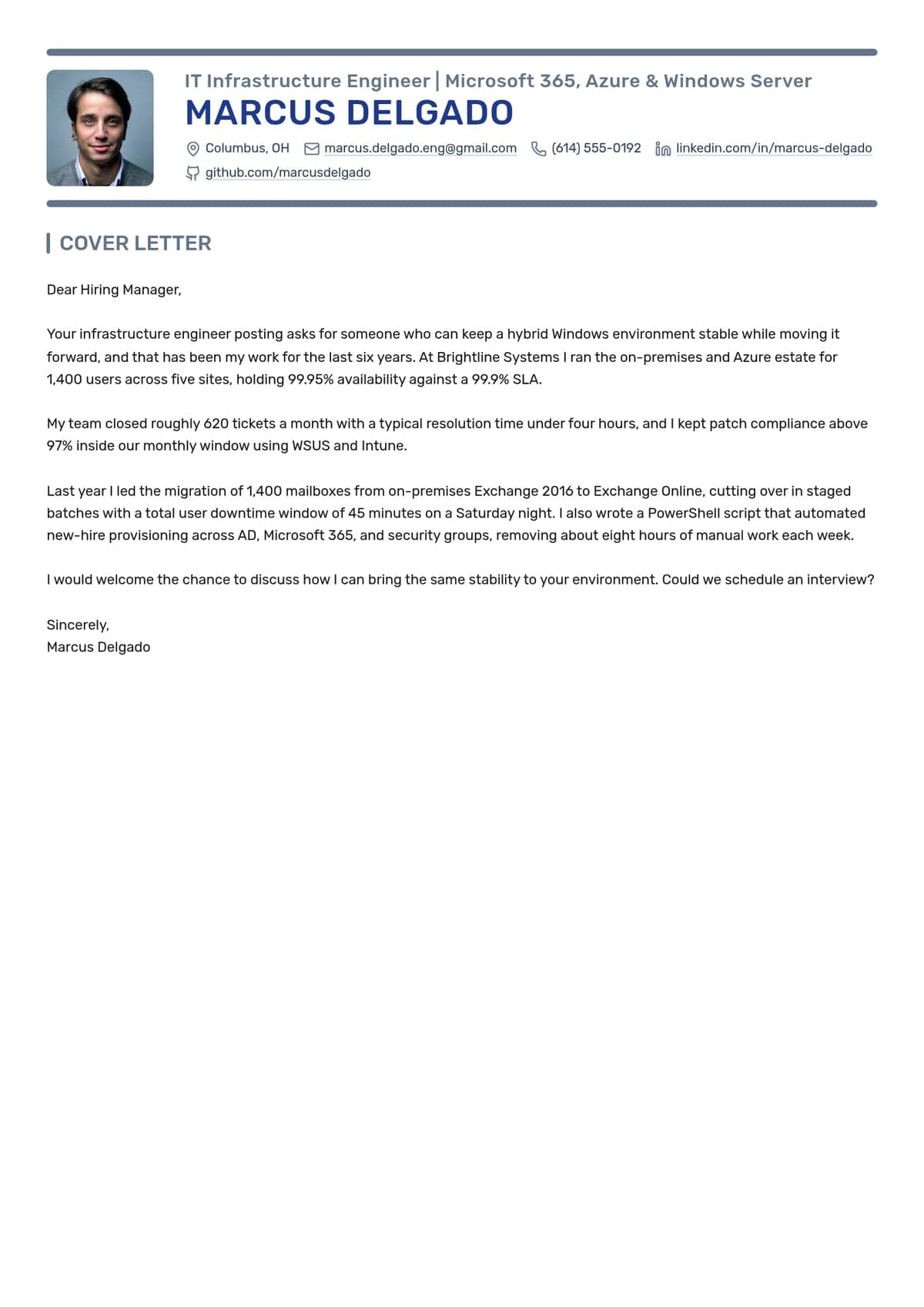
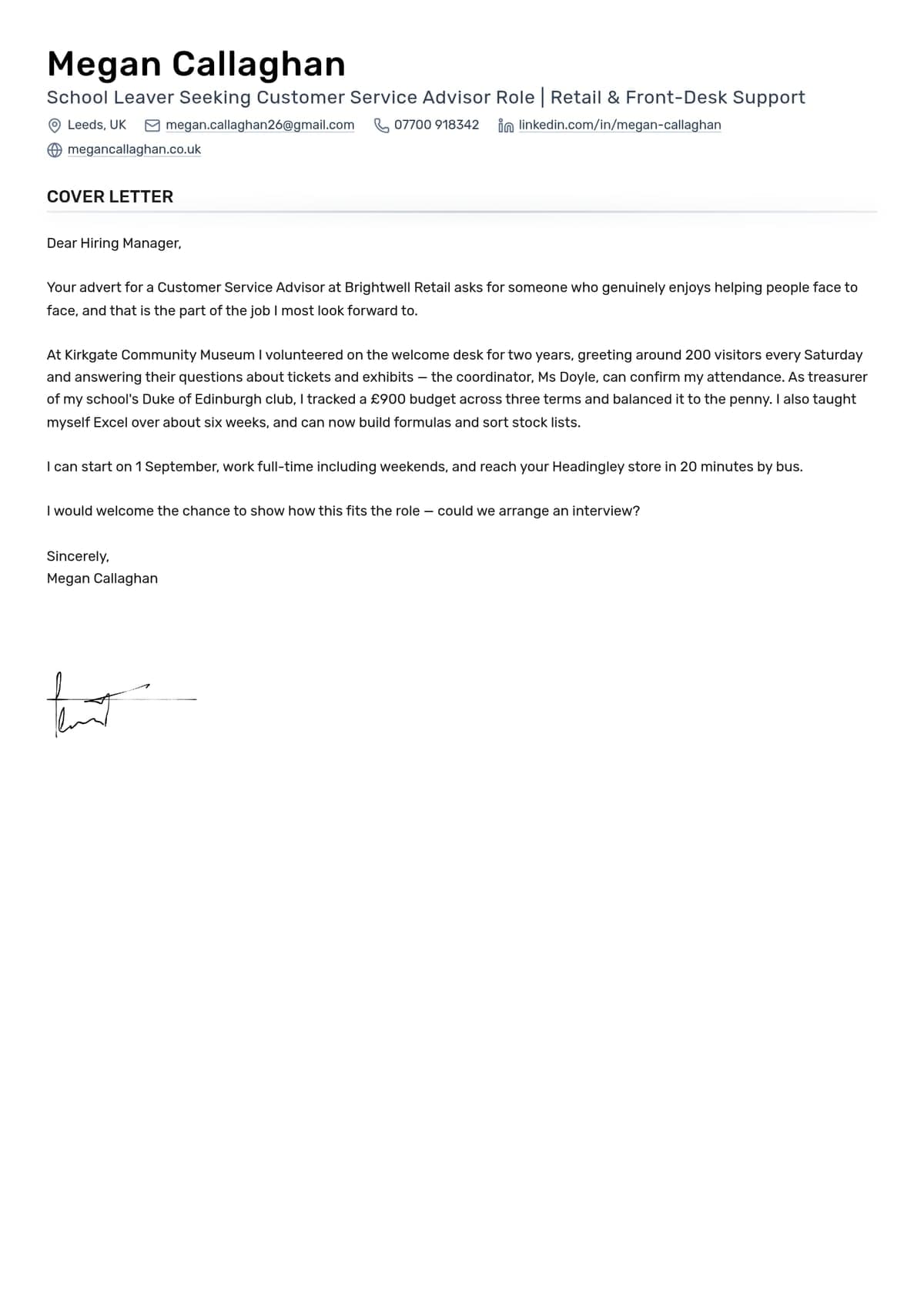
Write yours on the same template.
Every example here is built on a template you can open in the editor. Keep the structure that works and put your own story in it, or let Roleframe draft a first version from your resume and the job posting.


