Writing Skills: Workplace Examples and Ways to Improve
What writing skills mean at work, with concrete examples, a worked before-and-after rewrite, a self-assessment, and resume bullets backed by real evidence.

On this page
Writing is part of many jobs that do not have “writer” in the title: explaining a finding, answering a customer, documenting a process or asking for a decision. The useful test is whether the intended reader can understand the message and act on it.
Workplace writing has one job: help a specific reader understand something or act on something. That definition rules out two things people confuse it with. It is not creative writing, so you are not auditioning for a publishing career. And it is not a grammar worksheet, because a grammatically perfect email that buries its request still fails. This guide defines the skill, shows it in concrete examples, walks through a full rewrite, and then covers how to prove it on a resume and in an interview.
What writing skills mean at work
At work, good writing is measured by what the reader does next. Did they approve the budget, follow the instruction, answer the question? If yes, the writing worked. A request for clarification can reveal a gap to improve, though new questions may also reflect a complex topic or missing information.
Five abilities sit under the label, and they are what employers mean when a posting asks for business writing skills:
- Clarity. One idea per sentence, plain words, no ambiguity about who does what.
- Organization. The point first, support after, so a reader who stops halfway still got the message.
- Evidence. Specific, checkable facts instead of "things are going well."
- Tone. Matching formality and directness to the reader, from a customer apology to an executive summary.
- Revision. Treating the first draft as raw material. Experts increasingly separate mechanical correctness from this higher-value judgment: choosing what to include, explaining implications and owning the final text.
Writing is a subset of communication skills, but it has a property speech lacks: it leaves an artifact. That artifact is what makes writing one of the easiest skills to prove, which matters for everything in the second half of this article.
Writing skills examples across work and early-career settings
Workplace writing spans several formats: emails, reports, proposals, documentation and stakeholder updates. The same facts become a different document depending on audience and purpose. A bug you fixed is two sentences in an email to your manager, a step-by-step note in the team's runbook, and a plain-language reassurance in a customer reply. Knowing which version a reader needs is the skill.
Adjective lists ("concise, persuasive, detail-oriented") tell you nothing you can practice or prove. The matrix below maps each common writing task to the observable action behind it, the artifact it produces, and the follow-up question an interviewer could reasonably ask. Use it in both directions: to find what to practice, and to find evidence you already have.
Use work records only with permission. Redact confidential details or describe the example instead of sharing the original artifact.
| Task | Observable action | Shareable artifact | Likely interview follow-up |
|---|---|---|---|
| Status email or project update | States the headline in the first line; separates what changed, what's blocked, and what you need from the reader | A redacted update that got a decision or unblocked work | "How do you decide what to leave out of an update?" |
| Instructions or how-to guide | Writes steps in the order a novice performs them; tests the draft on someone unfamiliar with the task | An onboarding doc, runbook page or checklist others actually use | "How did you know the guide worked?" |
| Report or analysis | Leads with the finding and its implication; keeps methods and caveats in a clearly marked section | A redacted report, plus a one-paragraph summary you wrote for a different audience | "Walk me through how you structured it and why." |
| Proposal or recommendation | Names the decision, lays out options with consequences, and makes a recommendation with a reason | A proposal with its outcome (approved, revised, rejected and why) | "What pushback did you get, and what did you change?" |
| Customer or support reply | Answers the actual question first, then explains; matches tone to the customer's frustration level | Before-and-after versions of a template you improved, or feedback scores tied to replies | "Show me how you'd respond to an angry customer in writing." |
| Technical explanation for a nontechnical reader | Replaces jargon with the consequence the reader cares about; cuts detail the decision doesn't need | A summary a stakeholder forwarded, or slides built from your written explainer | "Explain something technical from your last role to me, right now." |
That last row is worth flagging on its own. Explaining complex information to a nontechnical audience is a useful application of writing skill. If you are in a technical field, a one-page explainer a VP actually read is stronger evidence than any grammar credential. The technical writer resume example shows what document-based evidence looks like at full strength, but the same logic applies to any role that writes.
Early in a career, the artifacts are smaller but the structure is identical. A student club's event announcement that answered where, when and what-to-bring without a single follow-up question is a writing sample. So is a capstone report with a real executive summary, or the README on a class project.
A worked example: turning a long update into a decision request
Here is the most common workplace writing failure, then its fix. Everything in this example is fictional: the people, the project, the dates and the figures are invented to show structure, nothing more.
Before. Subject line: "Update."
"Hi all, just wanted to give a quick update on where we are with the vendor onboarding project. Things have been moving along, though we've hit a few snags with the contract review, which has been taking longer than expected. Legal has been looking at it and we're hoping to have more clarity soon. In the meantime the team has continued working on integration testing, which is mostly going well, although there are a couple of open issues we're still tracking. We may need to think about the timeline at some point depending on how the contract piece shakes out. Happy to discuss on our next call if useful."
Nothing in that paragraph is false, and nothing in it is usable. The reader cannot tell what "snags" means, how late "longer than expected" is, or whether anything is being asked of them. "We may need to think about the timeline" hides the only thing that matters.
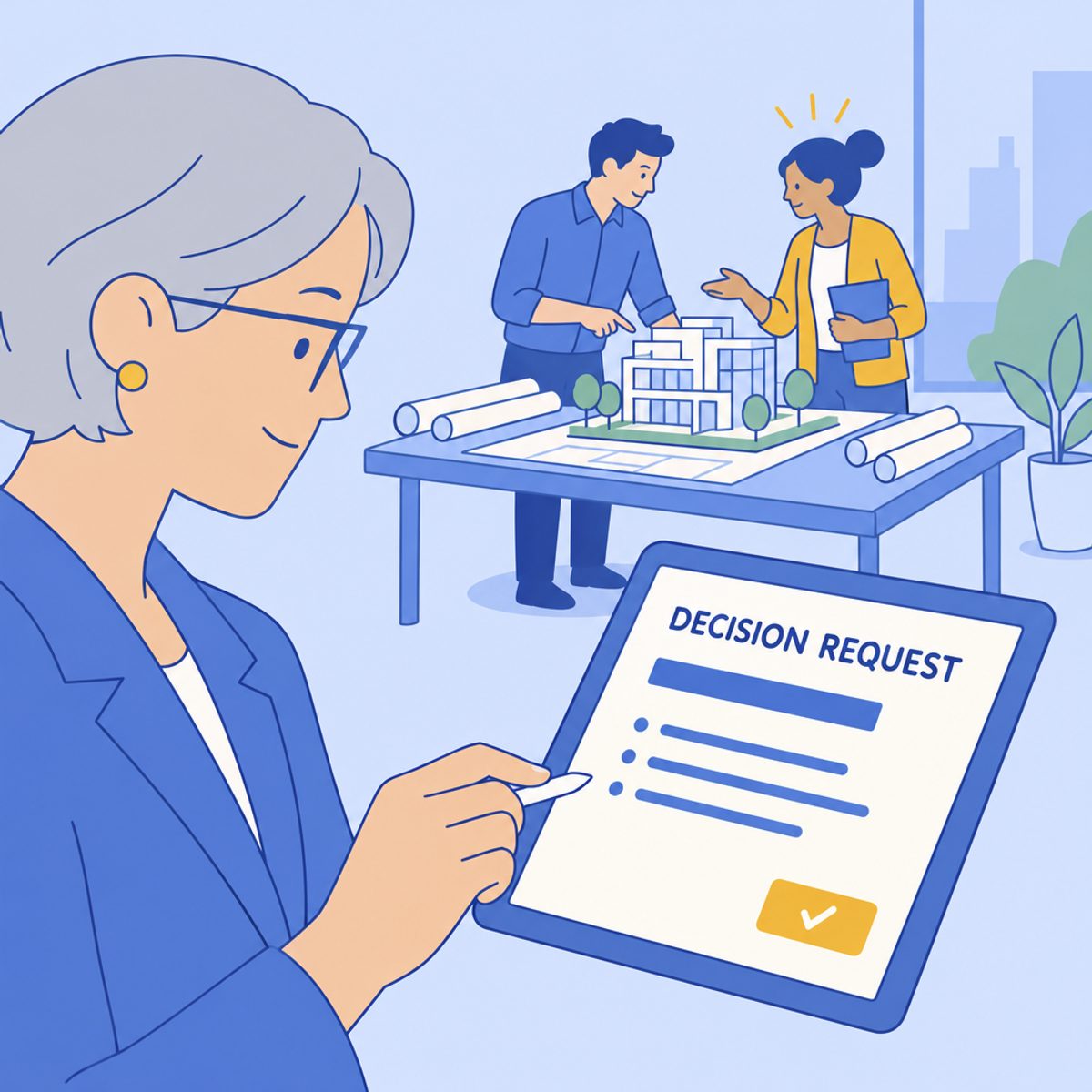
After. Subject line: "Decision needed by Fri Oct 30: extend onboarding deadline, or cut phase two."
"Team, we need a decision by Friday, October 30: extend the vendor onboarding deadline by two weeks, or keep the date and drop phase two.
Why now: Legal's contract review is two weeks behind plan (due October 16, still unresolved). Integration testing is on track, with 14 of 16 test cases passing.
Option A: extend two weeks. Full scope ships; launch moves to November 27. Option B: keep the date. Phase two (automated invoicing) moves to next quarter.
My recommendation is A. The two failing test cases depend on the contract terms, so cutting scope saves less time than it appears.
Reply with A or B by Friday, October 30 at noon, and flag any missing information before then."
What changed, piece by piece:
- The subject line does the work. A reader who opens nothing else knows a decision is due and when.
- Structure follows the reader's questions. What do you need from me, why, what are my options, what do you suggest, what do I do next. In that order.
- Evidence replaced adjectives. "A few snags" became "two weeks behind plan, due October 16." "Mostly going well" became "14 of 16 test cases passing." The revised details are specific enough for a reader to check.
- Active, specific verbs. "We may need to think about the timeline" became "extend two weeks or drop phase two." Vague verbs are usually a sign the writer has not decided what they are asking for.
- One next action with a deadline. "Happy to discuss" asks for nothing. "Reply with A or B by Friday noon" states a clear request and deadline.
A practical self-assessment
Take the last substantial thing you wrote at work or school, an email longer than three sentences, a report section, a set of instructions. Score it against these six questions honestly:
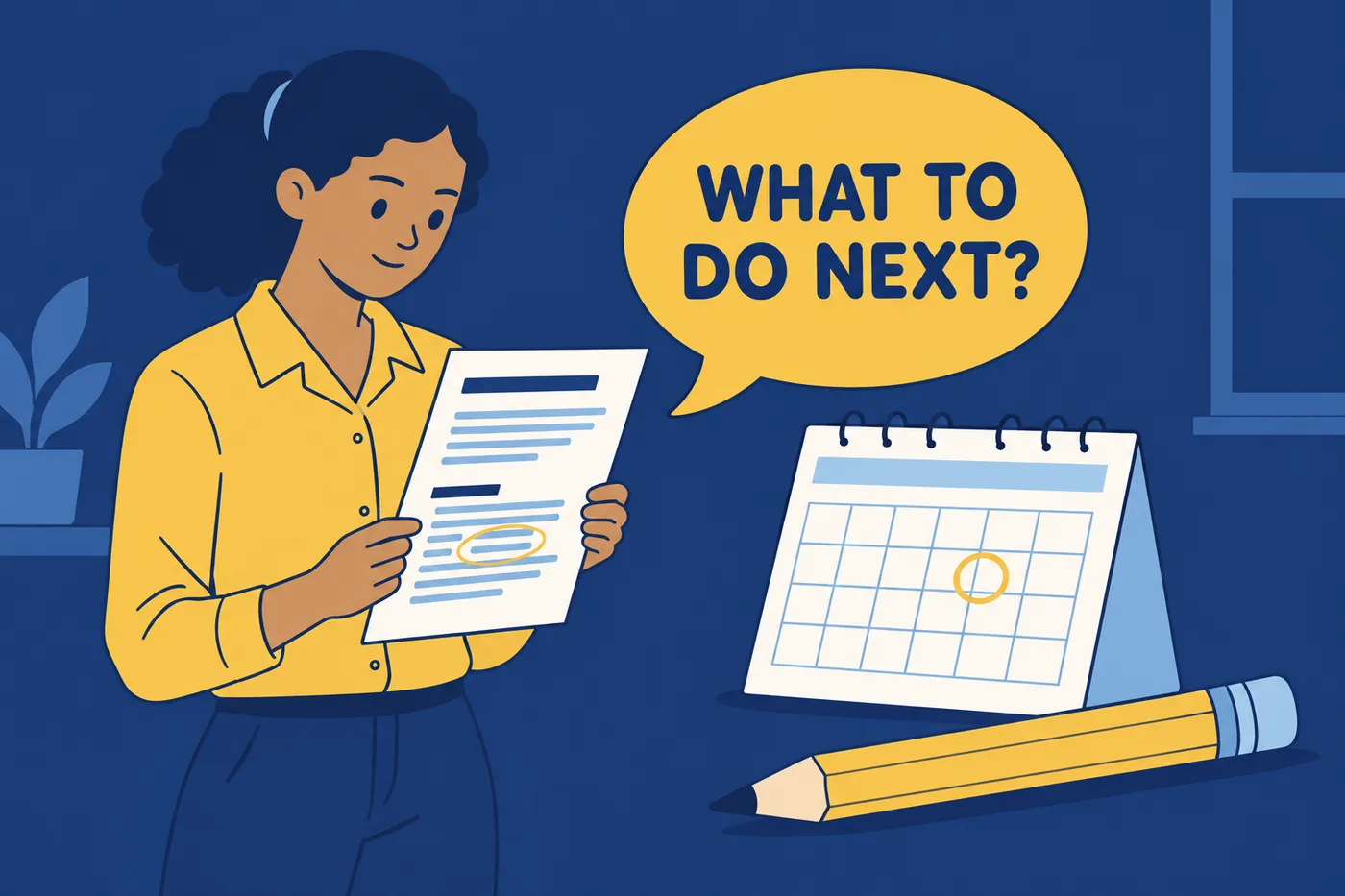
- Purpose: can you state in one sentence what the reader was supposed to do or understand after reading? If you can't, the reader couldn't either.
- Organization: is that purpose visible in the first two lines, or does the reader have to dig for it?
- Specificity: circle every vague phrase ("soon", "some issues", "going well"). Could each one be replaced with a date, a count or a name?
- Accuracy: pick one factual claim in the document. Could you show where it came from if challenged?
- Tone: would this reader, at this level of seniority and this level of frustration, find the register right? Read it aloud as them.
- Usability: hand it to someone and ask one question only: "what are you supposed to do next?" If their answer doesn't match your purpose sentence, the document failed its only test.
That last check is the one most people skip and the one that teaches the most. It converts "is my writing good?", which nobody can answer, into "did the message land?", which anyone can.
How to improve your writing skills
Revise the message and structure before polishing small errors. Clarify who the reader is, what they need and which evidence belongs in the document. For the final check, Purdue OWL’s proofreading guidance recommends a break, an error checklist and reading aloud.
Try three exercises:
- Edit a paragraph for structure. Find its main point, move it near the front and cut sentences that do not support it.
- Verify a factual claim. Check a statement in an update against its original source, then correct or qualify it.
- Test an instruction. Ask a willing person unfamiliar with the task to follow a safe, nonsensitive draft. Note where they need clarification, then revise those steps.
A repeatable weekly practice plan
- Monday: before writing anything substantial, write one line at the top of the draft: "After reading this, [reader] will [action]." Delete it before sending; keep it while drafting.
- Midweek: run the one-paragraph structure edit on something already sent. Comparing your edit to what went out shows your habitual weaknesses.
- Friday: collect one piece of feedback. Ask a colleague a narrow question ("was the ask clear in that email?"), not a broad one ("was it good?"). Narrow questions get honest answers.
- Ongoing: keep a running file of before-and-after pairs. In a month you'll have both measurable progress and interview material.
Where AI fits, and where it doesn't
If your workplace permits AI assistance, use it within the organization’s confidentiality and disclosure rules. Do not upload restricted material to an unapproved tool.
Check every factual claim, calculation, name and citation in the output. You still need to decide what the reader needs and whether the tone and recommendation fit the situation. A polished draft does not establish accuracy or give you permission to claim work you did not do.
Writing skills on a resume: evidence, not adjectives
A readable resume makes your experience easier to understand. Check its accuracy, organization and wording; clearer writing can help a reader evaluate your evidence, but it cannot guarantee a hiring outcome.
"Excellent written communication" in a skills list proves none of it. Show specific outputs and outcomes, such as documentation, reports, proposals or client communications, instead of relying on the label. Be precise about which kind of writing the job wants, too. Technical writing, executive communication, documentation and stakeholder reporting are different requirements, and the posting usually names one. Match the posting's term, and put the evidence where it carries weight: a strong writing achievement belongs as an experience bullet under the job where it happened, while the skills section carries only the short, specific label.
Build your bullets on an action-context-evidence pattern. Four templates, one per task family from the matrix above. Everything in brackets is a fact only you can supply; fill it from your real work or cut the bullet, because an invented number is worse than no number:
- Updates: "Wrote weekly status updates for [audience, e.g. three stakeholder teams] on [project]; format was adopted as the template for [group]."
- Documentation: "Wrote the onboarding guide for [process/tool]; [N] new hires completed setup using it, with [support tickets dropping from X to Y / zero escalations you can verify]."
- Proposals: "Drafted the proposal for [change], including options and cost comparison; approved by [decision-maker/committee] and implemented in [timeframe]."
- Editing and standards: "Created the team's style guide for [customer replies/release notes]; reviewed [N] documents against it per [week/month], cutting revision rounds from [X to Y]."
A weak-to-strong rewrite makes the pattern concrete:
Weak: "Strong writing and communication skills; responsible for various reports and documentation."
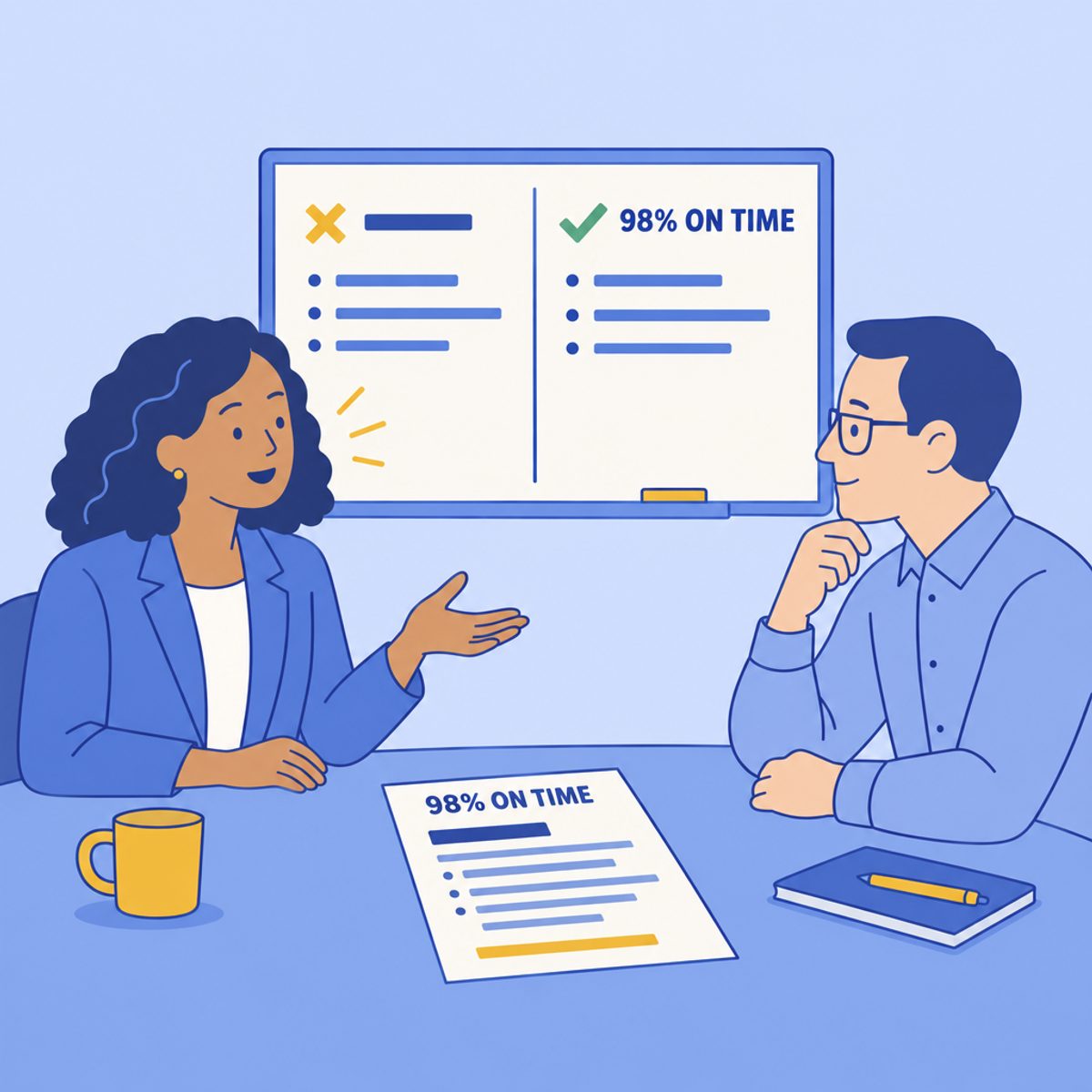
Strong: "Wrote the monthly operations report for [audience]; restructured it to lead with exceptions and decisions needed, cutting the review meeting from [X to Y minutes]."
The weak version could appear on anyone's resume, which is precisely the problem. For more phrases to cut on sight, see resume buzzwords to avoid. Beyond bullets, keep artifacts ready for when a recruiter asks: two or three redacted writing samples, a style guide you wrote, a before-and-after pair with a one-line rationale for the changes, and any reader feedback you can quote with permission.
In Roleframe’s resume editor, live checks can flag wording to review while you edit. Signed-in accounts have a limited free allowance for AI features. If you ask Remi for a rewrite, supply the facts and review the proposed changes before applying them; keep only claims you can support.
Proving writing skills in an interview
Prepare one complete story before you need it. Pick a real situation where writing changed an outcome, then structure it as situation, your action, and a verifiable result or an honest learning. "Our launch updates were being ignored, so I restructured them to lead with decisions needed; the next three updates each got a same-day response" is a full answer in two sentences. The STAR method gives you the scaffolding if the story needs more room.
Three boundaries keep the answer credible. First, redact: describe the document's purpose and effect, never confidential contents, and say so plainly if asked to share the original. Interviewers read that as judgment, not evasion. Second, claim your actual role; if you edited rather than wrote, say "edited", because the follow-up questions will find the truth anyway. Third, a result you can't verify becomes a learning, not a statistic. "I don't have the ticket numbers, but the team stopped asking me the same setup questions" is honest and still lands.
The mistakes that sink these answers are the same ones that sink the documents: vague claims ("people liked my reports"), results with no mechanism ("communication improved"), and stories where the writing was incidental to the outcome. If the interviewer asks you to explain something technical on the spot, that is the matrix's last row arriving live. Answer the way the rewrite above did: consequence first, detail only as needed.
Frequently asked questions
- How do I make my writing skills better?
Clarify the audience and purpose, draft, revise the structure and wording, then proofread separately. Purdue OWL suggests taking a break before proofreading and checking against an error list. Ask a reader what the document is asking them to do; use their answer to guide your revision.
- How do I make a work email clearer?
Start with the decision or information the reader needs, then add the supporting facts and the next action. In an email, a useful subject line names the topic and any real deadline. Do not invent urgency when none exists.
- What are the 7 stages of writing?
For this guide, a practical sequence is purpose, audience, research, planning, drafting, revision and final editing. Writing is often iterative: you may return to research after drafting or reorganize after feedback. The count matters less than checking both the ideas and the finished text.
- What are the elements of good writing?
Useful elements include a clear purpose, accurate content, an appropriate structure, specific wording, suitable tone and readable sentences. Their balance depends on the task. A short update may need one action and a deadline; a report also needs enough evidence and limitations for the reader to assess the conclusion.
- Are writing skills a hard skill or a soft skill?
They sit in between, which is why evidence matters more than the category. Specific forms like technical documentation or proposal writing behave like hard skills: they produce artifacts you can show. The judgment underneath, choosing what a reader needs and adapting tone, behaves like a soft skill. On a resume, name the specific form the posting asks for and back it with an outcome; see hard skills vs. soft skills on a resume for how to place each type.
- Is it okay to use AI for work emails and reports?
Follow your organization’s policy first, including confidentiality and disclosure requirements. If assistance is permitted, verify the output against reliable sources and review the tone and purpose yourself. You remain responsible for the final message.
- How do I show writing skills on a resume without work experience?
Use the writing you've already done: a capstone report with an executive summary, a club announcement that needed no follow-up questions, a project README, a tutoring guide. Frame each as action, context and evidence, such as "Wrote the setup guide for [project]; [N] classmates completed installation without help." The no-experience resume example shows how to build a full page from this kind of material.
Turn your skills into proof.
A skills section helps most when your experience backs it up. In the editor, write each skill into a bullet about real work, then check the page against the posting before you send it.


