Organizational Skills: Examples, Self-Checks and Resume Evidence
Organizational skills defined with concrete examples, a behavior-to-evidence matrix, a self-check, and resume bullets you can defend in an interview.

On this page
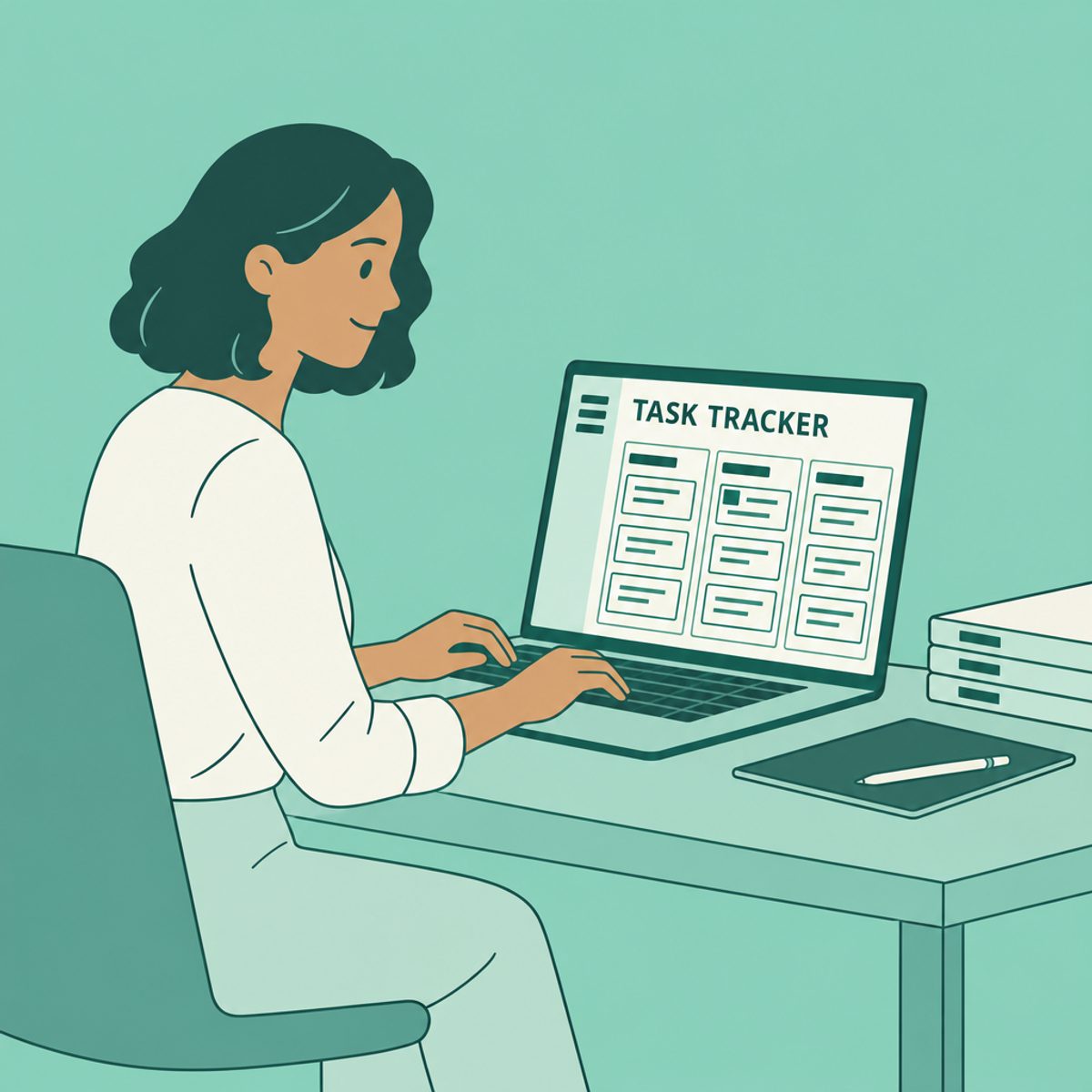
Organizational skills become visible through useful systems: a tracker another person can read, a folder a teammate can search and a handoff note that lets work continue while you are away. This guide maps those behaviors to practical exercises, resume bullets and interview evidence.
What organizational skills actually are
Organizational skills are the ability to arrange information and tasks so that work can be found and finished, by you or by someone else. That covers capturing requests so none disappear. It also covers filing documents so a teammate can retrieve them, keeping records that match reality, and coordinating people and materials so the right things meet at the right time.
They are not the same thing as time management. Time management decides when you do things, the hours you allocate and the deadlines you hit. Organizational skills decide where things live and who owns them, the systems that make the work legible. The two overlap, and a job posting usually wants both, but they fail differently. A person with great time management and poor organization finishes every task on schedule while their files and handoffs stay unusable to everyone else. If time allocation is your actual gap, start with time management skills instead.
At work, organization can include managing dependencies, keeping status reports accurate and maintaining usable documentation. The right system depends on the task; a shared spreadsheet may be enough, while a large project may need a dedicated planning tool.
Searchers often ask whether to write "organization skills" or "organizational skills." The standard phrase is organizational skills. "Organization skills" is understandable but reads less naturally and can suggest skills tied to a specific organization. Use "organizational skills" on a resume and in professional writing.
Organizational skills examples: the behavior-to-evidence matrix
An adjective list ("detail-oriented, structured, methodical") tells an employer nothing. What they can evaluate is a behavior that leaves an artifact. The matrix below maps each common organizational skill to the task it solves, the action a coworker could observe, the artifact you could show, and the follow-up question an interviewer is likely to ask. If you can answer the follow-up, the skill is yours to claim.
Use work records only with permission. Redact confidential details or describe the example instead of sharing the original artifact.
| Task | Observable action | Shareable artifact | Likely interview follow-up |
|---|---|---|---|
| Task capture: requests arrive by chat, email and meetings | Logs every request in one list with an owner and a due date, the day it arrives | The tracker itself (sheet or board) | "Walk me through how one request got from message to done." |
| Prioritization: more tasks than hours | Re-ranks the list against stated criteria (deadline, dependency, impact) and says "not yet" out loud | A ranked backlog with the criteria visible | "Tell me about a task you deliberately dropped and why." |
| Naming and filing: shared files others need | Applies one naming convention (date, project, version) and a predictable folder tree | A folder a teammate can search without asking you | "If you were out sick, how fast could someone find the latest version?" |
| Calendar coordination: meetings across teams or time zones | Confirms agenda, pre-reads and attendees before the invite goes out | Invites with agendas and attachments | "How do you decide a meeting shouldn't happen at all?" |
| Inventory and records: stock or data that must match reality | Counts and reconciles on a fixed cadence, logging discrepancies with dates | A reconciliation log | "What did you do the last time the count didn't match the system?" |
| Repeatable checklists: recurring work like onboarding or closing | Writes the steps down after the second repetition, then runs and revises the checklist | The checklist with its revision history | "What step did you add after something went wrong?" |
| Documented handoff: work passing to another person | Hands over owner, status, open items and file locations in writing | The handoff note | "Describe a handoff that failed and what you changed." |
Notice what the third column does. Every artifact is something a stranger could inspect. That is the test that separates real organizational skills from resume filler, and it is the same test you will use in the self-assessment below.
A worked comparison: one request, two outcomes
The people, company and figures in this scenario are fictional, invented to show the mechanics.
Dana coordinates operations at Brightline Supply. On Monday morning a regional manager sends a chat message asking for the updated pricing sheet ahead of the Harmon meeting later that week.
Untracked version. Dana reads it between two other messages and mentally files it under "this week." By Wednesday the message has scrolled out of view. On Thursday Dana remembers, searches three folders for the latest pricing file, finds two versions with no dates in the filenames, and sends one. The Harmon meeting was Wednesday. Nobody can even reconstruct where it went wrong, because nothing was written down.
Tracked version. Dana replies with one clarifying question ("Which day is the meeting?") and adds a row to the request tracker. The row reads Harmon pricing sheet, requested by R. Alvarez, owned by Dana, due Tuesday end of day, file at /Clients/Harmon/2026-10_Pricing_v3. The due date is a day before the meeting, on purpose. Tuesday morning the row is still open, so it gets done first. The file link points at a folder where the newest version is obvious from the name. Dana marks the row complete and the thread ends.
The difference is not effort or memory. It is five fields: what, who asked, who owns it, when it is due, and where the files live. Every organizational system worth having is some version of those fields plus the discipline to fill them in on arrival.
A practical self-assessment
Rate yourself with tests another person could run, because "I feel organized" measures mood, not systems. Four checks:
- The file test: could a teammate find the latest version of a document you own, in under two minutes, without messaging you?
- The next-task test: if someone opened your task list right now, could they tell what you will work on next and why it outranks the rest?
- The owner test: for each open piece of work you're involved in, is it written down who owns it, or does ownership live in people's heads?
- The recovery test: if you handed your work to a colleague tomorrow with no meeting, could they pick up an unfinished item from your notes alone?
Failing a check is useful information, not a character flaw. Each one maps to a row in the matrix above: the file test points to naming and filing, the next-task test to capture and prioritization, the owner and recovery tests to tracking and handoffs. Fix the failed check first; ignore the rest until it holds.
How to improve: a one-week system you can actually evaluate
Organizational skills improve through practice on real work, and a week is enough to see whether a system helps. The plan:

- Pick one capture point. A single sheet or board with five columns: request, requester, owner, due date, file link. Everything goes here, including verbal asks.
- Log every incoming request for five working days, the day it arrives. If a request has no due date, ask for one; "next week" becomes a date or it isn't captured.
- Adopt one naming convention for every file you touch this week, such as YYYY-MM_Project_Description_v2. Don't reorganize old folders yet; just stop adding to the mess.
- Hold a 20-minute review on Friday. Count three things: open rows with no owner, items that slipped past their due date, and how many times you spent over two minutes hunting for a file.
The Friday numbers are your evaluation. If search time and slipped items drop over two or three weekly cycles, the system is working; if they don't, change one element (usually the capture point, because split capture points kill trackers) rather than abandoning the whole thing. For feedback, ask the person who most often receives your work two questions: "Was anything late or missing from me this month?" and "When you need a file of mine, how do you get it?" Their answers are evidence you can later quote.
Job seekers get a free practice arena here: an application pipeline is a tracking problem with owners, due dates and documents. Running your search this way builds the habit and gives you a current example to discuss. There's a full method in how to organize your job search.
Organizational skills for a resume: evidence, not adjectives
Describe organization through the work: how you tracked requests, assigned ownership, kept records accurate or made handoffs easier. Choose the examples relevant to the posting rather than adding a generic claim that you are organized.
So the skill mostly belongs in your experience bullets, built on the action-context-evidence pattern: what you did, where, and the artifact or outcome that proves it. Four role-specific examples, with brackets around every fact you must supply yourself. Never invent the bracketed numbers; a figure you can't defend in an interview is worse than no figure.
- Administrative assistant: "Built a shared request tracker covering [number] weekly travel and facilities requests, each with an owner and due date; [your verifiable outcome, e.g. no missed request during the Q2 audit]."
- Project coordinator: "Maintained the dependency and status log for [number] concurrent workstreams in Jira, producing the weekly status report used in [named leadership meeting]."
- Retail / operations: "Reconciled inventory records for [number] SKUs on a weekly cadence, logging discrepancies with dates; shrink reporting passed [review or audit] with [result]."
- Student / early career: "Created a dated filing convention for the club's grant documents, so the incoming treasurer located every record without a handover meeting."
Here is the weak-to-strong rewrite in full.
Weak: "Highly organized team player with strong organizational and multitasking skills."
Strong: "Tracked [number] incoming client requests per week in a shared sheet with owner, due date and file link; [zero requests went unanswered over a six-month period, if true]."
The weak version could appear on any resume on earth. The strong one names the system and its mechanics, then makes a checkable claim. Your skills section itself should hold the named, searchable items a posting screens for, such as Jira, Confluence, Excel, or a records system, while the behavior lives in the bullets. More patterns in resume skills section examples.
In Roleframe’s resume editor, live checks can flag wording to review while you edit. Signed-in accounts have a limited free allowance for AI features. If you ask Remi for a rewrite, supply the facts and review the proposed changes before applying them; keep only claims you can support.
Interview evidence: one answer, built properly
Interviewers test organizational skills with behavioral prompts like "Tell me about a time you managed competing priorities" or "How do you keep track of your work?" Build one answer in advance from a real situation with enough specifics to be credible, the action you took (the system, not the adjective), and a verifiable result or an honest learning. It is the same structure as the STAR method, compressed.
Using the fictional Dana scenario as a shape, the answer might run like this. "Requests reached me through chat and email, plus hallway conversations, and two slipped in one month. I set up a single tracker with an owner and a due date on every row, and made a rule that nothing counted as requested until it had a row. Over the next quarter the team stopped asking me for status, because they could read it, and nothing slipped." Then be ready for the follow-ups from the matrix, such as which request you deliberately dropped and how fast a teammate could find your files.
Three boundaries keep the answer honest. Don't name a tool you couldn't demonstrate; "familiar with Jira" collapses under one workflow question. Don't claim sole credit for a team outcome; explain what you personally changed and what colleagues contributed. And if your evidence is strong, it belongs in an experience bullet where the interviewer will find it, with the skills list reserved for the named tools. For more prompts to prepare against, see behavioral interview questions.
Frequently asked questions
- What are organizational skills?
Organizational skills are the ability to plan, prioritize, coordinate and manage tasks and information so work can be found and finished. In practice that means capturing requests, keeping files retrievable, maintaining accurate records, meeting deadlines and adapting the system when circumstances change. The reliable test is whether another person could pick up your work from your artifacts alone.
- Is it "organization skills" or "organizational skills"?
Use organizational skills. It is the standard phrase for the ability to organize work, tasks, time and resources. "Organization skills" is grammatically possible but reads less naturally and can be misread as skills tied to a particular organization. On a resume and in professional writing, "organizational skills" is the safer choice.
- What is another way to say strong organizational skills?
Pick the phrase that matches your evidence: "planning and prioritization skills" if you rank and sequence work, "coordination skills" if you organize people and resources, "time-management skills" if deadlines are the point, or "proficient in managing competing priorities" for multi-request roles. Better still, skip the label and write the bullet that proves it, such as the tracker or reconciliation log you ran.
- What are examples of poor organizational and management skills?
Examples include requests that never enter a tracker, files without a clear current version, unclear ownership, missed dependencies and handoffs that omit the next action. Identify the specific failure before choosing a tool; a new app will not fix an undefined owner or an unagreed deadline.
- What are 5 organizational skills employers look for?
Five useful areas are task capture, prioritization, filing and documentation, accurate records, and coordination of people and schedules. The priority depends on the role. A project coordinator may emphasize dependencies and status reporting; an administrator may emphasize requests, calendars and records.
- Where do organizational skills go on a resume?
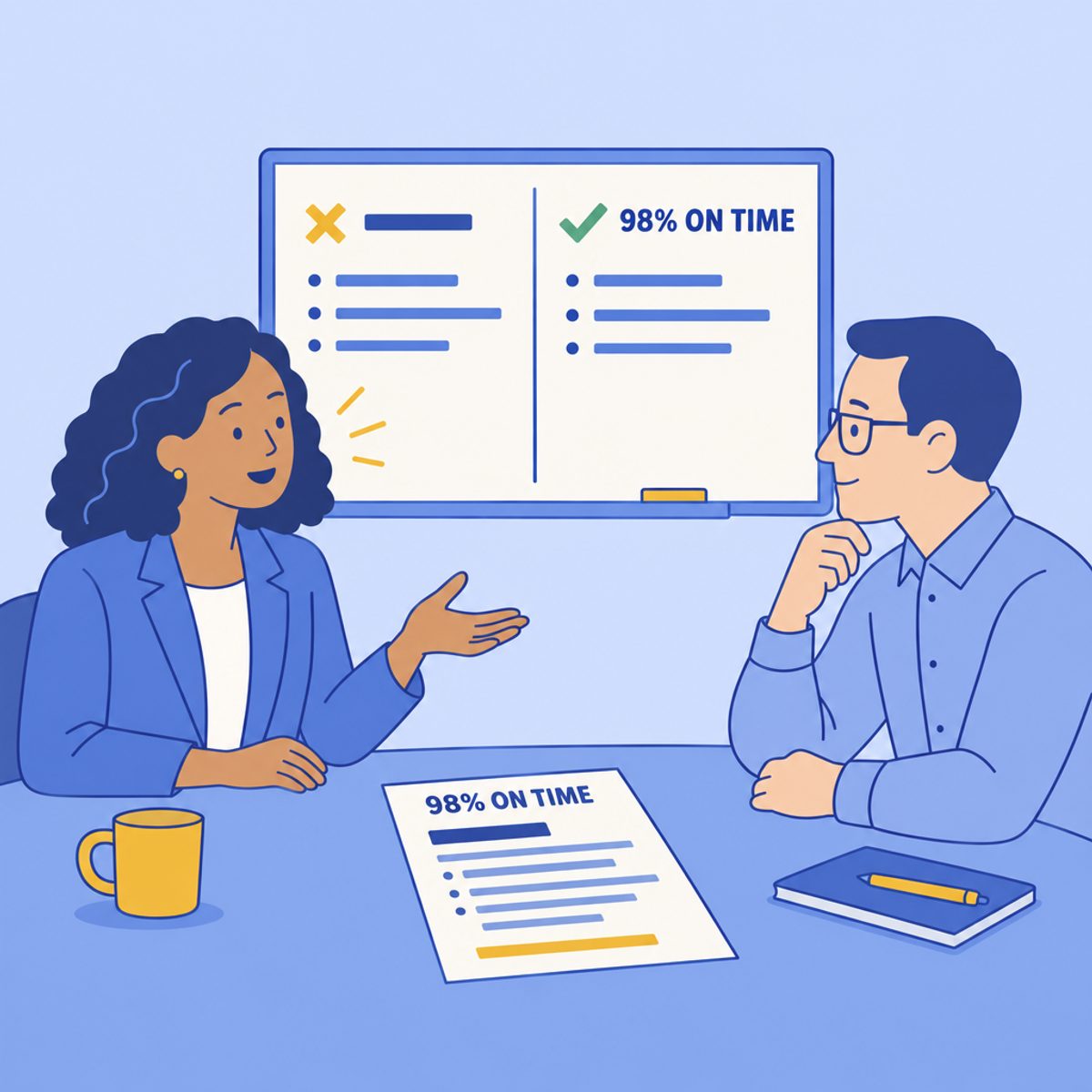
Mostly in your experience bullets, as action-context-evidence statements like "maintained the status log for [number] workstreams in Jira, producing the weekly report used by leadership." The skills section should carry the named, searchable tools a posting screens for, such as Jira or Excel. Avoid listing "organizational skills" as a bare phrase with no supporting bullet; it reads as filler and invites a follow-up you can't answer.


Turn your skills into proof.
A skills section helps most when your experience backs it up. In the editor, write each skill into a bullet about real work, then check the page against the posting before you send it.


