Work Ethic: What It Means and Examples You Can Show
What work ethic actually means, strong work ethic examples with evidence you can share, plus how to show it on a resume and prove it in an interview.


On this page
Work ethic is whether you do what you said you would do, at the quality you agreed to, and how you behave when something goes wrong. That is the whole definition, and it is testable. A hiring manager cannot see your character, only your behavior: the deadline you hit, the error you flagged before anyone else found it, the update you sent when a task slipped.
That framing matters because the common shorthand, "hard worker," is useless on a resume and in an interview. It names a trait instead of showing a behavior, and anyone can type it. This guide defines work ethic as observable actions, gives you strong work ethic examples mapped to the evidence behind each one, and shows how to turn that evidence into resume bullets and interview answers that hold up under follow-up questions.
What work ethic means (and what it doesn't)
Work ethic breaks down into four behaviors an employer can actually observe:
- Reliability. You keep commitments. When you say Thursday, the work arrives Thursday, and when it won't, people hear from you before Thursday.
- Integrity. You tell the truth about your work, including the parts that went badly. You handle confidential information the way you agreed to, even when nobody is checking.
- Accountability. When something you own breaks, you say so, fix it, and change the process so it doesn't repeat. No quiet patching, no blaming the handoff.
- Quality. You check your own work against a standard before passing it on, instead of treating review as someone else's job.
Hours alone do not establish reliability, integrity or quality. Someone who leaves at an agreed time for childcare, or works differently because of a disability, can demonstrate all four behaviors. Evaluate the commitments and work within the person’s agreed responsibilities and available support.
One language note, since searchers ask: work ethic (singular) means your habits toward doing work, which is what this page covers. Work ethics (plural) usually means the moral rules of workplace conduct, like honesty, fairness and avoiding conflicts of interest. A job posting that says "strong work ethic" means the first one.
Engagement and work ethic are different concepts. Feeling enthusiastic about a job is not the same as handling responsibilities reliably. Workload, resources, management and personal circumstances can affect what is feasible; discuss those constraints instead of treating every missed target as a character judgment.
Strong work ethic examples: the behavior-to-evidence matrix
An example of work ethic is only useful if it survives a follow-up question. So instead of a list of adjectives, here is a matrix: the behavior, what it looks like as an observable action, the artifact or record that proves it happened, and the interview follow-up that action can withstand. If you can fill in a row from your own history, you have evidence. If you can only fill in the first column, you have a claim.
Use work records only with permission. Redact confidential details or describe the example instead of sharing the original artifact.
| Behavior | Observable action | Artifact or evidence | Interview follow-up it survives |
|---|---|---|---|
| Keeping commitments | Delivered a weekly report every week for a year, including weeks with competing deadlines | The report archive; a manager who can confirm it | "Walk me through a week when that was hard to keep." |
| Admitting and correcting an error | Found your own data error after submission, flagged it to your manager the same day, sent the corrected version with a note on what changed | The correction email; the revised file with a changelog | "Tell me about a mistake you made and what you did." |
| Protecting confidential information | Declined to share salary or customer data with a colleague who had no access rights, and pointed them to the proper channel | Nothing shareable, and that is the point; a reference can confirm your handling | "How do you handle sensitive information?" |
| Quality before handoff | Built a pre-submission checklist for your own deliverables and caught discrepancies before they reached the client | The checklist itself; a drop in revision requests you can describe | "How do you make sure your work is accurate?" |
| Asking for help before a deadline is missed | Raised a blocker three days before a due date instead of missing it quietly, with a proposed fallback | The message thread; the delivered fallback | "Tell me about a time you were behind schedule." |
| Early update when scope changes | Told the project lead the same day a dependency slipped, with a revised estimate, rather than hoping to absorb it | The updated plan or timeline; the lead as a reference | "How do you communicate bad news?" |
| Follow-through on unglamorous work | Kept the shared tracker, the meeting notes, or the closing checklist current for months because the team depended on it | The tracker or notes themselves | "What do you do when a task is boring but necessary?" |
Early-career readers: every row works without a full-time job. A group project where you flagged your section was behind, a retail shift where you balanced the till and reported the discrepancy instead of hiding it, a volunteer role where you showed up for every scheduled slot for a semester. The settings are smaller; the behaviors are identical, and interviewers for entry-level roles expect exactly these settings. If that is your situation, the approach in how to write a resume with no experience shows how to build a whole document from this kind of material.
A worked comparison: claimed vs. shown
Here is the same person described two ways. Maya, her team and all figures in this example are fictional, written to illustrate the structure.
Claimed: "Maya is extremely hardworking and dedicated. She always goes the extra mile, has a strong work ethic, and never gives up until the job is done."
Shown: "Maya owned the monthly inventory reconciliation. In March, she found a counting error in her own submission two days after filing it, flagged it to her manager that afternoon, and refiled with a note explaining the cause. She then added a two-step cross-check to her process, and the next six reconciliations went through without a correction. When April's count collided with a system migration, she told her manager a week ahead that the deadline was at risk and proposed splitting the count across two days. It landed on time."
Read the difference. The first version contains zero verifiable facts; a skeptical reader learns nothing. The second names a task, an error handled transparently, a process improvement, and an early escalation, and every piece could be confirmed by the manager it mentions. Notice too that the shown version involves no heroics and no overtime. Maya works a normal workload. The work ethic is in the transparency and the follow-through, which is what employers can actually use.
A practical self-assessment
Before you write a bullet or rehearse an answer, take stock. This is a reflection checklist, a way to find your own evidence. It does not measure your character, and a low count on any question usually says more about your role's conditions than about you. Think over the last three months and answer honestly:
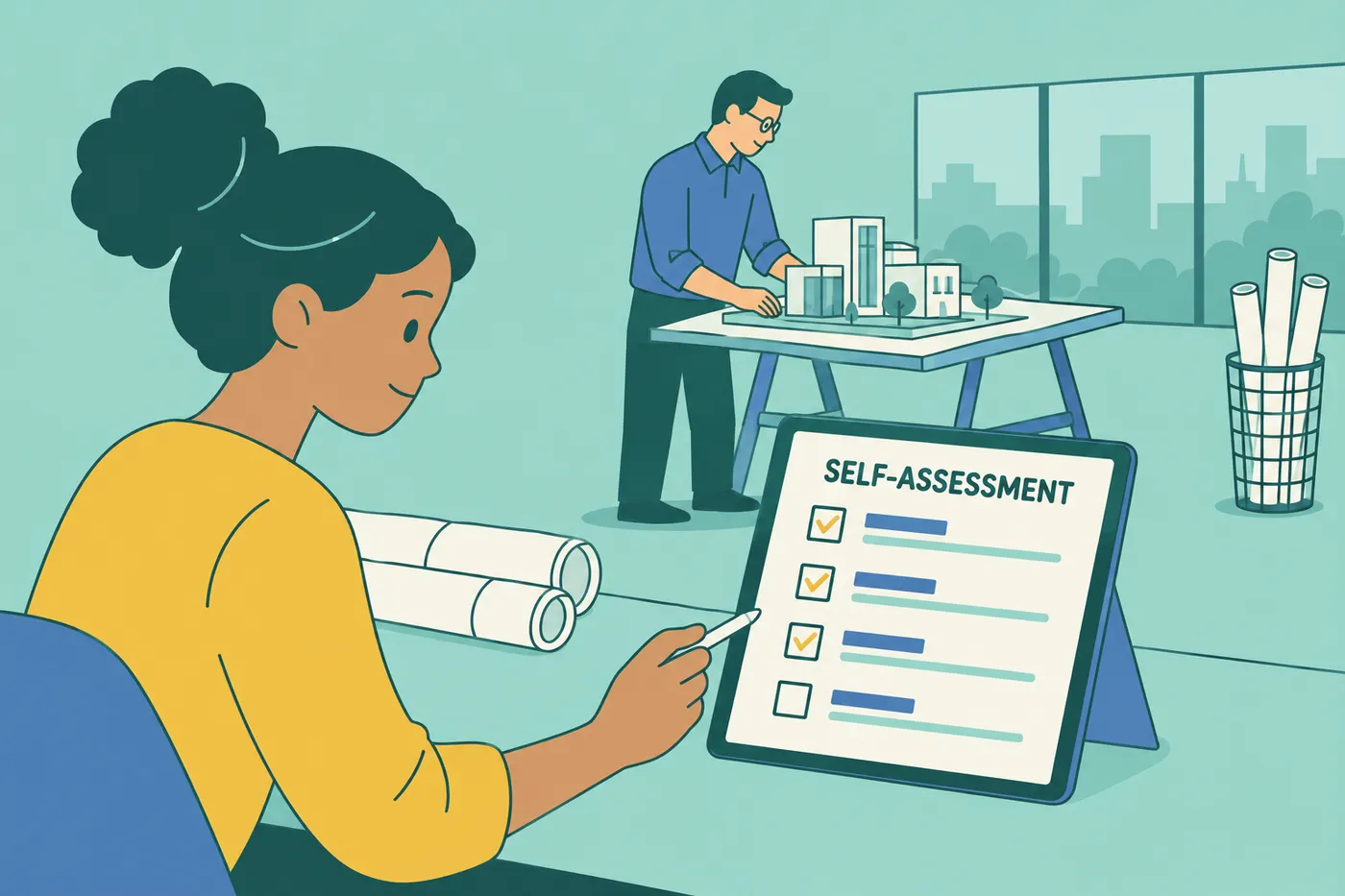
- Promises kept: Of the commitments you made with a date attached, how many landed on time? For the ones that didn't, did the other person hear from you before the deadline or after?
- Errors corrected: Can you name a mistake you surfaced yourself, and what you changed afterward so it wouldn't repeat?
- Quality standard: Do you have a definition of "done" for your main deliverable, written or in your head, and do you check against it before handing work over?
- Escalation decisions: When you last hit a blocker, how long did you sit on it before asking for help? Was the delay about the problem or about not wanting to look stuck?
- Confidentiality and integrity: Has anyone ever had to correct how you handled sensitive information or an inconvenient fact? What would a former manager say?
- Unglamorous follow-through: What recurring, low-visibility task do you keep current, and who relies on it?
Write your answers down with the specific instances attached. Those instances are the raw material for every section that follows: the resume bullets, the interview answer, the references you brief.
How to improve your work ethic
Work ethic improves the way any skill does, through specific, repeatable practice. Not through resolving to "try harder," which changes nothing by Tuesday. Three moves cover most of the ground:
Make commitments explicit. Vague commitments can't be kept or broken, so nothing compounds. Replace "I'll get to it soon" with "you'll have it Thursday by noon." A dated commitment forces you to either deliver or communicate, and both build the track record.
Write down what "done" means. For your main deliverable, list the three to five checks it must pass before it leaves your hands: numbers reconciled, names spelled correctly, the one question the recipient always asks already answered. Quality stops being a mood and becomes a checklist you can show.
Practice the early update. The hardest work-ethic behavior is telling someone a commitment is at risk while there is still time to react. Draft the sentence in advance: "X slipped because of Y; here's my revised date and a fallback." Sending that message early, once, makes it dramatically easier the second time.
A four-week plan that makes this concrete:
- Week 1: Pick one recurring deliverable. Write its definition of done and use it before every handoff this week.
- Week 2: Attach an explicit date to every commitment you make, in writing, however small.
- Week 3: The first time anything threatens a date, send the early update the same day. No exceptions, even if you think you can still recover quietly.
- Week 4: Ask one person you deliver to a single question: "What's one thing that would make my handoffs easier to rely on?" Apply the answer, then repeat the cycle.
Feedback lets you check whether your process helps the people who depend on it. Ask for a specific example, make one adjustment and follow up after the next handoff.
Work ethic on a resume: four bullets that carry evidence
Never write "strong work ethic" in your skills section. A recruiter reads it as filler because it is unverifiable, and it displaces a skill they are actually scanning for. Work ethic belongs in your experience bullets, where it appears as a result with a behavior behind it. The pattern is action, context, evidence: what you did, under what conditions, and the record that proves it.
Four templates built from the matrix above. The brackets mark facts only you can supply; fill them with your real numbers or cut the bullet, because an invented figure collapses at the first interview question:
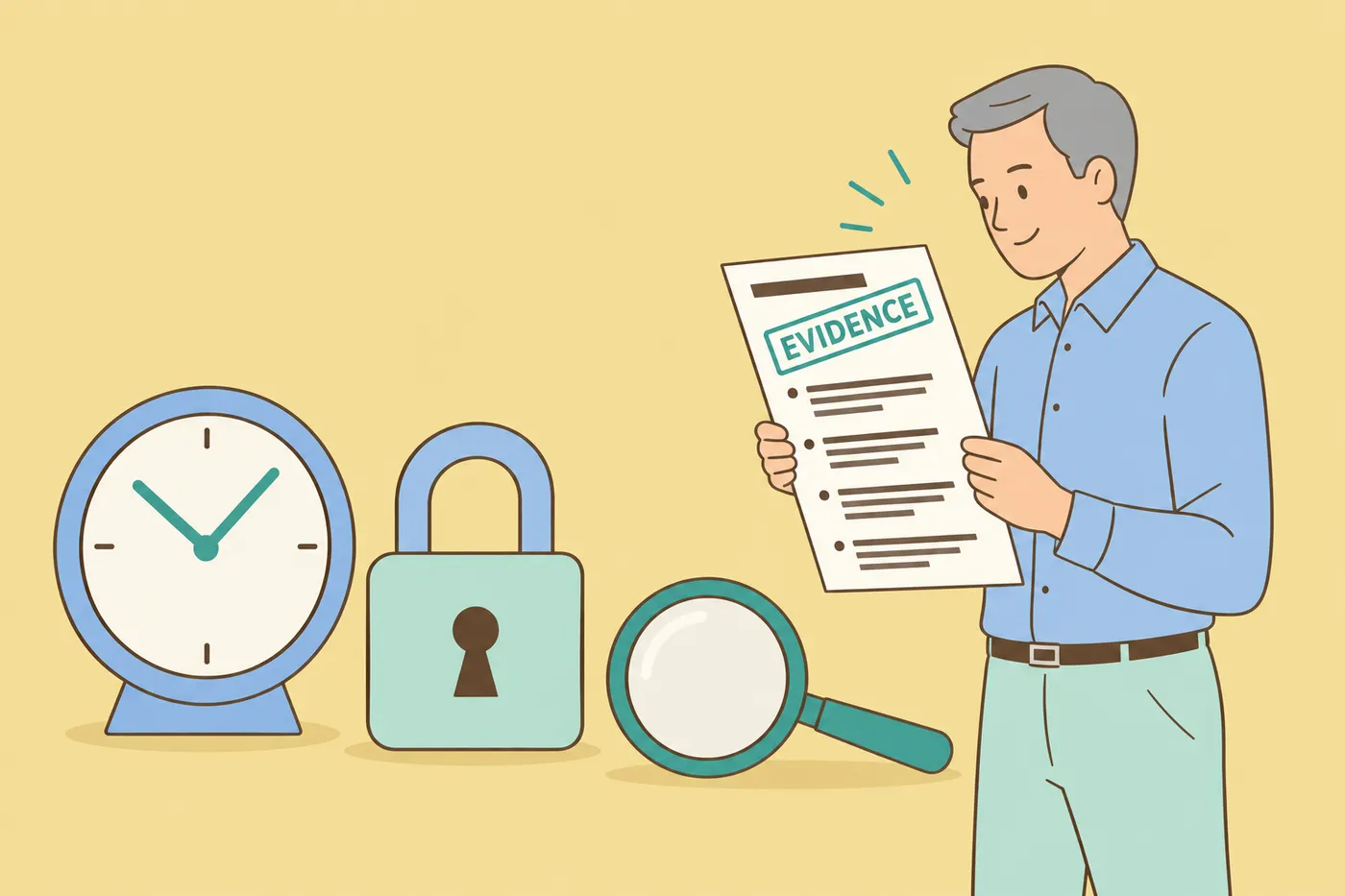
- Delivered [weekly/monthly deliverable] on schedule for [N consecutive months], including through [a concrete crunch: audit season, a system migration, a staffing gap].
- Identified and corrected a [type of error] in my own [report/order/submission] before it reached [the client/the regulator/production], then added a [named check] that cut corrections to [zero/N] over the following [period].
- Flagged a [blocker/dependency slip] [N days] ahead of deadline and proposed [the fallback you proposed], keeping [the deliverable] on its original date.
- Maintained [the tracker/log/handover doc] used by [N people/the whole shift] with [accuracy or currency standard], cited in [a review/supervisor feedback] as [the specific praise, quoted or paraphrased].
A weak-to-strong rewrite to calibrate against:
Weak: "Hardworking team player with a strong work ethic and great attention to detail."
Strong: "Processed [N] customer orders per week with [measured accuracy rate] accuracy; flagged and corrected a recurring pricing discrepancy that had caused [N] refunds per month."
The weak version makes three claims and proves none. The strong version makes one claim and proves it twice, and it gives the interviewer something to ask about, which is exactly what you want. For verbs that describe follow-through rather than decorate it, the sorted list in action verbs for a resume is a good source, and hard skills vs. soft skills on a resume covers the broader rule of where trait-like skills belong.
In Roleframe’s resume editor, live checks can flag wording to review while you edit. Signed-in accounts have a limited free allowance for AI features. If you ask Remi for a rewrite, supply the facts and review the proposed changes before applying them; keep only claims you can support.
Work ethic examples for interview answers
Interviewers rarely ask "do you have a strong work ethic?" because yes is the only answer anyone gives. They ask behavioral questions instead: tell me about a mistake, a missed deadline, a time you were overloaded. Your work-ethic evidence is the answer to all of them, structured as situation, your action, and a verifiable result or an honest learning.
Build one anchor answer from your best matrix row before any interview. A fictional example showing the structure; use only your own true experience in an interview:
"In my last role I owned the month-end inventory report. One month I found an error in a report I'd already submitted. I flagged it to my manager the same afternoon rather than waiting to see if anyone noticed, sent the corrected version with a note on what caused it, and added a cross-check to my process. The next six reports went out without a correction, and my manager later used that cross-check with the rest of the team."
Three things make that answer work. The result is checkable, a reference could confirm it. The mistake is real, which reads as integrity rather than weakness; an answer with no mistakes in it reads as evasion. And the workload is normal: no all-nighter, no heroic weekend. Framing boundaries as part of your work ethic is fine and often lands well, something like "I protect my focus hours so my commitments stay realistic, and when one is at risk, people hear it from me early." That is reliability stated as a system.
One placement rule: evidence like this belongs in your experience bullets and your prepared stories, never as "work ethic" on the skills list. The skills list is for skills a posting screens for; the behavior shows up in how you describe the work. For more question patterns and a way to build a bank of these stories, see behavioral interview questions and the structure guide in what the STAR method is.
Frequently asked questions
- What does good work ethic mean?
Good work ethic means consistently working with responsibility, reliability, integrity and care for quality, shown through observable behavior. That looks like meeting commitments, producing accurate work, communicating early about problems, handling confidential information properly, and taking initiative where it is appropriate. It does not mean working long hours; someone on a strict 9-to-5 can have an excellent work ethic.
- What is the difference between work ethic and work ethics?
Work ethic (singular) describes your personal habits toward doing work: dependability, diligence, accountability, commitment to quality. Work ethics (plural) usually means the moral standards governing workplace conduct, such as honesty, fairness, respect and avoiding conflicts of interest. A job posting asking for a "strong work ethic" means the first; a company code of conduct covers the second.
- What are the 10 best work ethics?
Ten broadly useful work-ethic qualities are integrity, reliability, accountability, diligence, punctuality, self-discipline, initiative, respect, teamwork, and commitment to quality. Which ones matter most depends on the role: accuracy and confidentiality are central in finance, safety and procedural compliance in healthcare and manufacturing. Each one only counts when you can point to a behavior that demonstrates it, not when it sits as a word on a list.
- How do I say I have a strong work ethic?
Don't say the phrase; show the behavior and attach a result. Instead of "I have a strong work ethic," say something like: "I'm dependable with deadlines. In my last role I delivered the weekly report on time for a full year, and the one week it was at risk, my manager knew three days ahead with a fallback plan." Name the behavior, give the specific instance, and make sure a reference could confirm it.
- Does a strong work ethic mean working long hours?
No. Evaluate reliability, honesty, responsible error handling and the quality of agreed work. Long hours alone do not establish any of those. Keep commitments realistic and communicate when workload or resources put them at risk.
- Should I put "work ethic" in my resume skills section?
No. Recruiters skim the skills section for specific, screenable skills, and "work ethic" or "hardworking" reads as filler because it can't be verified there. Put the evidence in your experience bullets instead: a deadline streak, a self-caught correction, an early escalation that saved a date. See resume skills section examples for what belongs on the list itself.
- How do interviewers actually assess work ethic?
An interviewer may ask about a mistake, a deadline at risk or a responsibility that required sustained follow-through. Prepare genuine examples with your actions, constraints and outcome. Ask references for permission and remind them of work they actually observed; do not coach them to repeat a manufactured account.

Turn your skills into proof.
A skills section helps most when your experience backs it up. In the editor, write each skill into a bullet about real work, then check the page against the posting before you send it.


