Communication Skills: Examples, Practice and Proof at Work
Communication skills explained with workplace examples, a peer self-assessment, a weekly practice plan, and evidence-first resume and interview advice.


On this page
Communication appeared in 34.2% of U.S. job advertisements across more than 600 occupations, according to a 2026 Federal Reserve Bank of Cleveland analysis, making it the most frequently requested soft skill in the dataset. The same analysis found demand for it rises with wage levels. The skill employers ask for most is also the one most resumes claim with a single adjective and zero evidence.
This guide treats communication as something you can observe, practice and prove. You'll find concrete examples mapped to the artifacts that back them up, a worked rewrite of a project-delay message across three channels, a ten-minute self-assessment you can run with a peer, a weekly practice plan, and resume and interview guidance built on evidence rather than adjectives.
What communication skills actually are
Communication skills are the ability to exchange meaning with another person and confirm it arrived. The second half is the part most people skip. Sending a message is easy; knowing it landed the way you intended is the skill.
Meaning moves through four channels at work. Written (email, chat, documents, briefs), spoken (meetings, calls, hallway conversations), visual (diagrams, charts, annotated screenshots) and nonverbal (tone, timing, body language, even how fast you reply). A skilled communicator makes four decisions on every message. Which channel fits the message, how to match the detail level to the audience, how to make the point unmissable, and how to confirm the other person understood.
Employers no longer treat this as one generic trait. A 2025 survey summarized by the Graduate Management Admission Council found global recruiters rank verbal communication, presentation skills, active listening, digital communication, conflict resolution, writing, negotiation and cross-cultural communication as distinct capabilities. The National Association of Colleges and Employers (NACE) places communication among the leading competencies employers seek in 2026, next to teamwork and critical thinking, and now lists AI skills alongside them rather than instead of them.
The idea that technical roles escape this requirement does not survive contact with job postings. A 2025 analysis of job descriptions found communication emphasized across 35 of 39 occupations studied, including roles in artificial intelligence. Employers in that analysis expect people to translate complex ideas for technical and nontechnical audiences, influence decisions and build trust. If you write code, analyze data or run infrastructure, the communication bar is higher, since your audience often cannot verify your work directly.
Communication skills examples: five workplace situations
An example is only useful if it names the audience, the message, the channel and the confirmation. "Good listener" names none of those. Here are five situations that cover most early-career and mid-career work, each with the observable action a manager would actually notice.
- A customer reply. Audience: a frustrated customer. Message: here is what happened and what happens next. Channel: email, because the customer needs a record. Confirmation: the customer does not write back asking the same question. The observable action is restating the customer's problem in your first sentence before answering it.
- A concise project update. Audience: a manager or sponsor with two minutes. Message: status, risk, and the decision you need. Channel: written, short, sent on a predictable schedule. Confirmation: the reader acts, or replies to the specific ask. The observable action is leading with the decision needed instead of the chronology.
- A visual explanation. Audience: someone who keeps asking how a process works. Message: the steps and who owns each. Channel: a diagram or annotated screenshot. Confirmation: the repeat questions stop. The observable action is choosing a picture because the text version failed twice.
- An escalation. Audience: the one person who can remove a blocker. Message: the risk, the deadline it threatens, and the specific help you need. Channel: whatever that person actually reads, fast. Confirmation: they act, or tell you why not. The observable action is naming the ask in one sentence rather than describing the problem and hoping.
- A written handoff. Audience: whoever picks up your work next. Message: open items, owners, and the first action to take. Channel: a document they can find without you. Confirmation: they start without messaging you. The observable action is writing it before you are asked.
Each of these produces something you can point to later. That is the matrix below: the task, the behavior someone could watch you do, the artifact that proves it, and the follow-up question an interviewer is likely to ask about it.
| Task | Observable action | Artifact you could share | Likely interview follow-up |
|---|---|---|---|
| Reply to a frustrated customer | Restate the issue in sentence one, answer the actual question, end with one named next step and a date | A redacted email thread that closed without a repeat contact | How did you know the customer understood the resolution? |
| Weekly project update | Lead with status and the decision needed; cut detail the reader cannot act on | A before-and-after version of the update, or a one-page decision brief | Who read this, and what changed after you shortened it? |
| Explain a process visually | Replace a step-heavy text explanation with a diagram matched to what the audience already knows | The diagram, plus the questions it stopped | Why a visual instead of a document here? |
| Escalate a blocker | Name the risk, the deadline it threatens and the specific help needed, to the person who can act | The escalation message and the response it got | When do you escalate versus keep trying yourself? |
| Written handoff | Document open items, owners and the first action; confirm the next person could start without you | The handoff document and the absence of follow-up questions | What did the next person still have to ask you? |
One message, three channels: a worked comparison
Channel choice is the communication decision people get wrong most often, so here is the same message worked through three ways. Dana, the project and the dates below are fictional. The pattern is not.
Dana runs a data migration that was due Thursday. Testing found a vendor rate limit, and go-live slips to Monday. Three teams are affected.
Chat, the weak version: "Heads up, migration's delayed, will keep you posted." Three failures in nine words. No length of delay, so the reader cannot judge severity. No cause, so the reader cannot judge whether it will slip again. No request, so nobody knows if they should do anything. The effective chat version fixes all three: "Migration slips from Thu to Mon. Cause: vendor API rate limits found in testing. No action needed from you; I'll confirm the new date by 3pm tomorrow." Chat is the right channel here only for people already deep in the project's context who need speed over record.
Email, when a record matters: the delay affects three teams, some of whom will care about this in two weeks. The subject line carries the change itself: "Data migration: new go-live Mon June 15 (was Thu June 11)." The body gives the cause in one line, the impact per team in one line each, and one clear ask: "Reply by Wednesday if the new date breaks anything on your side." The unclear-request failure mode in email looks like "let me know if you have any concerns," which assigns nobody anything by no date.
A meeting, when the delay forces re-planning: if one of those teams had a launch pinned to Thursday, an email announcing the slip would start an argument in a reply thread. The meeting version is a negotiation, so Dana brings two options with one tradeoff each and leaves with a recorded decision and an owner. Announcing bad news in a meeting without options is the most common escalation mistake; you spend the goodwill of interrupting calendars and deliver nothing decidable.
The effective version in every channel shares four parts. The change, the cause, the ask, and the next checkpoint. The weak versions all omit at least two.
A ten-minute self-assessment with a peer
You cannot grade your own clarity, because you already know what you meant. A peer can. This exercise takes ten minutes and one colleague.
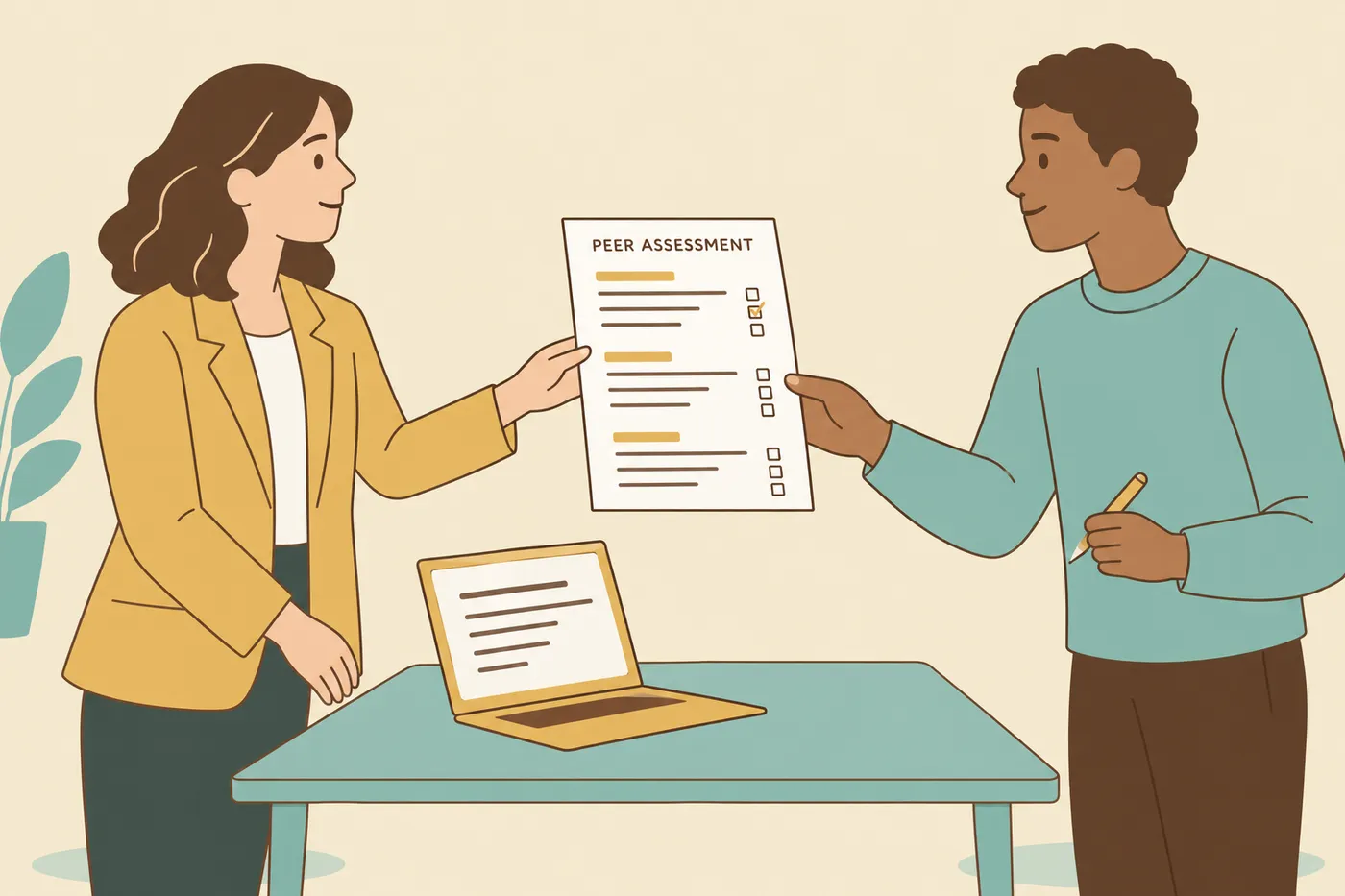
- Pick a real message you need to send this week, one that contains a requested action. Do not invent a rehearsed scenario; the point is to test your default, not your performance mode.
- Deliver it to a peer the way you plan to deliver it for real. Speak it if it is a spoken update, or have them read it if it is written.
- Ask them to restate, in their own words, what you said and what you want done, by whom, by when.
- Compare their restatement with your intent. Then ask one question: "Where did you almost lose me?"
Score the result on the rubric below. This is a descriptive practice rubric, not a validated test. It will not tell you how you compare to other candidates, and it should never appear on a resume as a score. What it tells you is which of the four dimensions to practice first.
| Dimension | Working | Needs work |
|---|---|---|
| Clarity | Your peer restates the core message in one sentence without checking back | They restate something adjacent, or have to ask what you meant first |
| Audience fit | They never stumble on a term; the detail level matches what they can act on | They ask what an acronym means, or repeat back detail they can do nothing with |
| Listening | You let the restatement finish, then address only the gap | You interrupt to correct, or re-explain everything instead of the missed part |
| Closure | They name the requested action, the owner and the deadline | They know the topic but cannot say what happens next or by when |
How to improve: a repeatable practice plan
Communication improves through reps on real messages, not through reading about it. Two drills cover most of the ground, and both produce artifacts you will reuse on your resume later.
Drill one: the decision brief rewrite. Take your longest recent status update and rewrite it into five parts. One line of situation. The decision needed. Two options with one tradeoff each. Your recommendation. The deadline for deciding. Target under 150 words. The discipline is in what you cut; everything the reader cannot act on goes. Keep the before and after. The pair is evidence.
Drill two: the 60-second handoff. Pick a task a colleague could take over tomorrow. Explain it out loud in 60 seconds: the current state, the next action, where everything lives, and the one risk to watch. Time yourself. Then have a peer restate it using the rubric above. Running over time almost always means you led with history instead of the next action.
Here is the weekly loop that makes the drills stick.
- Monday: rewrite one real message as a decision brief before you send it.
- Midweek: one timed 60-second handoff with a peer who restates it back.
- Every message with a request: end with one named action, one owner, one date. Note whether the reply addressed your ask or ignored it.
- Friday, five minutes: log the week's restatements and replies, and mark which rubric dimension each gap belonged to.
- Monthly: re-run the peer self-assessment and see which rubric column you land in now.
Keep a running document of verbatim reactions, good and bad. "Clearest update I've had this quarter" and "wait, what do you need from me?" are both data. That log becomes the raw material for the next two sections.
Communication skills for your resume
NACE's 2026 guidance to candidates is blunt on this point: demonstrate competencies with evidence rather than merely listing them. "Excellent written and verbal communication skills" in a skills section is a claim every other applicant also made, and recruiters read it as filler.
The fix is a bullet with three parts. The action you took, the context it happened in, and the evidence it worked. Build them from artifacts you already have: redacted briefs, customer correspondence, handoff documents and the feedback log from the practice plan above. Everything in brackets is a fact only you can supply. Never fill a bracket with an invented number; if you do not have the figure, state the outcome qualitatively.
- "Condensed a [12-page] requirements document into a one-page brief for [a nontechnical client group]; the brief was approved [without a revision round]."
- "Handled [number] customer escalations by email, restating the issue in the first reply and closing each thread with a named next step; [repeat contacts on resolved tickets fell / describe the outcome you can verify]."
- "Wrote the shift handoff template adopted by [team of N]; incoming staff stopped re-asking [the recurring question it answered]."
- "Chosen by [manager / the team] to present [quarterly results] to [audience] after peer feedback named my updates the clearest on the team."
A weak-to-strong rewrite makes the difference visible. Weak: "Strong communication skills; liaised with stakeholders." Strong: "Rewrote the weekly status update for [the sponsor group] as a one-page decision brief; sign-off on [the decision] came in [one meeting instead of three]." The weak version could belong to anyone. The strong version could only belong to you, and it hands the interviewer a question you want to be asked.
Your skills section still has a job, which is naming specific capabilities a posting screens for, such as "stakeholder updates," "technical documentation" or "customer escalation handling," while the proof lives in the experience bullets. See resume skills section examples for how to structure the list, and hard skills vs. soft skills on a resume for how the two kinds of claims carry different burdens of proof.
Adjective-only bullets are exactly what Roleframe's live checks flag while you edit: the resume editor underlines bullets that read like duties anyone in the role could list and shows where a number would carry the point, and you make each fix yourself, with Remi suggesting wording from facts you supply. Save the finished file as a PDF; it keeps your layout exactly as submitted.
Proving communication skills in an interview
Interviewers rarely ask "do you have communication skills." They ask for a time you explained something complex to a nontechnical audience, a time a message of yours was misunderstood, a time you disagreed with a stakeholder, or a time you delivered bad news. Each is a request for one real story.
Build the answer around three verifiable parts. The situation, which means the real audience and the real stakes. Your action, which means the communication choices you made: the channel you picked, how you structured the message, and how you confirmed understanding. The result, which means what the recipient did next, or an honest learning if it went badly. The misunderstood-message question is often the strongest one to prepare, because a candidate who can describe a failure and the specific change they made afterward is more credible than one who claims a clean record. The STAR method gives this answer its skeleton, and a story bank keeps you from improvising under pressure.
Mind the boundaries. Redact client names and figures when you describe an artifact, and never hand over a confidential document to prove a point; describing what it did and what changed is enough. If an interviewer asks for a work sample, offer something that is genuinely yours to share.
One placement rule ties this back to the resume. If a communication win has a context and an outcome, it belongs in an experience bullet, where it does double duty as resume evidence and interview material. The skills list entry is just the label; the bullet is the proof the label points to.
Frequently asked questions
- What is a list of communication skills?
The core list covers active listening, clear speaking, concise writing, asking and answering questions, giving and receiving feedback, presenting, explaining complex information, adapting to the audience, empathy, nonverbal awareness, persuasion, negotiation, conflict resolution and digital communication. The right combination depends on the role. Customer-facing work leans on listening and empathy, while project work leans on stakeholder updates and negotiation. On a resume, name the specific capabilities the posting asks for rather than the whole list.
- What does active listening mean?
Active listening means deliberately concentrating on the other person's message, reading both the words and the relevant nonverbal cues, and showing the message was understood. In practice it looks like not interrupting, asking clarifying questions, paraphrasing the speaker's meaning back to them, and responding to what was actually said rather than waiting for your turn to speak. The paraphrase is the observable part, which is why the peer self-assessment in this guide is built around restatement.
- What are the five pillars of effective communication?
There is no single accepted five-pillar standard; the answer depends on the framework being used. A practical workplace version is clarity (the message is understandable), concision (no detail the reader cannot act on), audience awareness (the level matches the listener), active listening with feedback (understanding gets checked), and alignment of verbal and nonverbal signals (tone and behavior support the words). If an interviewer asks, give your framework and an example of applying one pillar rather than reciting a list.
- How do I say I have great communication skills?
Replace the unsupported claim with a capability and a result. Instead of "I have great communication skills," say "I communicate clearly with technical and nontechnical stakeholders, summarize decisions, and tailor updates to the audience." Stronger still is evidence: "I led weekly cross-functional updates that clarified ownership and kept the project on schedule." The same rule holds on the resume, where NACE's 2026 guidance tells candidates to demonstrate competencies with evidence rather than merely naming them.
- What's the difference between written and verbal communication skills?
Written communication creates a record, can be revised before sending, and works across time zones, which is why it suits decisions, handoffs and anything someone will need to reference later. Verbal communication is immediate, carries tone, and allows real-time confirmation, which suits negotiation, bad news and anything likely to need back-and-forth. Employers list both as distinct requirements, so show each separately: an artifact like a brief or a redacted email proves the written side, while a story about a meeting, escalation or presentation proves the verbal side.
- Are communication skills still worth developing now that AI handles so much writing?
Yes, and the current evidence points the other way from the worry. NACE's 2026 employer research places AI skills alongside communication, teamwork and critical thinking, meaning employers evaluate communication together with technology fluency rather than replacing one with the other. The Cleveland Fed's 2026 analysis also found communication demand rises with wage levels. A tool can draft a message; deciding the channel, the audience fit and the ask, then confirming the message landed, is still on you.


Turn your skills into proof.
A skills section helps most when your experience backs it up. In the editor, write each skill into a bullet about real work, then check the page against the posting before you send it.


