Interpersonal Skills: Everyday Examples and Ways to Improve
What interpersonal skills are, concrete examples with observable actions, a practice plan, and how to show them on a resume and in interviews.

On this page
Interpersonal skills are the behaviors you use to build working relationships: checking that you understood someone, disagreeing respectfully and handing over work with enough context for the next person to continue.
This guide defines the term precisely, gives examples as observable actions rather than adjectives, walks one workplace scenario through three different responses, and shows how to turn what you actually do into resume bullets and interview answers you can defend.
What are interpersonal skills?
Interpersonal skills are repeatable behaviors that make other people able, and willing, to work with you. They show up in how you open a disagreement, how you respond to a correction, and whether a commitment you made last week actually got done.
Two distinctions keep the term useful. First, the skill is not the channel. Email, chat and meetings are places where interpersonal behavior happens; writing a tactful message and writing a message are different skills. Second, the skill is not a personality label. "People person" and "extrovert" describe temperament. Interpersonal skill describes what you do, which means a quiet colleague who paraphrases accurately and follows through has stronger interpersonal skills than a charming one who never closes a loop.
O*NET’s social-skills definitions distinguish negotiation, persuasion, coordination and social perceptiveness. This helps turn a broad label into behaviors you can practice. These capabilities can also transfer between roles; our transferable skills guide covers how to describe that connection.
Interpersonal skills examples: actions you can point to
Most lists of interpersonal skills examples stop at adjectives: empathetic, collaborative, tactful. An adjective cannot be practiced, and it cannot be verified by a recruiter or a reference. An action can.
The matrix below maps each skill to three things: the action someone could watch you do, the evidence it leaves behind, and the interview follow-up question that evidence invites. The third column matters most for job seekers. If a skill never produces an artifact, a document, a thread, a decision that changed, you will struggle to prove it later.
Use work records only with permission. Redact confidential details or describe the example instead of sharing the original artifact.
| Skill | Observable action | Evidence it leaves behind | Interview follow-up it invites |
|---|---|---|---|
| Active listening | You paraphrase the other person's point before answering: "So the concern is the deadline, not the scope?" | Meeting notes that restate decisions and who owns them | "Tell me about a time you misunderstood a request. How did you catch it?" |
| Empathy | You name the constraint the other person is under before proposing a fix | A reply where you acknowledged a teammate's deadline before asking for anything | "How do you work with someone who is under pressure?" |
| Tact | You deliver a correction in private, framed around the work rather than the person | Written feedback you gave that the recipient acted on | "Describe feedback you gave that was hard to hear." |
| Cooperation | You hand off work with context: current status, open blockers, where the files live | A handoff note or checklist another team actually used | "Walk me through a cross-team project you worked on." |
| Receiving feedback | You ask a clarifying question instead of defending: "Which part read as abrupt?" | A revision history showing you applied the change | "Tell me about criticism you disagreed with." |
| Boundary setting | You decline with an alternative: "I can't own this by Friday, but I can review a draft Thursday" | The message where you reset scope and the outcome both sides agreed to | "How do you handle an unrealistic request?" |
| Negotiation | You trade on priorities instead of positions: "If X slips a week, I can deliver Y now" | An agreed plan both sides signed off on | "Tell me about a compromise you helped reach." |
| Social perceptiveness | You notice who hasn't spoken and invite them in by name | A decision that changed because you surfaced a quiet objection | "How do you read the room in a tense meeting?" |
Use the matrix by picking the two or three rows your target role depends on most. A support role leans on active listening and receiving feedback; a coordinator role leans on cooperation and negotiation. Then collect one real artifact per row over the next month. Those artifacts feed the resume and interview sections below, and the work of collecting them is itself the practice.
One concern, three responses: a worked comparison
Here is the same situation handled three ways. Everything in this scenario is fictional, including the names, and any numbers are placeholders, not data.
The setup. Maya, a coordinator on another team, posts in a shared channel: "The new intake form is creating duplicate records and my team is spending every morning cleaning them up." You built the form.
Response 1: defend. "The form follows the spec we agreed on. If entries were submitted correctly there wouldn't be duplicates." This might even be true. It is still the weakest move, because it converts a solvable process problem into a status fight. Maya's options now are to escalate or to go quiet and route around you, and either way the duplicates continue.
Response 2: avoid. You reply "I'll look into it," and never come back to the thread. This feels polite and costs more over time. The cleanup work continues, Maya learns your commitments are decorative, and the next time she has a concern she takes it to your manager instead of you.
Response 3: address. "So the duplicates show up when someone resubmits after the form times out, is that right? Can you send me two examples? I'll check the timeout behavior and post what I find here by Thursday." Then you do exactly that, and close the loop in the same channel where the concern was raised.
Notice what the third response contains: a paraphrase that Maya can confirm or correct, a request for specifics instead of a verdict, a commitment with a date, and a public close. None of it requires charm. All of it is learnable, and the thread it produces is exactly the kind of artifact the matrix above describes. Months later, "traced a duplicate-records issue another team reported, fixed the cause, and closed the loop publicly" is a resume bullet with a witness.
A self-assessment you can run this week
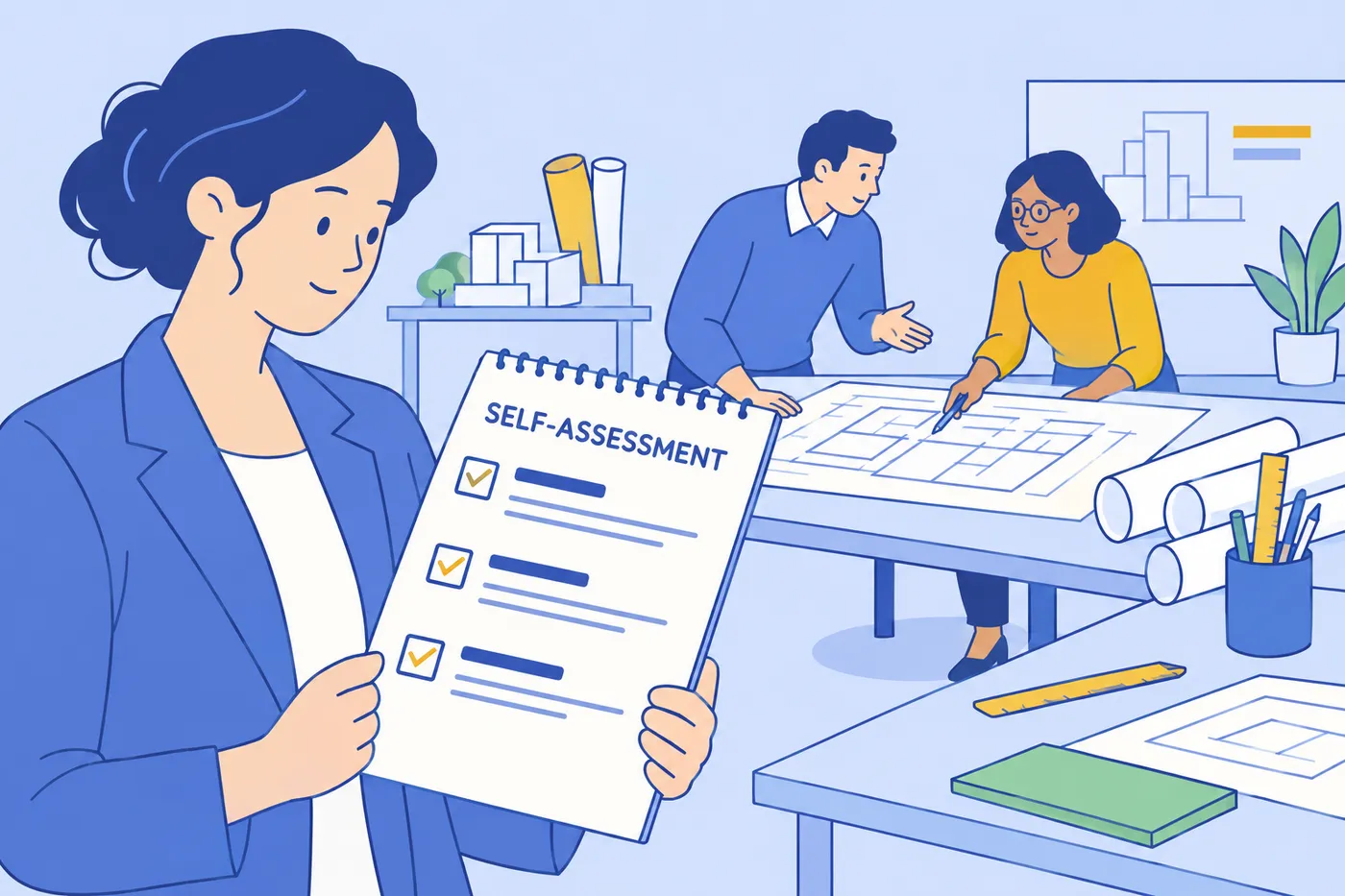
You cannot grade your own interpersonal skills in the abstract, and you should not try to score them like a personality test. Personality labels and clinical-sounding scores tell you nothing about behavior. What works is auditing one real conversation.
Pick a recent exchange that had some friction: a disagreement, a correction, a request you pushed back on. Answer four questions about what observably happened.
- Did you restate the other person's point before responding, and did they confirm you had it right?
- Did you ask at least one question before stating your position?
- What did your first sentence do: clarify, defend, or deflect?
- Did you do what you said you would, by when you said it?
Then add one outside data point. Ask a trusted colleague: "What is one specific moment where I made your work easier or harder?" Insist on a moment, not a trait. "You're a good communicator" tells you nothing you can act on. "Your handoff note in March meant I didn't have to ask you a single question" is evidence you can practice repeating and later put on a resume. Write the answer down verbatim in a running note file. That file is where your strongest resume bullets will come from.
How to improve interpersonal skills
Interpersonal skills improve through reps, not reading. The three drills below each target one behavior from the matrix, cost nothing, and fit inside conversations you were going to have anyway.
The paraphrase drill. In your next disagreement, restate the other person's point until they say "yes, that's it" before you answer. This is a practical listening exercise: attention, paraphrasing, clarification, and holding your judgment until you have confirmed what you heard. Expect it to feel slow. It is still faster than a week of arguing past each other.
The open-question drill. Ask one genuinely open question per meeting: "What would make this easier for your team?" rather than "This works for you, right?" Open questions surface the objection before it becomes a blocker, which is social perceptiveness you can do on purpose.
The feedback drill. The next time you receive feedback, ask a clarifying question before defending your work. If the issue is not urgent, take time to consider it. Correct a consequential factual error promptly and respectfully rather than applying an arbitrary waiting period.
Make it a repeatable loop rather than a one-time effort:
- Monday: pick one drill and run it at least once a day for the week.
- Friday: write down one moment the drill changed an outcome, or didn't, and why.
- Every two weeks: ask a colleague the one-specific-moment question again and record the answer word for word.
- Monthly: move the best moments and artifacts into your resume notes.
After a month you will have something most candidates never collect: dated, specific evidence of interpersonal behavior. The next two sections turn it into application material.
Interpersonal skills on a resume
The phrase "interpersonal skills" gives little context on its own. Pair it with an example that shows what you did. The evidence belongs in your experience bullets, where a skill becomes a specific episode with a result. The hard skills vs. soft skills guide covers the general rule; here is the pattern for interpersonal evidence specifically.
Build each bullet as action, context, evidence. Anything in [brackets] is a fact only you can supply; never invent it.
- From feedback you acted on: "Restructured the weekly status update after [client/manager] feedback that it buried decisions; [stakeholder group] stopped requesting follow-up calls."
- From a resolved misunderstanding: "Traced a recurring handoff error between [team A] and [team B] to an ambiguous intake field, rewrote the checklist with both leads, and reduced rework on [task] by [amount, if you have one]."
- From cross-team work: "Coordinated [project] across [number] teams using a weekly sync and a shared decision log that both leads kept using through launch."
- From a boundary or negotiation: "Renegotiated a [deadline/scope] conflict by proposing phased delivery; [what shipped, and when]."
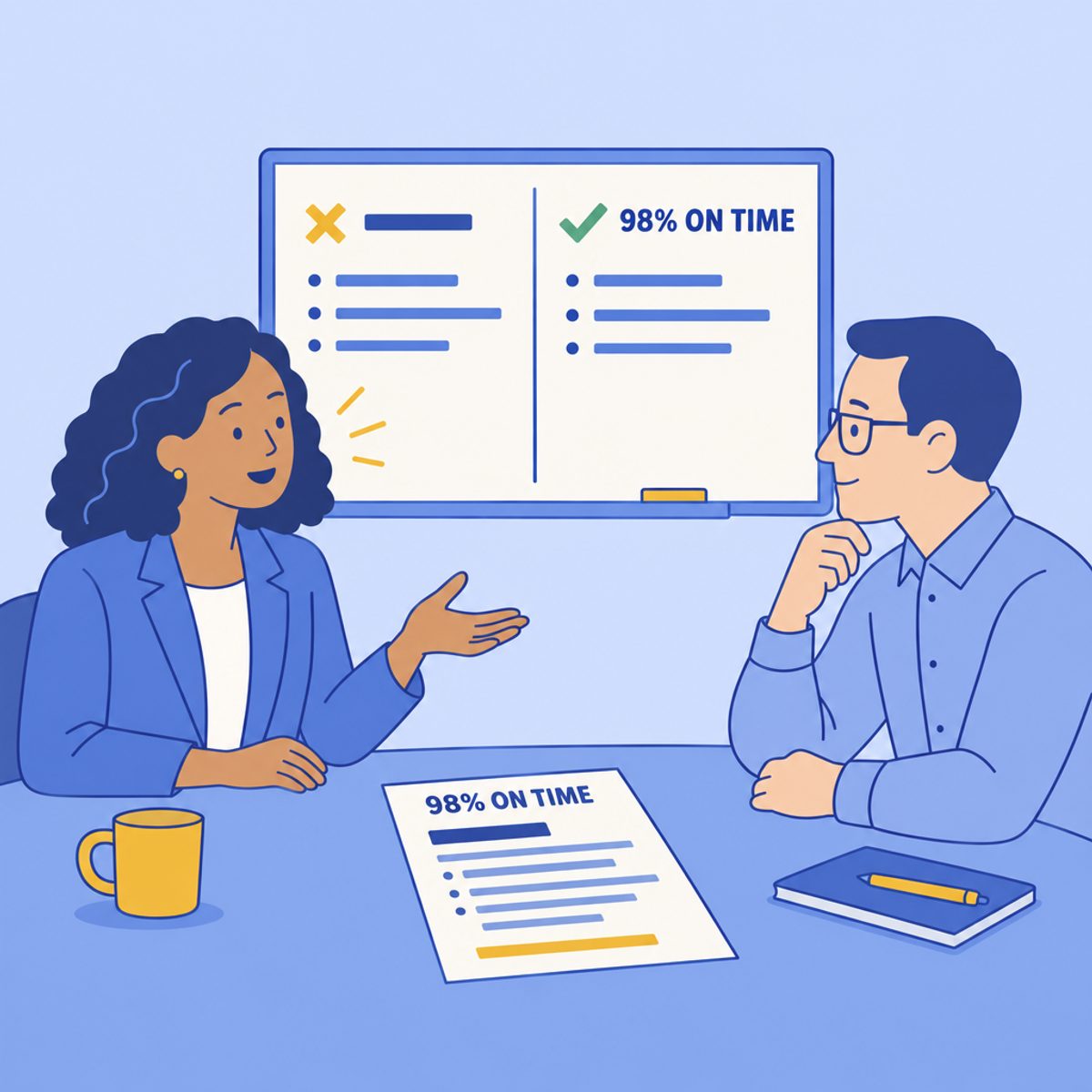
Here is the difference a rewrite makes. Weak: "Strong interpersonal and communication skills. Team player with a positive attitude." Strong: "Mediated a scheduling conflict between [design and engineering] by running a shared-priorities session; both releases shipped on the dates agreed in that meeting." The strong version names a situation, an action a reference could confirm, and an outcome. The weak version could appear on any resume on earth, which is exactly why recruiters skip past it.
In Roleframe’s resume editor, live checks can flag wording to review while you edit. Signed-in accounts have a limited free allowance for AI features. If you ask Remi for a rewrite, supply the facts and review the proposed changes before applying them; keep only claims you can support.
Proving interpersonal skills in an interview
Interviewers rarely ask "do you have interpersonal skills?" They ask the follow-up questions from the matrix: tell me about a conflict with a coworker, describe tough feedback you received, walk me through a time you had to persuade someone. Prepare one real episode per question type rather than a speech about your qualities. The behavioral interview questions guide has a full story-bank method; the short version for interpersonal evidence is a three-part answer.
Situation, one sentence. "Another team reported that a form I built was creating duplicate records." Your action, including the words you used. "I paraphrased the problem back to confirm I understood it, asked for two examples, and committed to an answer by Thursday." A verifiable result or an honest learning. "The cause was a timeout resubmission; the fix shipped that week and I posted it in the same thread where the concern was raised."
Two things make these answers land. First, admit your part. "I defended the spec at first, then realized that was the wrong opening" reads as self-awareness, which is itself the skill being tested. A flawless story reads as rehearsed. Second, keep the result verifiable: something a reference could confirm, or a concrete change in how you worked afterward. If the honest outcome was a lesson rather than a win, say the lesson plainly.
One placement rule ties this back to your resume: if an episode has a who, a when and an outcome, it belongs in an experience bullet, where the interviewer will find it and ask about it. The skills list is for searchable, checkable skills. Writing "conflict resolution" there and having no story ready is worse than not writing it at all.
Frequently asked questions
- What are examples of interpersonal skills?
Common examples include active listening, empathy, clear verbal communication, cooperation, negotiation, conflict resolution, assertiveness, giving and receiving feedback, relationship building, and adaptability. O*NET also lists persuasion and social perceptiveness as distinct interpersonal capabilities. The useful test for any item on the list is whether you can name an action behind it: "active listening" means paraphrasing a point and confirming it before you respond, not nodding along.
- What are the 7 interpersonal skills?
There is no official list of exactly seven; different employers and educators draw the line differently. A practical seven-skill set is active listening, empathy, verbal communication, nonverbal awareness, teamwork, conflict resolution, and adaptability. Some frameworks swap in negotiation, leadership, assertiveness, or feedback. Pick the set your target role actually depends on rather than memorizing anyone's seven.
- Can a quiet person have strong interpersonal skills?
Interpersonal skill does not require being the most talkative person. Confirming requirements, giving a clear handoff, inviting a colleague’s view and following through are observable actions. Choose communication methods that suit both you and the people you work with.
- How do I describe a workplace conflict in an interview?
Use a real disagreement where you can explain the issue, your part in it, what you said or changed, and the outcome. Avoid blaming the other person or claiming that every conflict ended perfectly. A specific lesson can be useful evidence too.
- Are interpersonal skills the same as soft skills?
Interpersonal skills are the part of soft skills involving other people, such as listening, cooperating and negotiating. Soft skills can also include individual thinking and self-management capabilities. O*NET’s definitions describe the category in terms of both interpersonal and thinking skills.
- Should I list interpersonal skills in my resume skills section?
Include relevant wording from the posting when it describes you accurately, then support it with an experience bullet. A resolved misunderstanding, a clearer handoff or feedback you acted on explains more than the broad label alone.


Turn your skills into proof.
A skills section helps most when your experience backs it up. In the editor, write each skill into a bullet about real work, then check the page against the posting before you send it.


