Signs You Will Get the Job After an Interview (and the Myths to Ignore)
Interpret interview follow-ups without guessing the result. Learn what next steps, reference requests and offer terms tell you, plus how to follow up.


On this page
A scheduled next round, a reference request or a discussion about availability can show that a hiring process is moving forward. None tells you that an offer is certain. A friendly conversation, a long interview and “we’ll be in touch” are even harder to interpret.
Separate progress in the process from an actual offer with clear terms. An offer can still have conditions to satisfy. This guide helps you record what the employer actually said, decide what to ask next, and keep your search moving without trying to turn body language into a prediction.
- An invitation to a specific next interview or assessment
- A request for references or further information
- Questions about your availability, notice period or expectations
- An introduction to people involved in the hiring decision
- A stated decision date or explanation of the remaining steps
- An explicit offer that identifies the role, terms and any conditions
For each signal, ask: What has changed, what remains unknown, and is there an action for me? A calendar invitation means you should prepare for another conversation. A reference request means you should contact your referees. Neither is a reason to assume the hiring decision is complete.
The encouraging signs, and what each one actually tells you
Concrete actions are easier to interpret than tone because they tell you what happens next. They do not reveal where you rank against other applicants. Use them to plan your next action, not to calculate an unsupported probability of an offer.
They talk about concrete next steps
“We would like you to meet the director on Thursday” tells you more about your next task than “great speaking with you.” Confirm the time, format and participants, and ask what the next discussion will cover.
A decision date is useful even when there is no further interview. Write it down so you know when to follow up. If another round is scheduled, you have advanced to that stage; other candidates may have advanced too.
They ask about your start date or notice period
Availability questions help the employer understand practical constraints. They may be part of the standard screen for every applicant, so the question alone does not establish that you are a finalist.
Give an honest answer based on your commitments: “I would need to confirm my notice requirements before agreeing a start date.” If you have another offer deadline, share the actual date without inventing competing offers or implying that you can start sooner than you can.
They ask for references
A reference request tells you the employer wants information for its process. The timing differs: an application form may collect names early, while another employer waits until later.
Ask whether references will be contacted now and whether the employer needs any particular type of referee. Obtain permission before sharing someone's details. If you need discretion with your current employer, raise that before the contact happens rather than assuming the request means an offer is already agreed.
They introduce you to the team or start selling the job
A team introduction gives you a chance to understand the work and ask questions. It might be part of every candidate's visit or an additional step. You do not need to decode whether it was spontaneous: ask who the people are and how the conversation fits into the process.
Use a discussion about projects, benefits or onboarding to evaluate the job. Clarify the responsibilities, reporting line and expectations. Positive descriptions are useful information about the role; they are not a substitute for an explicit offer.
So how do you know if the interview went well?
Review the substance of the conversation separately from the outcome. Did you answer the questions, explain your own contribution and ask about the work? Note one answer you would improve and any useful information for a later round.
A reserved interviewer is not proof of rejection, and a warm interviewer is not proof of selection. In a structured process, questions and scoring can be deliberately consistent. The U.S. Office of Personnel Management's guidance describes asking candidates predetermined questions and using common rating standards. A scripted question therefore need not mean the interviewer lacks interest.
If you did not have time for your questions about the role, ask the recruiter how to get them answered.
Myths and mixed signals: the "signs" that don't mean much
The table gives alternative explanations, not a ranking of your chances. None of these observations establishes a hiring decision by itself.
| The "sign" | Why it feels like a yes | What it can also mean |
|---|---|---|
| The interview ran long | They want to hire me | Your questions, the complexity of the discussion or loose scheduling may explain the extra time |
| The interview ran short | They rejected me, or already chose me | The format may be brief, the interviewer may have a hard stop, or a topic may need later follow-up |
| Small talk and laughing | I am the preferred candidate | The interviewer may aim to put every applicant at ease |
| “You would fit in here” | The decision is made | It expresses a positive impression without specifying an offer |
| “We will be in touch” | An offer or rejection is coming | The phrase leaves the next step unspecified; ask about the timeline |
| “When you join” instead of “if” | They accidentally revealed the result | Conversational wording is not a clear offer of employment |
| Lots of notes, or very few | My answers were especially good or bad | Note-taking can reflect the interviewer’s method or the assessment format |
A quick reply can be useful without being an offer. Read what it actually asks: scheduling an assessment, confirming a detail and offering employment are different actions. Likewise, an unanswered message does not reveal the reason for the delay.
Keep a simple record with three columns: confirmed fact, unknown, and next action. For example: “Reference details requested”; “whether this is the final check”; “ask when referees will be contacted.” This keeps a real task separate from an interpretation.
What unclear or negative updates actually tell you
A direct update is more informative than a change in tone. Distinguish a stated decision from uncertainty:
- “The role has been filled”: treat that vacancy as closed unless the employer explains another opportunity.
- “Hiring is on hold”: ask whether there is a revised timeline, but do not rely on the role resuming.
- “We are still interviewing”: the process remains open; it does not tell you your ranking.
- No clear next step: ask for the expected timeline rather than assigning a meaning to the silence.
- A stated requirement you do not meet: clarify whether it is essential, without claiming a qualification you do not have.
If the promised date passes, send a short status request. Delays can arise for different reasons, but you do not know which applies until the employer explains. Avoid repeatedly contacting several interviewers with the same question.
If you receive a rejection, you can thank the contact and ask whether feedback is available. Use any specific feedback to improve the next application, while recognizing that a rejection does not necessarily identify a flaw in your interview.
Red flags about the employer
Use the interview to evaluate the employer as well. If two interviewers describe different reporting lines or responsibilities, ask for clarification. If the offer deadline would leave too little time to understand the terms, request more time and explain what you need to review.
A vague answer is a reason for a follow-up question, not proof of hidden turnover or bad intentions. For example: “I heard different descriptions of the first project. Who would set my priorities, and what would success look like in the first month?” Record whether the answer resolves the uncertainty.
After the final interview: distinguish checks from an offer
Reference checks, availability questions and compensation discussions may occur late in a process, but they do not necessarily mean an offer has been made. Ask directly what remains before a decision.
When an offer is made, review the role, pay, location, start date, acceptance deadline and any conditions. Ask for written confirmation so there is a record you can check. Do not assume an oral offer has no legal effect: for example, Acas guidance in Great Britain explains that clear terms offered and accepted verbally can create a contract. Rules differ by jurisdiction.
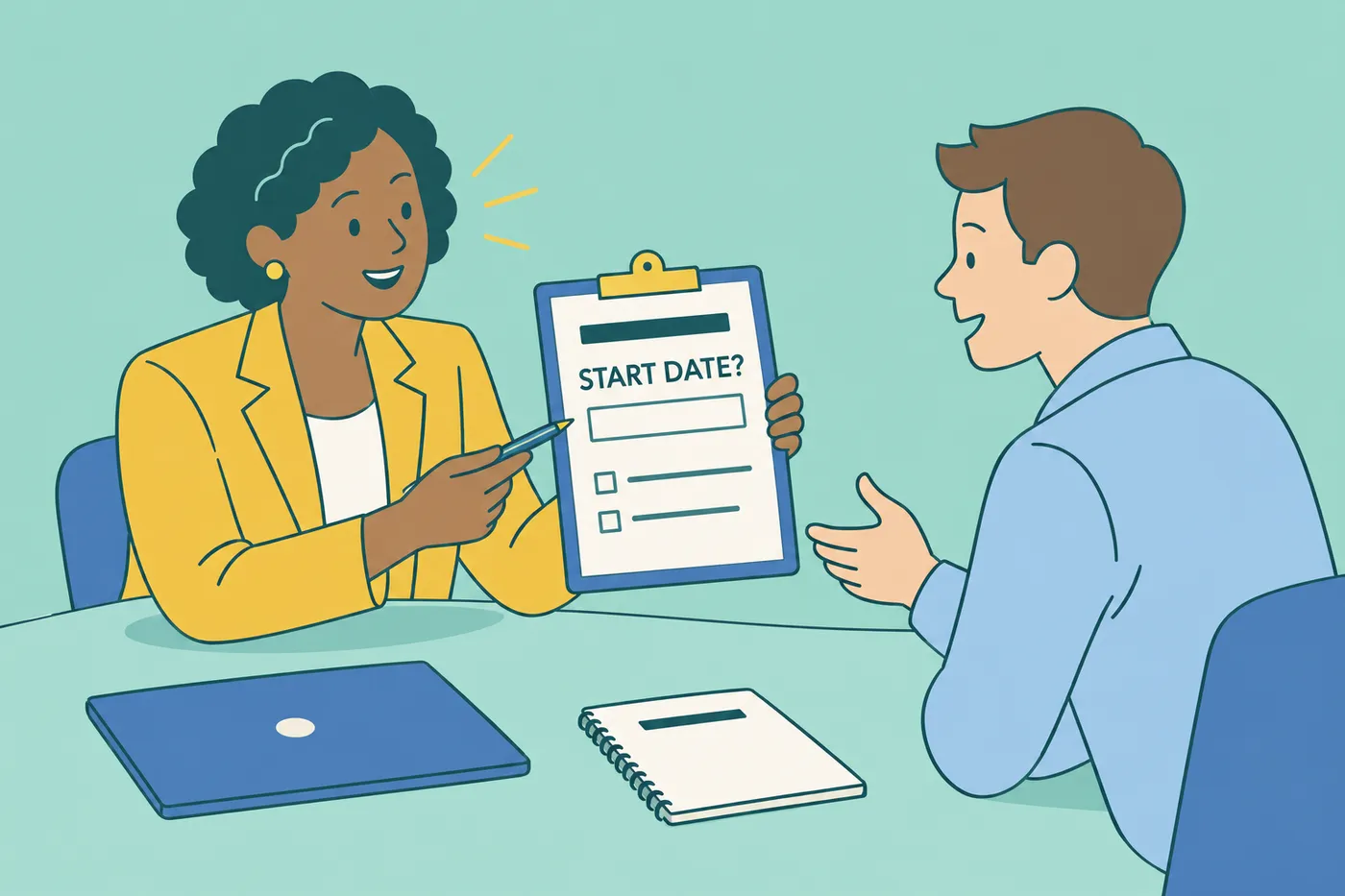
- Ask the employer to confirm the offer terms and any outstanding checks in writing. Resolve differences between verbal and written terms before making decisions.
- Clarify which conditions remain and who will confirm they have been met. A written document can still describe a conditional offer.
- Before resigning, relocating or withdrawing from other processes, review the confirmed arrangements and your existing obligations. An offer is a major decision, not a signal to interpret from tone.
How long after an interview do you get an offer?
There is no reliable universal wait between a final interview and an offer. Use the employer's stated timeline rather than an unsourced average. If you have a deadline for another opportunity, explain it accurately and ask whether an update is possible.
At the end of an interview, ask: “What steps remain, and when should I expect an update?” If there is no date, ask when a follow-up would be useful.
After an agreed date passes, a brief message can say: “Thank you again for discussing the analyst role on Tuesday. You mentioned an update by Friday. I remain interested; could you share whether the timeline has changed?” This is a fictional template—replace the role and dates with the facts of your application.
What to do while you wait
Make the waiting period manageable by setting a follow-up date and focusing on tasks you can complete.
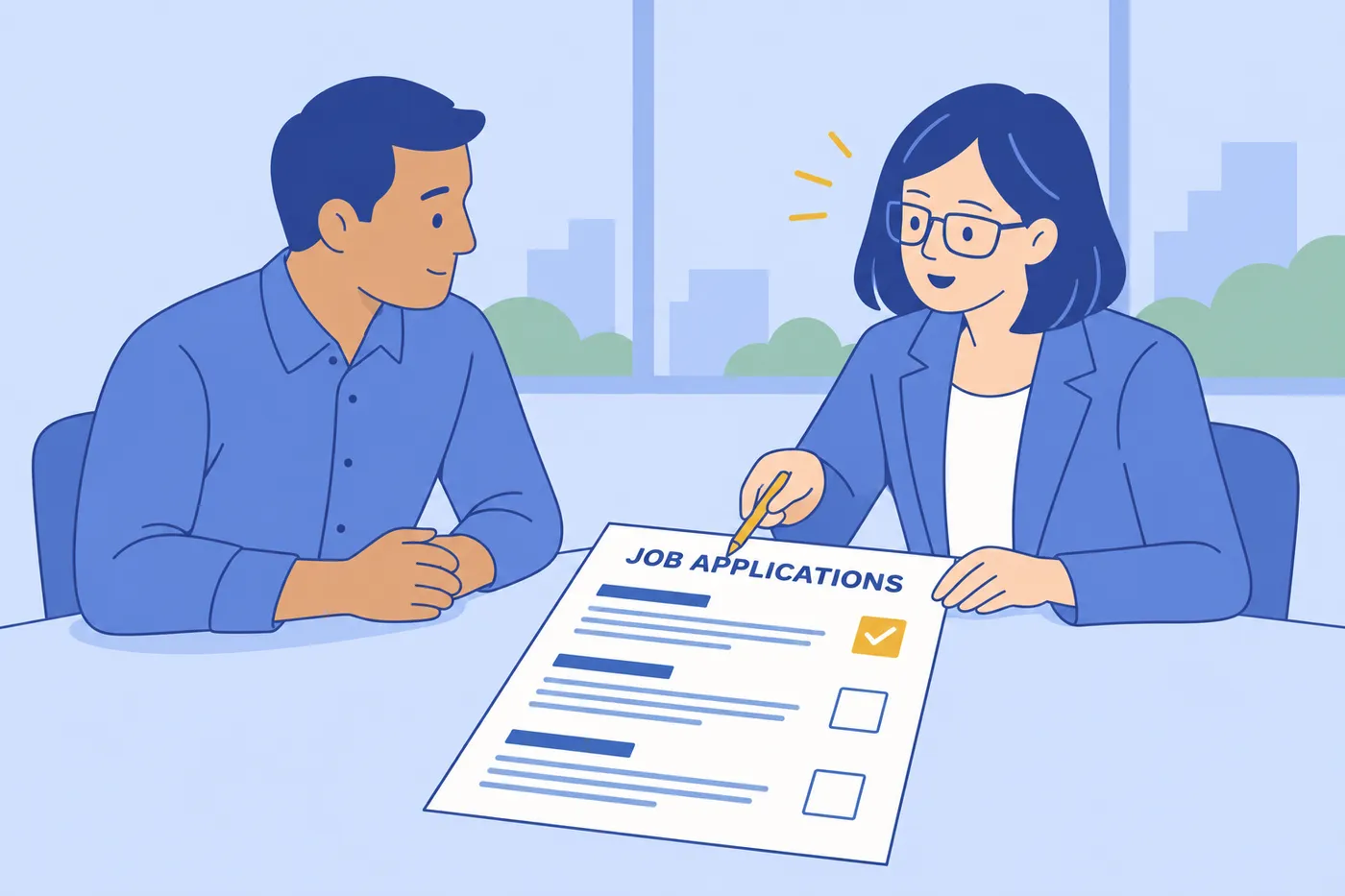
- If appropriate to the process, send a short thank-you message that mentions something specific from the conversation. Follow any instructions limiting contact.
- Record the promised update date. Send a polite status request after it passes, rather than interpreting every quiet day.
- Continue relevant applications while the outcome is uncertain, at a pace you can sustain. Be truthful about other deadlines and commitments.
- Save the posting, resume version, interview notes and next action together. Keep confidential assessment materials private.
Our thank-you email guide and follow-up templates offer wording you can adapt. A job-search spreadsheet or tracker can keep the dates in one place.
What is the 30-60-90 rule in an interview?
A 30-60-90 day plan is a planning framework for the first three months in a role. Receiving a request for one does not establish that you have been selected. Clarify the scope and prepare a proportionate response, with assumptions stated rather than promises based on information you do not have.
This fictional account-manager outline shows one way to structure it:
- First 30 days: learn the product, review assigned accounts, understand handoffs, and agree priorities with the manager.
- By day 60: take ownership of agreed customer conversations, document account risks, and check progress with the team.
- By day 90: review outcomes from that work and propose the next set of targets using actual account information.
Adapt the plan to the role and resources available. Avoid guaranteeing a sale or percentage improvement before understanding the business.
Keep a record of facts and next actions
For each application, save the last confirmed update and the next date that matters. “Second interview on Thursday” and “decision expected next week” are actionable notes. “The interviewer seemed impressed” is an impression, not a status.
You can use a spreadsheet, calendar or Roleframe's job tracker. Choose something you will keep current. Review one application at a scheduled time, then return to preparation or other opportunities rather than continually checking your inbox.
Frequently asked questions
- How do I know whether I impressed the interviewer?
You can review how clearly you explained your work, but you cannot infer the decision from warmth, eye contact or note-taking. A specific next-step invitation tells you the process is advancing; it does not reveal your ranking.
- Does a reference request mean I got the job?
No. References may be collected or checked at different stages. Ask when they will be contacted and what steps remain. Get permission from your referees before sharing their details.
- Is a long interview a good sign?
It may reflect an engaged discussion, but it can also reflect scheduling, questions or the complexity of the role. Length alone does not establish an outcome. Record any explicit next step instead.
- Does “we will be in touch” mean rejection?
No. The phrase does not specify either an offer or a rejection. Ask when an update is expected and who you should contact if the date passes.
- How long should I wait after the final interview?
Follow the employer’s stated timeline. If no timeline was given, ask when to expect an update. There is no universal number of days after which silence proves rejection.
- Does an offer have to be written to count?
Not necessarily. Legal effect depends on the jurisdiction and circumstances; Great Britain’s Acas guidance explains that a verbal agreement can create a contract. Ask for written confirmation of the terms and conditions so you can review them clearly.
- Should I keep applying while I wait?
Continuing suitable applications can preserve options while the outcome is uncertain. Choose a sustainable pace. Before accepting or withdrawing from a process, review your actual commitments and any offer conditions.



Ready to start your new resume?
Writing a resume takes time, and even a polished one can miss what a hiring manager is looking for. Roleframe helps you build a clear, ATS-safe resume in minutes and tailor it to the job you want.


