Situational Interview Questions: Sample Answers by Scenario
Situational interview questions ask what you would do, not what you did. Get one answer structure plus full sample answers by scenario and by job.


On this page
A situational interview question asks what you would do in a hypothetical work scenario. A behavioral question asks about something you did. The U.S. Office of Personnel Management's structured-interview guidance distinguishes these formats and explains how questions can be tied to job competencies.
The sample answers below demonstrate possible reasoning, not an employer's scoring key. Every speaker, incident and outcome in them is fictional. Adapt the approach to the role and instructions, and use a past example only if it really happened to you. There is no phrase or answer structure that guarantees a favorable hiring decision.
A practical structure for situational answers
Use these prompts to organize your thinking. You may need to change their order when the scenario includes immediate danger or an instruction to follow a particular procedure.
- Clarify the facts or state the assumptions that affect your decision.
- Describe the first action you would take and why it has priority.
- Explain who you would involve and what you are authorized to do.
- Describe how you would confirm the outcome and follow up.
- If useful and invited, add a brief real example of similar reasoning. You do not need to invent a past experience to answer a hypothetical.
Keep the answer focused on the scenario asked. A past example can illustrate your reasoning, but it is optional and should not replace the hypothetical answer. If you have no relevant example, explain how you would learn the procedure or get appropriate help.
Situational vs. behavioral: the same skill, asked two ways
Interviewers often probe the same competency with both formats, so it helps to see them side by side.
| Skill being tested | Situational version | Behavioral version |
|---|---|---|
| Handling deadlines | "What would you do if you realized you were going to miss a deadline?" | "Tell me about a time you missed a deadline." |
| Working through conflict | "How would you handle a coworker who disagreed with your approach?" | "Tell me about a time you disagreed with a coworker." |
| Owning mistakes | "What would you do if you found an error in work you had already submitted?" | "Describe a mistake you made and how you fixed it." |
| Prioritizing | "What would you do if two urgent tasks landed at once?" | "Tell me about a time you had to juggle competing priorities." |
For a past event, STAR can organize the context: Situation, Task, Action and Result. Explain your own contribution while accurately crediting the team. See our guide to STAR method interview questions and our behavioral interview examples.
For a hypothetical, keep your verbs conditional: "I would check," "I would notify" or "I would ask." Describe the outcome you would aim to confirm rather than claim that an untested plan would definitely succeed. Interview formats and scoring vary; listen to the question and any constraints the interviewer supplies.
People scenarios: full sample answers
"What would you do if a coworker kept missing their part of a shared task?"
A possible focus: communication, task ownership and the shared deadline.
Fictional sample answer: "For an ordinary handoff delay, I'd ask my coworker what is blocking the task and explain which part of the deliverable depends on it. We'd confirm the owner, next step and a realistic handoff time. I'd keep the project owner informed if the deadline was at risk. If the issue persisted, I'd ask our manager to help resolve priorities or capacity, using the specific missed handoffs rather than assumptions about motivation. If the delay involved safety or another urgent risk, I'd follow the required escalation process immediately."
Watch for: promising to fix someone else's workload yourself, or delaying an escalation the situation requires.
"How would you handle an upset customer asking for something outside policy?"
A possible focus: listening, policy and authority to offer a remedy.
Fictional sample answer: "I'd listen to the customer's concern, acknowledge the inconvenience and confirm what they want resolved. I'd check the applicable policy and the options I am authorized to offer. If an exception required approval, I'd explain that and contact the appropriate person without promising the outcome. I'd tell the customer what will happen next and when to expect an update. If the conversation became threatening, I'd use the organization's safety process."
Watch for: offering a refund, credit or exception before checking whether you can authorize it.
"What would you do if your manager gave you an instruction you thought was wrong?"
A possible focus: professional disagreement and recognizing a risk that requires escalation.
Fictional sample answer: "I'd first confirm the instruction and its purpose. If it was an ordinary judgment disagreement, I'd explain the risk I saw, give the relevant evidence and suggest an alternative. Once the authorized decision was clear, I'd carry it out within my responsibilities. If I believed it involved an unsafe, unlawful or prohibited action, I would not assume a manager's instruction made it acceptable. I'd raise the concern promptly through the appropriate safety, compliance or other reporting channel and seek guidance before proceeding."
Watch for: confusing a preference about how to work with a situation requiring a formal report or immediate action.
"What would you do if a teammate took credit for your work?"
A possible focus: documenting contributions and resolving a dispute appropriately.
Fictional sample answer: "I'd check what was said and gather the work records so I understood the situation. If it felt appropriate and safe, I'd speak privately with my teammate: 'I prepared the analysis discussed today, and I want to make sure the contribution is clear.' I'd ask how we can credit the work accurately in the next update. If it continued, or a direct conversation was not appropriate, I'd bring the facts to my manager or the relevant support channel."
Watch for: assuming intent without evidence or treating a private conversation as mandatory in every conflict.
Workload and deadline scenarios: full sample answers
These scenarios give you a chance to explain priorities, capacity and communication. Name the trade-off instead of assuming you can satisfy every request at once.
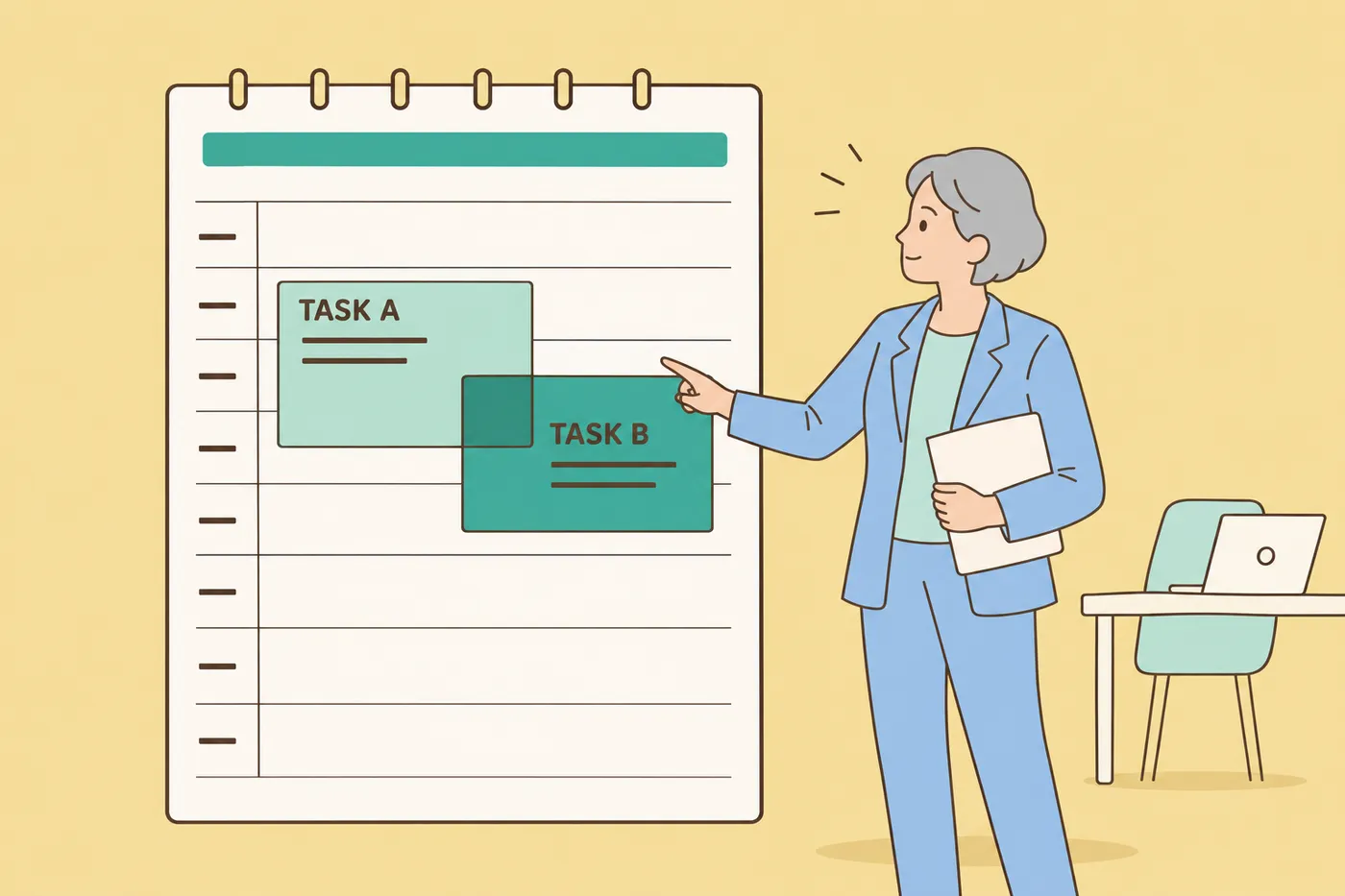
"Two managers give you urgent requests at the same time. What do you do?"
A possible focus: prioritization and keeping requesters informed.
Fictional sample answer: "I'd clarify the actual deadlines, what each request affects and how long the work is likely to take. If I could meet both, I'd confirm the order. If I couldn't, I'd make the conflict visible to the people responsible for the priorities and offer realistic options, such as reducing scope, moving a deadline or finding another owner. I'd confirm the agreed plan with both managers and flag any new risk promptly."
Watch for: accepting incompatible deadlines without explaining the capacity conflict.
"You notice a mistake in work you already sent. What do you do?"
A possible focus: ownership, proportionate response and correcting the record.
Fictional sample answer: "I'd quickly assess the error and who could be affected. If it posed an immediate risk, I'd alert the appropriate owner while verifying the details rather than wait for a complete investigation. I'd explain what is known, what needs correction and whether anyone should pause action based on the earlier version. I'd issue the correction through the approved process, then check the cause and whether an additional review step would help."
Watch for: hiding the error or silently replacing material people may already have relied on.
"You get a task with unclear instructions and a close deadline. What do you do?"
A possible focus: working with uncertainty and making assumptions visible.
Fictional sample answer: "I'd send specific questions and my current understanding of the requested outcome. While waiting, I'd work on the parts that are clear, authorized and reversible. I'd share an early draft if that could reveal a misunderstanding. If an unanswered question affected safety, compliance, cost or an irreversible decision, I'd escalate or pause that part instead of guessing. I'd also explain how the missing information affects the deadline."
Watch for: treating a deadline as permission to make a high-risk assumption.
"You're assigned a tool or process you've never used. What do you do?"
A possible focus: learning and recognizing the limits of your current knowledge.
Fictional sample answer: "I'd explain which parts are unfamiliar, ask about required training and read the approved guidance. If available, I'd practice on a low-risk example or training environment, then ask an experienced colleague to review the result. I'd confirm any permissions or checks needed before using the tool on live work. If I needed more time or support, I'd raise that early rather than promise competence I hadn't demonstrated."
Watch for: experimenting in a live system with data or actions you are not authorized to change.
Judgment and ethics scenarios: full sample answers
For ethics, safety and confidentiality scenarios, explain how you would recognize the risk, stay within your authority and reach the appropriate reporting channel. These examples are interview practice, not substitutes for the applicable law, training or organizational policy.
"What would you do if you saw a coworker break a safety or data rule?"
A possible focus: prompt reporting and avoiding further harm.
Fictional sample answer: "I'd assess whether anyone was in immediate danger or whether data exposure was continuing. I'd follow the emergency or incident procedure and alert the appropriate safety or security contact promptly. I'd take only containment steps I was trained and authorized to take, record the facts and avoid distributing sensitive material further. I'd ask for guidance if the reporting route was unclear. I would not wait for a repeat incident before making a report required by policy."
Watch for: making a private conversation with the coworker a prerequisite for reporting an incident.
"A customer offers you a gift. What do you do?"
A possible focus: conflicts of interest and relevant gift rules.
Fictional sample answer: "I'd acknowledge the gesture and explain that I need to check the applicable rules before accepting. I'd consult the organization's gift and conflict-of-interest policy, including any reporting or approval requirement. If it was prohibited or could improperly influence a decision, I'd decline and follow the reporting process. If I was unsure, I'd ask the designated compliance contact rather than invent a monetary threshold."
Watch for: assuming a small gift is automatically acceptable or deciding based only on the giver's apparent intent.
"You're asked to cut a corner to hit a target. What do you do?"
A possible focus: distinguishing an authorized process change from a prohibited shortcut.
Fictional sample answer: "I'd clarify exactly which step I was being asked to skip and whether it was mandatory. For an optional process step, I'd explain the risk and ask the authorized owner to decide on a documented alternative. I would not omit a required safety or compliance check, or record work that was not done, simply to meet a target. I'd raise that concern through the appropriate channel and propose an honest revised timeline or scope."
Watch for: assuming a target owner's approval can override a legal or mandatory control.
"Confidential information is sent to you by mistake. What do you do?"
A possible focus: limiting access and using the incident process.
Fictional sample answer: "I'd stop reading once I recognized the mistake and avoid forwarding or using the contents. I'd notify the sender and the appropriate security or privacy contact according to policy. I'd ask how to contain and handle the material, including whether it needs to be retained for incident investigation or securely removed. I would not independently delete evidence or assume the sender alone could decide how to handle a reportable incident."
Watch for: sharing the contents more widely or deleting material before obtaining the appropriate handling instructions.
Situational questions by job
The following fictional prompts adapt the same reasoning to different roles. They are practice examples, not predictions of a particular employer's questions.
| Role | Practice question | Useful points to explain |
|---|---|---|
| Customer service | "A customer demands a refund the policy doesn't allow." | Acknowledge first, lead with what you can do, and route the exception to someone who can approve it instead of promising it yourself. |
| Retail and hospitality | "The register freezes while a line builds." | Explain the disruption, request backup and use an authorized fallback. Do not bypass payment or cash-handling controls. |
| Executive assistant | "Two executives are booked into the same slot." | Clarify priorities and constraints, offer feasible rescheduling options, confirm changes with the affected people and check how the conflict arose. |
| First-time manager | "A team member keeps underperforming." | A private conversation first to find the cause (skills, workload, or unclear expectations), then specific goals with dates, regular check-ins, and a written record. |
| Software and IT | "You find a bug just before a release." | Assess impact, reproduce or document the issue safely, notify the release owner and recommend a response. A regression test can help detect the same failure again; it cannot guarantee the bug never returns. |
| Healthcare front desk | "A family member is upset about wait times." | Acknowledge the concern, seek an update from the appropriate staff and share only information you are authorized to disclose. Refer clinical concerns to clinical staff. |
For deeper role preparation, including the behavioral and technical questions that run alongside these, see the dedicated guides to customer service interview questions, administrative assistant interview questions and nursing interview questions and answers.
Good situational questions to ask, and what theirs reveal
You can also ask scenario-based questions to understand how the team works. Adapt these to what has already been discussed:
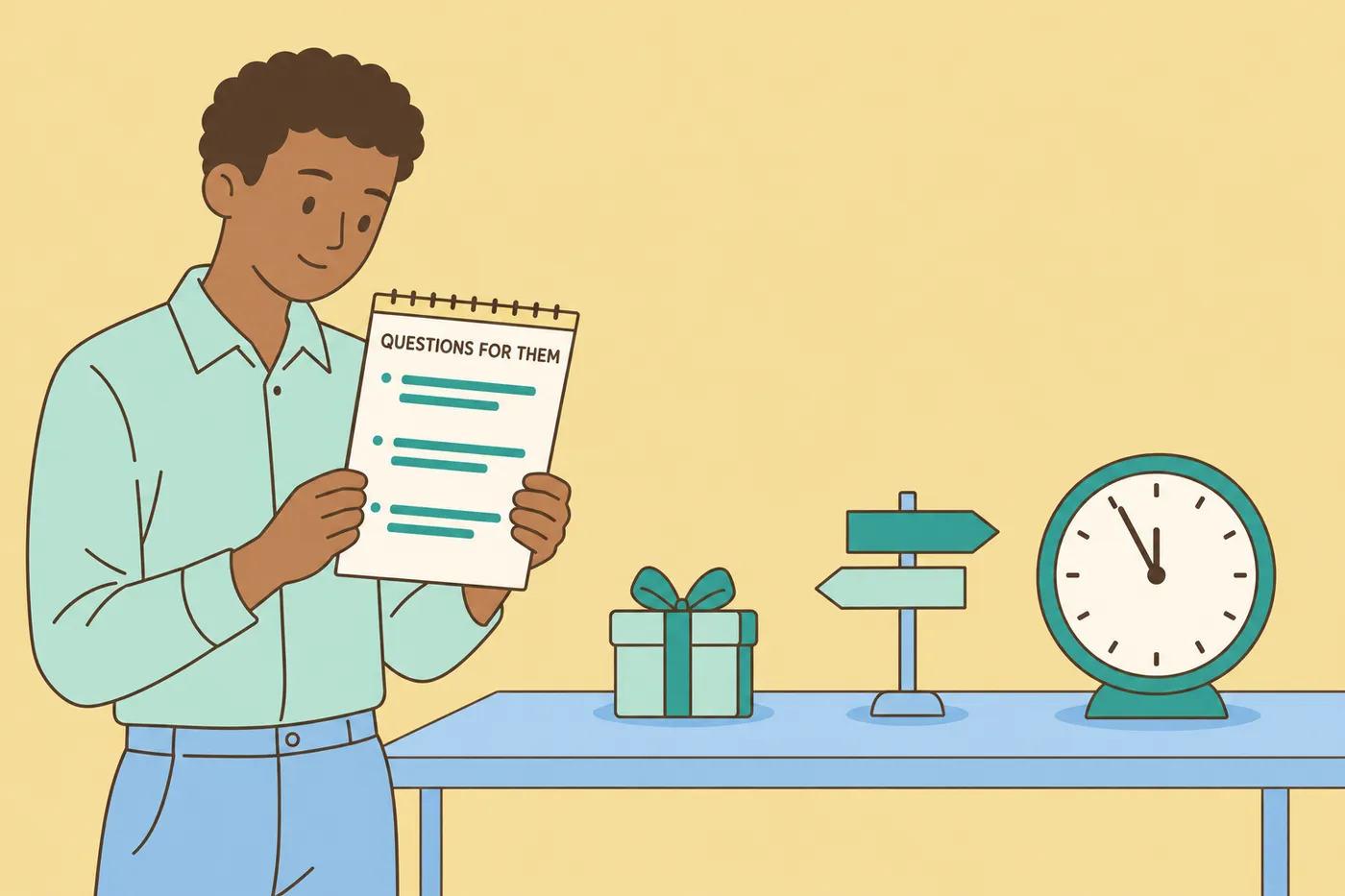
- "What does a hard week in this role look like?"
- "When two priorities collide, who decides?"
- "If I started Monday, what's the first fire I'd be handed?"
- "What would make you say, six months in, that this hire worked out?"
These questions invite concrete examples. More options are in our guide to questions to ask during an interview.
The interviewer's hypothetical is not proof that a problem routinely occurs at the company. If repeated questions about conflict or deadlines concern you, ask how often the situation arises and how the team responds. If an answer is unclear, request an example or ask who could provide more detail. Consider the whole conversation and any conflicting information before drawing a conclusion.
Build your practice set from the job posting
The job posting can help you choose practice scenarios. You cannot know the exact interview questions, but you can rehearse explaining decisions related to the advertised duties.
- Choose a responsibility in the posting and imagine a realistic complication.
- Write what you would clarify, the first action and who you would involve.
- If you have a relevant real example, note it without inventing a result or claiming someone else’s work.
- Practice aloud, then check whether you answered the scenario and stated any important assumptions.
For example, "coordinate travel for a leadership team" could become: "Two leaders need last-minute itinerary changes. How would you respond?" Clarify the immovable meetings, available travel options and approval limits. Explain how you would confirm priorities with the travelers and work with the authorized booking provider. Identify any cost or timing conflict before making commitments.
You can reason through a hypothetical even if you have not held that exact job. Relevant coursework, volunteering or part-time experience may offer an honest comparison. If you have no comparable example, say how you would seek guidance. Informal frameworks such as the "5 C's" are optional memory aids, not a known scoring system for every interview.
Practice out loud before the interview
Practice with a friend, record yourself or use an interview-practice tool. Ask whether your answer addressed the question, explained the priority and identified any step that required permission or specialist help. Shorten repeated context and leave room for follow-up questions.
Roleframe's AI assistant is another place to explore practice prompts. Verify suggested answers against your own experience and the role. AI feedback is practice feedback, not the employer's rubric, a qualification assessment or a prediction of the questions you will receive.
Frequently asked questions
- What is a situational interview?
It uses hypothetical work scenarios to ask what you would do. The OPM guidance distinguishes these from behavioral questions about past actions. An interview may combine both. Listen for whether the interviewer wants a proposed decision or an actual example.
- What is the STAR method for interviews?
STAR stands for Situation, Task, Action and Result. It is a way to organize a real example: the context, your responsibility, what you did and what happened. For a hypothetical, describe your proposed actions and the outcome you would check rather than inventing a past result.
- What are the 5 C's of interviewing?
Different writers use that label for different memory aids. Ask which version is meant if someone recommends it. There is no reason to assume every employer scores answers against a particular five-word framework; focus on the question and any instructions you receive.
- What is the biggest red flag to hear when being interviewed?
There is no universal phrase. If responsibilities, expectations or working conditions remain unclear after follow-up questions, seek more information before deciding. Inconsistencies or pressure can be reasons to investigate, but a single awkward answer is not enough to establish what the workplace is like.
- What should you say when asked about a difficult situation at work?
If asked about a real past event, choose one you can discuss honestly and explain your own actions and the outcome. A fictional structure is: "Requirements changed during a project. I confirmed priorities, split the remaining work into milestones and updated the stakeholders. We completed the agreed scope." Replace it with your actual experience rather than borrowing that result. If the question is hypothetical, explain what you would do.
- How do you answer situational questions with no work experience?
Explain what you would clarify, the action you would take, who you would consult and how you would check the result. Coursework or volunteering may provide a relevant comparison. If you have no example, do not invent one; state how you would learn the applicable procedure.
- How long should a situational interview answer be?
Use enough detail to explain your reasoning while leaving time for follow-ups. A brief opening answer is a practical starting point, then expand if asked. Follow any time limit the interviewer provides; a sentence count is not a universal scoring rule.


Ready to start your new resume?
Writing a resume takes time, and even a polished one can miss what a hiring manager is looking for. Roleframe helps you build a clear, ATS-safe resume in minutes and tailor it to the job you want.


