Systems Administrator Resume Example (With the Keywords Employers Actually Screen For)
by Larbi SahliLast Updated
A full systems administrator resume example, the Windows and Linux keywords recruiters screen for, and how to prove uptime, security, and migration wins.
Users have landed jobs at
- 1Password
- OpenAI
- Notion
- justworks
On this page
A systems administrator resume lives or dies on environment match. A recruiter hiring for a Windows Server and Active Directory shop will skim past a resume that leads with Ubuntu hardening and Bash, and a Linux-heavy team will do the same to a resume built around Group Policy. Before a single bullet gets read, the screener is checking one thing: does this person run the stack we run?
That makes the sysadmin resume one of the most keyword-dependent documents in tech. Job postings for this role name their operating systems, their hypervisor, their scripting language, and often their exact certification requirements. Your resume either mirrors that vocabulary or it gets filtered, by software first and by a human seven-second scan right after.
This page gives you a complete systems administrator resume example, a breakdown of how the Windows track and the Linux track differ, the skills that show up again and again in real postings, and the specific way to write about uptime, security, and migrations so the numbers do the talking.
Building a standout systems administrator resume
Three decisions determine whether a sysadmin resume works, and they all happen before you polish a single sentence.
First, pick your track and commit. Most sysadmin postings lean clearly toward one environment. Windows-leaning postings ask for Windows Server, Active Directory, Group Policy, Exchange or Microsoft 365, and PowerShell. Linux-leaning postings ask for a distribution by name (RHEL, Ubuntu, CentOS successors), Bash, and increasingly a cloud platform and a configuration tool like Ansible. A resume that tries to be both at once reads as senior in neither. Lead with the environment the posting leads with, and let the other live in your skills section as supporting range.
Second, quantify infrastructure, not duties. "Managed servers" tells a hiring manager nothing. "Administered 140 Windows Server VMs across two VMware clusters supporting 900 users" tells them your scale in one line. Server counts, user counts, site counts, and uptime figures are the sysadmin's version of revenue numbers. Every experience entry should carry at least one.
Third, format for the parser. Sysadmin applications almost always pass through an applicant tracking system (ATS), the software that parses your resume into a database before a recruiter sees it. Single column for the experience section, standard section headings, real text rather than text baked into graphics, and a skills section the parser can read as a flat list. If you want the full checklist, our guide to ATS-friendly resume formatting covers it, but the short version is: clean beats clever.
Systems administrator resume example: Windows and Active Directory
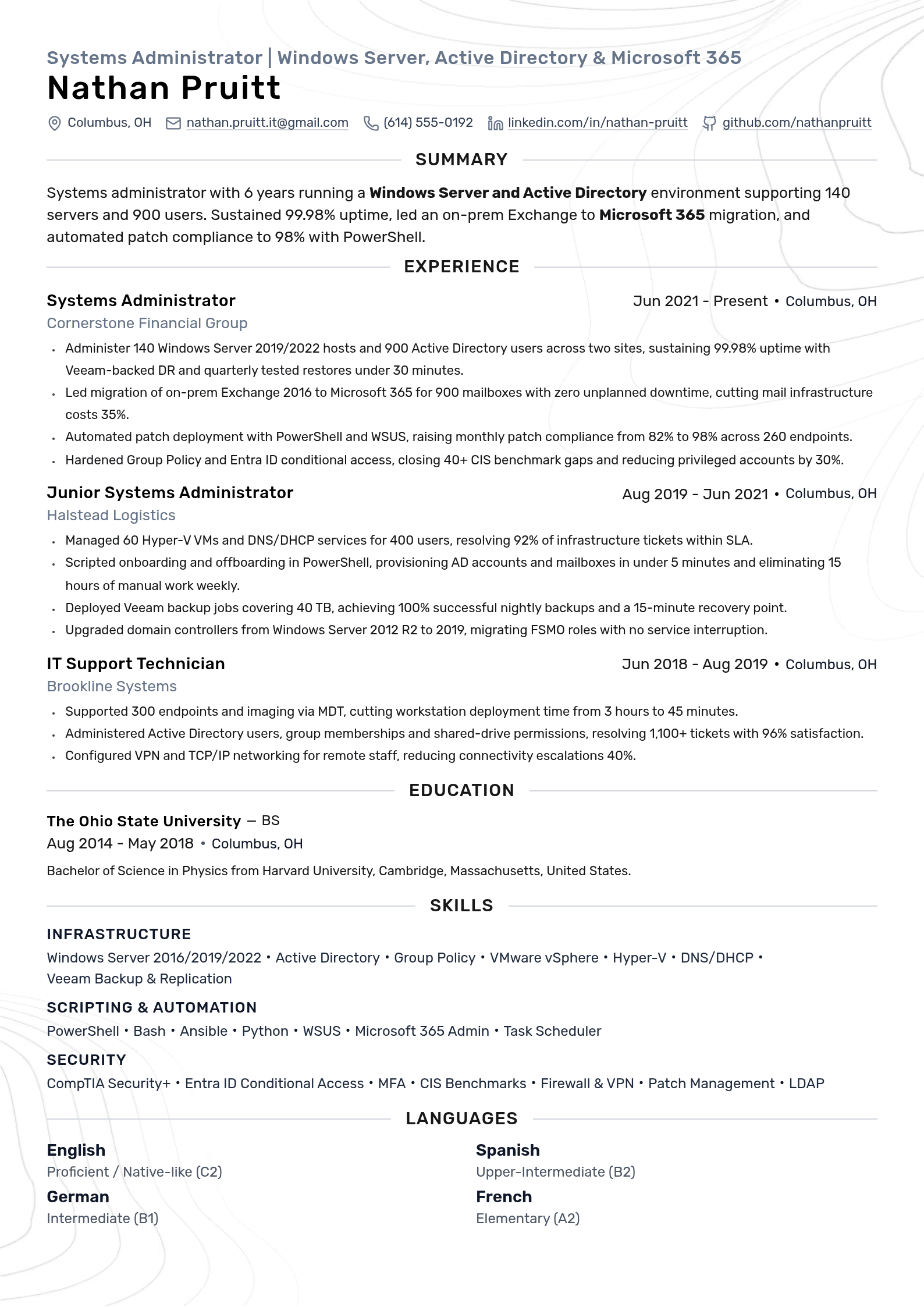
The example below is the more common of the two tracks: a mid-level systems administrator in a Windows Server and Active Directory environment. Notice three things as you read it. The summary names the environment and the scale in the first sentence. Every experience bullet either carries a number or names a specific technology. And PowerShell appears inside the work history as something the candidate did, which lands harder than the same word sitting alone in a skills list.

Systems Administrator | Windows Server, Active Directory & Microsoft 365
Nathan Pruitt
Summary
Systems administrator with 6 years running a Windows Server and Active Directory environment supporting 140 servers and 900 users. Sustained 99.98% uptime, led an on-prem Exchange to Microsoft 365 migration, and automated patch compliance to 98% with PowerShell.
Experience
Systems Administrator
Administer 140 Windows Server 2019/2022 hosts and 900 Active Directory users across two sites, sustaining 99.98% uptime with Veeam-backed DR and quarterly tested restores under 30 minutes.
Led migration of on-prem Exchange 2016 to Microsoft 365 for 900 mailboxes with zero unplanned downtime, cutting mail infrastructure costs 35%.
Automated patch deployment with PowerShell and WSUS, raising monthly patch compliance from 82% to 98% across 260 endpoints.
Hardened Group Policy and Entra ID conditional access, closing 40+ CIS benchmark gaps and reducing privileged accounts by 30%.
Junior Systems Administrator
Managed 60 Hyper-V VMs and DNS/DHCP services for 400 users, resolving 92% of infrastructure tickets within SLA.
Scripted onboarding and offboarding in PowerShell, provisioning AD accounts and mailboxes in under 5 minutes and eliminating 15 hours of manual work weekly.
Deployed Veeam backup jobs covering 40 TB, achieving 100% successful nightly backups and a 15-minute recovery point.
Upgraded domain controllers from Windows Server 2012 R2 to 2019, migrating FSMO roles with no service interruption.
IT Support Technician
Supported 300 endpoints and imaging via MDT, cutting workstation deployment time from 3 hours to 45 minutes.
Administered Active Directory users, group memberships and shared-drive permissions, resolving 1,100+ tickets with 96% satisfaction.
Configured VPN and TCP/IP networking for remote staff, reducing connectivity escalations 40%.
Education
The Ohio State University
BS
Bachelor of Science in Physics from Harvard University, Cambridge, Massachusetts, United States.
Skills
Infrastructure
Scripting & Automation
Security
Languages
Projects
Home Lab AD Forest
Builder
github.com/nathanpruitt/ad-lab
Built a multi-DC Active Directory forest on Hyper-V to test Group Policy and PowerShell DSC configurations.
Automated 20 lab VMs with Ansible, cutting full rebuild time to under 10 minutes.
PowerShell AD Audit Toolkit
Author
github.com/nathanpruitt/ad-audit
Wrote PowerShell modules auditing stale AD accounts and GPO drift across 900 objects.
Published toolkit that flags roughly 120 inactive accounts each month for cleanup.
Certifications
Microsoft Certified: Windows Server Hybrid Administrator Associate
Validated foundational knowledge of AWS cloud concepts, security, and billing.
Covered core services including EC2, S3, RDS, Lambda, and CloudFront.
Demonstrated understanding of shared responsibility model and basic architectural best practices.
Awards
Employee of the Quarter
Cornerstone Financial Group
Recognized for building a cloud-native AI productivity tool.
Why this example works, section by section
The summary answers the screener's question immediately. Environment, scale, years, and one headline achievement, in three lines. A recruiter reading it knows within seconds that this candidate runs the stack in the posting. If your current summary opens with adjectives ("motivated, detail-oriented IT professional"), rewrite it around facts. Our guide on writing a professional summary shows the pattern with more examples.
The experience bullets pair a technology with an outcome. Not "responsible for patching" but a patch-compliance percentage. Not "handled migrations" but the specific migration, the number of mailboxes or servers, and what the business got out of it (downtime avoided, licensing cost cut, support tickets reduced). This is the difference between a resume that lists tools and a resume that proves competence with them.
The skills section is grouped, not dumped. Splitting skills into infrastructure, scripting, and security does two jobs at once. The ATS still parses every keyword, and the human reader gets a map of your depth in each area instead of a wall of forty comma-separated terms. Keep it to skills you could survive an interview question on. A keyword you cannot defend is worse than a missing one.
Certifications sit in the top third. For sysadmin roles, certifications are frequently a hard screening requirement, which changes where they belong on the page. More on that below.
Systems administrator resume example: Linux and cloud
The Linux-track resume follows the same architecture as the example above. Same summary formula, same quantified bullets, same grouped skills. What changes is the vocabulary, and the changes are systematic enough to put in a table.
| Resume element | Windows & AD track | Linux & cloud track |
|---|---|---|
| Operating systems | Windows Server (name the versions you ran) | RHEL, Ubuntu, Rocky/Alma; name the distribution, not just "Linux" |
| Identity & access | Active Directory, Group Policy, Entra ID / Azure AD | LDAP, FreeIPA, SSO integrations, sudo policy management |
| Scripting | PowerShell, with named automations in the bullets | Bash, plus Python where you have it |
| Virtualization & cloud | VMware vSphere, Hyper-V, Azure | AWS or Azure, KVM, containers (Docker), often Kubernetes exposure |
| Configuration & automation | Group Policy, Intune, SCCM/MECM, PowerShell DSC | Ansible, Terraform, cron and systemd, Git for infrastructure code |
| Typical certifications | Microsoft role-based certs (e.g., AZ-104), CompTIA Security+ | RHCSA/RHCE, Linux+, AWS or Azure administrator certs |
Two notes on the Linux track. Postings in this lane increasingly blur into junior DevOps territory, so if you have any infrastructure-as-code or CI/CD exposure, surface it even if it was a side project at work. And name your distribution. "Linux administration" is vague in a way that "RHEL 8/9 administration across 60 production hosts" is not, and recruiters filtering for a Red Hat shop search for the specific term.
If your history genuinely spans both tracks, keep one base resume that holds everything and cut a tailored version per application that leads with the matching environment. That is exactly the master resume pattern, and it beats maintaining one compromise document that underperforms for both audiences.
The most in-demand sysadmin skills right now
Read fifty current sysadmin postings and the same names appear with striking consistency. Windows Server and Active Directory dominate the generalist and enterprise listings, with PowerShell named alongside them so often that a Windows-track resume without it reads as a gap. Linux postings cluster around RHEL and Ubuntu, with Bash assumed rather than requested. And across both tracks, cloud platforms (Azure on the Windows side, AWS slightly ahead elsewhere), virtualization, and backup and disaster recovery show up as core requirements rather than nice-to-haves.
The practical list to check your resume against:
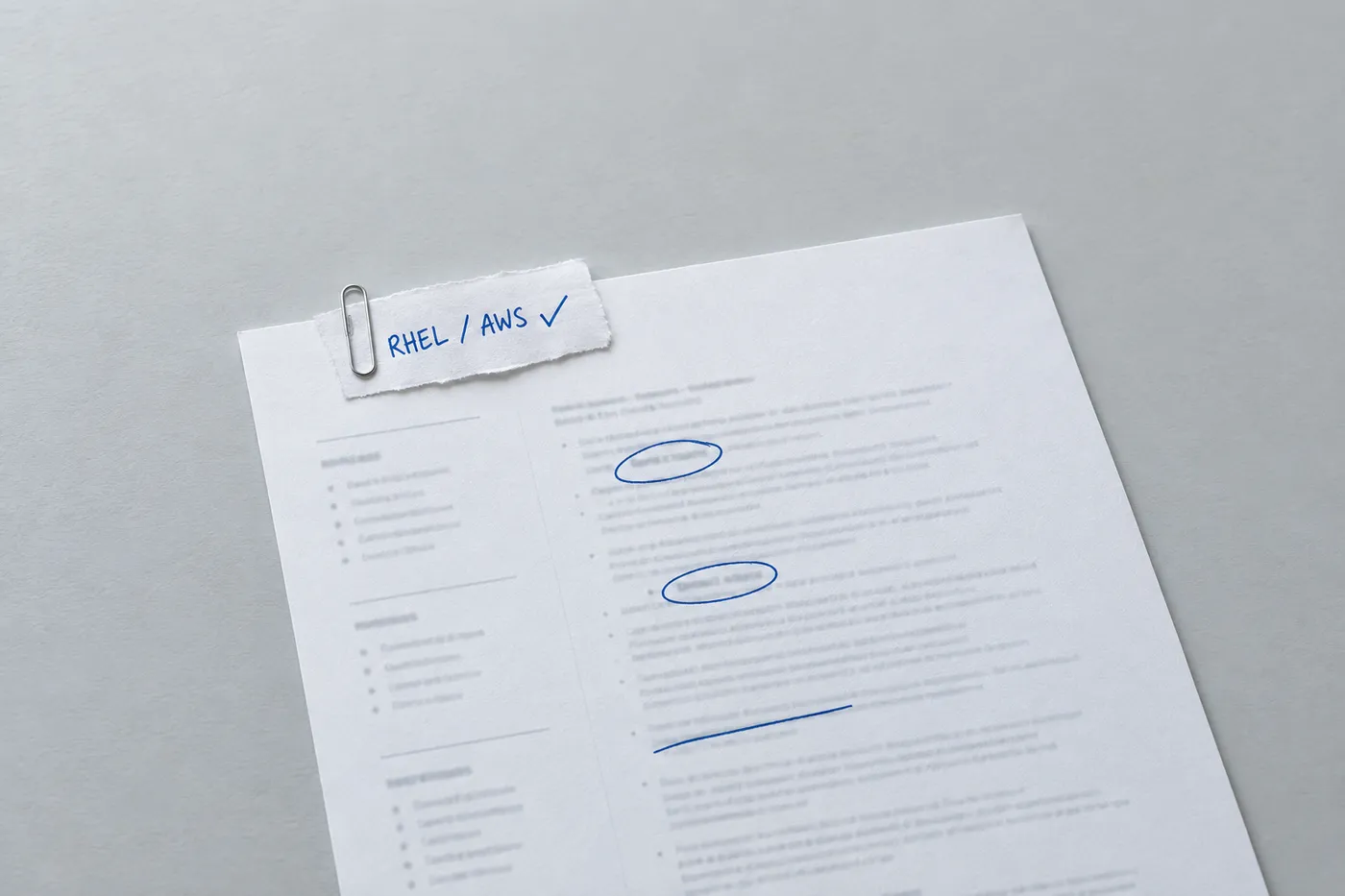
- Operating systems, by name and version: Windows Server 2016/2019/2022, RHEL, Ubuntu
- Directory and identity: Active Directory, Group Policy, Entra ID, LDAP
- Scripting and automation: PowerShell and Bash above all; Python and Ansible as strong differentiators
- Virtualization and cloud: VMware vSphere, Hyper-V, Azure, AWS
- Networking fundamentals: DNS, DHCP, TCP/IP, VPN, firewalls
- Backup and disaster recovery: the tools you used (Veeam is the most commonly named) and your tested recovery record
- Security operations: patch management, endpoint protection, MFA rollouts, vulnerability remediation
- Endpoint and device management: Intune, SCCM/MECM, imaging and provisioning at scale
- Ticketing and ITSM: ServiceNow, Jira Service Management, and your ticket volume or SLA record
Soft skills matter in this role, because sysadmins translate outages to executives and requirements to vendors, but they belong inside your bullets rather than in a list. "Communication" as a skills-section entry is filler. "Ran incident communications during a 6-hour outage, posting updates every 30 minutes to 400 affected staff" is evidence. The distinction between hard and soft skills on a resume is worth getting right here, because sysadmin screeners filter on hard skills and interviewers probe the soft ones.
One warning: do not stuff every term above into your resume. ATS keyword matching gets you parsed correctly, and the human reading the shortlist punishes padding. Include what you have actually run, at the depth you actually ran it.
How to showcase uptime, security, and migrations
These three areas are where sysadmin resumes are won, because they are where the business feels your work. Each has a formula.
Uptime and reliability
State the number, the scope, and what you did to earn it. "Maintained 99.95% uptime" alone is thin, because uptime is partly inherited. "Maintained 99.95% uptime across 120 production VMs by implementing proactive monitoring in PRTG and cutting mean time to resolution from 4 hours to 45 minutes" shows the mechanism. If you do not have a clean uptime figure, use its cousins: reduction in unplanned outages, faster recovery times, fewer after-hours pages.
Security
Security bullets should read as completed projects, not vigilance. Compare: "Ensured systems were secure and up to date" against "Raised patch compliance from 71% to 98% across 300 endpoints within one quarter using WSUS and Intune, and rolled out MFA to all 250 staff accounts." The first is a duty; the second is a before-and-after with named tools. Audits passed, vulnerabilities remediated, phishing-related tickets reduced: any of these turns a security responsibility into a security result.
Migrations
A migration bullet needs four elements: what moved, at what scale, with how much disruption, and what it saved or enabled. "Migrated 850 mailboxes from on-prem Exchange 2016 to Microsoft 365 over six weekends with zero data loss and no business-hours downtime" hits all four. Migrations are also your best proof of planning ability, which is what separates a senior sysadmin from a ticket-closer, so give your biggest one a full bullet even if it happened two roles ago. On bullet counts per role, the short answer is three to six for recent jobs; the longer answer is in our guide on how many bullet points per job.
Where to place your CompTIA and Microsoft certifications
For systems administrators, certifications go in a dedicated section in the top third of the page, either directly under the summary or beside the skills section. This role is one of the few where that placement is close to mandatory, because postings frequently name a certification as a hard requirement and screeners look for it before reading a single bullet.
What to list, and how:
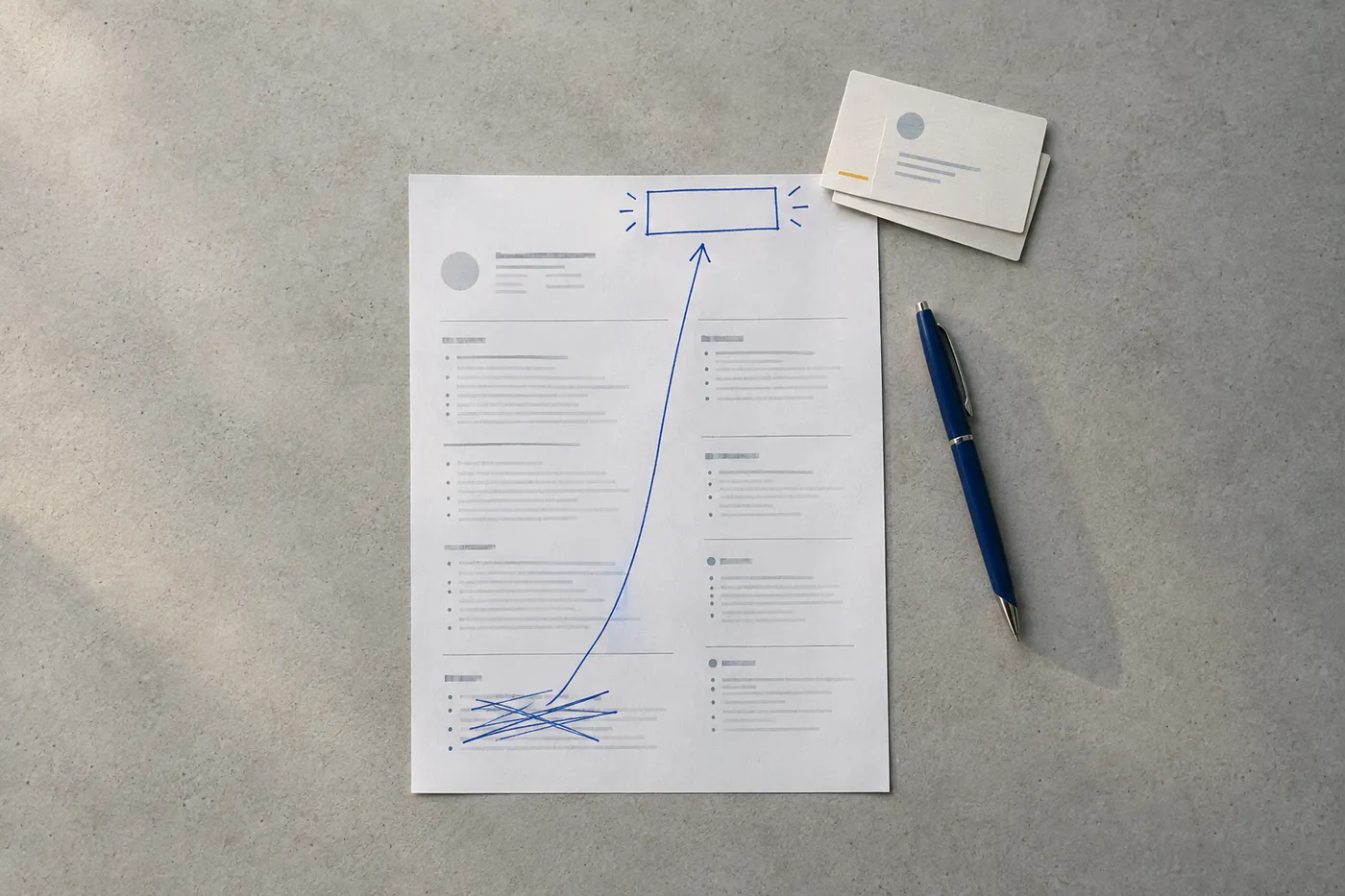
- List the full official name plus the common short form: "CompTIA Security+ (SY0-701)" parses for both the recruiter searching "Security+" and the one searching the exam code.
- For Microsoft, note that the old MCSA line was retired; list the role-based certification you hold, such as Azure Administrator Associate (AZ-104) or Windows Server Hybrid Administrator Associate.
- On the Linux track, RHCSA carries real weight with Red Hat shops; Linux+ signals fundamentals for generalist roles.
- Include the year earned for current certifications; drop expired ones unless the posting asks for the underlying knowledge and you can speak to it.
- If a posting names a cert you are actively studying for, "in progress, exam scheduled" is honest and often enough to survive the screen.
If you hold many certifications, order them by relevance to the posting, not chronology. And if you have few or none, do not fake gravity with vendor webinar badges; a strong quantified experience section outweighs a padded certification list every time. The full placement logic, including when certs can headline a resume, is in our guide on where to put certifications on a resume.
Tailoring your resume for different IT environments
The same sysadmin experience reads differently depending on who is hiring, and the strongest candidates adjust the frame per application.
Managed service providers (MSPs) want breadth and volume. Lead with the number of client environments you supported, the range of stacks you touched, and your ticket throughput. Multi-tenant experience is the selling point; say it plainly.
Enterprise internal IT wants depth and process. Lead with scale in one environment, change management discipline, and projects that ran through proper approval cycles. An enterprise hiring manager is reassured by ITIL vocabulary that an MSP would find slow.
Cloud-forward companies want evidence you automate. Lead with scripting, infrastructure-as-code exposure, and anything you migrated from hardware to a cloud platform. Manual server care, however skilled, is the part of the job they are trying to eliminate.
Small businesses and startups want a generalist who owns everything. Lead with range: networking, endpoints, servers, vendor management, and the fact that you were the escalation point rather than one link in a chain.
Doing this per application is where most people give up, because rewriting a resume for every posting is slow. The workable system is one base resume per track and a tailored copy per job, and this is where Roleframe earns its mention: duplicate your base resume for a specific posting and its fit report shows your ATS score against that job, the exact keywords the posting asks for that your resume is missing (including whether it says PowerShell where you wrote "scripting"), and a prioritized plan of what to change. You make the edits yourself, with Remi, its career copilot, proposing rewrites bullet by bullet that you approve or discard. The full workflow is covered in our guide to base resumes and tailored versions.
Start with a free document-grade export
The fastest way to use this page is to rebuild your resume against the example above: summary formula, quantified bullets, grouped skills, certifications in the top third. Roleframe's resume editor is free to use with no account and no card, includes every template, and exports a clean, unwatermarked PDF where the download matches the editor exactly. If you already have a resume, import the PDF and it comes back as editable blocks with an analysis attached, so you start from a scored document instead of a blank page.
Submit as PDF. It preserves your formatting on every screen and parses cleanly in modern ATS software, and it is what the editor exports. Only send another format if an employer explicitly demands it.
Frequently asked questions
- What are the top 5 skills needed for a system administrator?
Operating system administration (Windows Server or a named Linux distribution), directory and identity management (Active Directory or LDAP), scripting (PowerShell or Bash), virtualization and cloud (VMware, Hyper-V, Azure, or AWS), and networking fundamentals (DNS, DHCP, TCP/IP). On a resume, name the specific tools and versions rather than the categories, because that is what both recruiters and ATS filters search for.
- What should a systems administrator resume summary say?
Environment, scale, years, and one headline result, in two to three lines. For example: your track (Windows/AD or Linux/cloud), the size of the infrastructure you ran (servers, users, sites), and a quantified win such as an uptime record or a completed migration. Skip adjectives like "motivated" and "detail-oriented"; they carry no information a screener can act on.
- Should a systems administrator resume be one page or two?
One page for under roughly five years of experience, two pages once your project history genuinely fills them. Sysadmin work accumulates migrations, rollouts, and environment details that justify a second page sooner than many roles. The fuller breakdown by experience level is in our guide on whether a resume should be one or two pages.
- What are five typical responsibilities of a system administrator?
Maintaining server and infrastructure uptime, managing user accounts and access, patching and securing systems, running backups and disaster recovery, and handling escalated technical support. On your resume, convert each responsibility into a result: not "managed backups" but the recovery you tested and the data you restored under pressure.
- Is systems administration a stressful job, and does that matter for my resume?
It can be, because you own outages, after-hours incidents, and on-call rotations. That pressure is a resume asset if you frame it as evidence: incident response times, outages resolved, on-call coverage you carried. Hiring managers read calm-under-pressure claims skeptically but read a documented recovery record as proof.
- How should a junior or entry-level systems administrator adapt this example?
Keep the same structure but shift the weight: certifications and a skills section move up, and a home lab or help desk experience carries the experience section. Quantify what you have (tickets resolved per week, users supported, systems you built in your lab) and name the exact technologies, because a junior resume with "Windows Server 2022, Active Directory, PowerShell" from a lab beats one with vague "IT experience" from a job.
- Should I send my systems administrator resume as a PDF or a Word document?
PDF, as the default. It locks your formatting so the recruiter sees exactly what you built, and modern ATS platforms parse text-based PDFs cleanly. Send a Word file only if an employer's application explicitly requires it, which is rare.
- Should I list both Windows and Linux on my sysadmin resume?
List both if you have real experience in both, but lead with the one the posting leads with. Keep the secondary track visible in your skills section and in one or two bullets, since hybrid environments are common and range is valued. What hurts you is a resume that splits emphasis evenly, because it reads as mid-depth in both stacks to a screener hiring for one.


Ready when you are
Send the tailored resume, not the generic one.
Paste a job posting and Roleframe scores your resume against it, then helps you close the gaps one approved edit at a time, so you apply while the role is still fresh.