What Is a Conditional Job Offer, and Do You Have the Job?
by Larbi SahliPublished
Understand a conditional job offer, confirm the remaining checks and deadlines, and use a clear reply email while protecting sensitive information.

On this page
A conditional job offer proposes employment subject to conditions, such as references, identity or qualification checks, or another requirement stated in the letter. It is a positive step, but it is not a guarantee that you will start work.
Read the terms, confirm what remains outstanding and ask when the employer expects to confirm the start date. The effect of accepting or withdrawing an offer depends on the agreement and applicable law. This guide gives general practical information, with a short section on U.S. federal protections.
Does a conditional offer mean you got the job?
The employer is proposing to hire you if the stated conditions are satisfied. Ask which checks remain, who initiates them and whether the proposed start date is confirmed or provisional.
Consider waiting for written confirmation that the conditions are cleared before resigning from another job. Even then, review your notice obligations and the offer’s terms rather than assuming that a “final” offer eliminates every risk. If needed, use the notice-letter guide to prepare a clear message.
The common conditions, and what to do about each one
Read each request carefully, answer accurately and use verified channels to submit information. Do not volunteer sensitive medical or criminal-history details indiscriminately. What an employer may ask, and what you must disclose, depends on the question, role and local law. Seek qualified advice when a request or record raises a specific concern.
Background check
A background check may cover identity, work or education records, and other matters relevant to the role. For U.S. employment reports supplied by a background-reporting company, the employer generally needs your written permission. Verify the screening provider before sending sensitive details.
The joint EEOC/FTC applicant guide explains the process and protections. Our guides discuss what a check may include and why timelines vary.
Employment and education verification
The employer may confirm job dates, titles or qualifications. Check your application against your records. Ask which documents are needed and submit them securely; do not send tax or identity documents simply because they might be useful.
Drug test
If a lawful test is required for the role, follow the designated provider’s instructions and deadline. Direct medication or other medical questions to the appropriate healthcare or testing professional through the confidential process, rather than sharing medical details in a general recruiter email.
Reference check
Pick people who saw your recent work and warn them the call is coming, including which job it is for. A direct manager who answers prepared will do more for you than a bigger title who sounds vague. The guide to references on a resume covers who to choose and how to brief them.
Medical exam
For employers covered by the U.S. Americans with Disabilities Act, medical questions or exams are generally restricted before an offer. After an offer, they may be required if all entering employees in the same job category face the same requirement. Medical information must be kept confidential. See the EEOC’s medical-inquiry guidance; post-offer timing does not make every request or rejection lawful.
License or certification check
Check your credential’s status with the issuer. Provide the information requested for verification through the employer’s secure process and clarify any renewal or pending-status issue. Having the details ready helps, but it does not guarantee a particular turnaround time.
Security clearance
Some government or contractor roles require a clearance or background investigation. Ask the hiring contact which process applies, whether work can begin before it is complete and how to report changes. Follow the official instructions accurately; timelines vary substantially.
Your rights during the checks
The following is a limited summary of U.S. federal guidance. State and local protections may add requirements, and other countries have different rules.
Background-report safeguards. Before taking an adverse employment action based on a report from a reporting company, an employer must generally provide the report and a summary of rights. You can dispute inaccurate information with the reporting company and tell the employer a correction is pending. The EEOC/FTC guide explains where to seek help.
Discrimination protections. Screening practices must comply with applicable nondiscrimination law. A record or medical finding does not make every rejection lawful. Rules about when criminal-history questions can be asked also vary by location and type of employer.
If you believe a request or withdrawal violates your rights, consult the relevant employment agency or a qualified employment lawyer promptly. Keep the offer, notices and relevant correspondence.
Can you back out of a conditional job offer?
You can ask to withdraw after accepting, but do not assume there are no contractual consequences. Review the offer and any signed notice, bonus or relocation agreement. If your obligations are unclear, obtain advice before acting.
Once you decide, tell the recruiter promptly and politely. The declining-an-offer guide includes wording you can adapt.
How to reply: a full example email
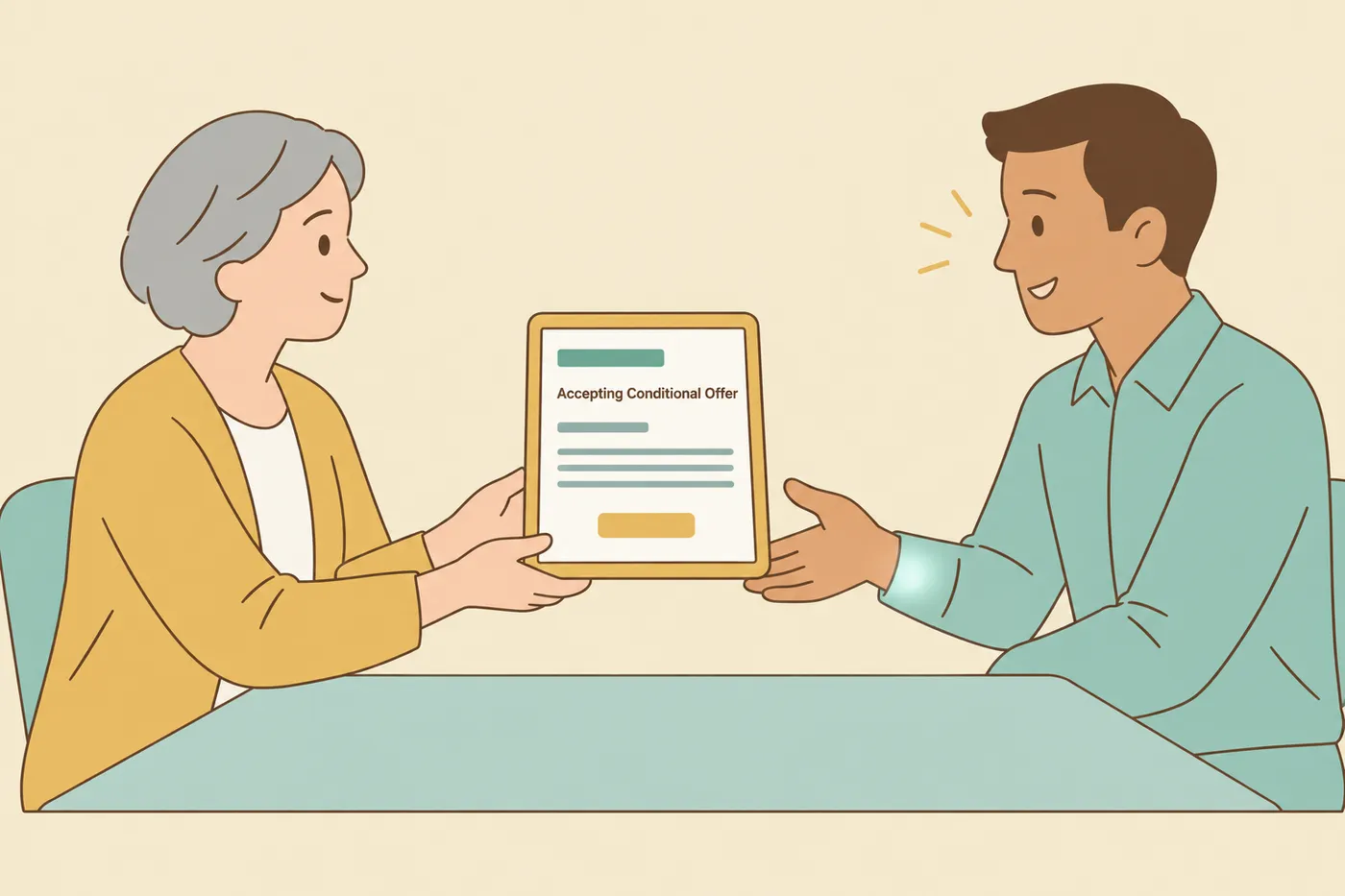
A good acceptance email does four things in under 150 words: thanks the recruiter, accepts the role subject to the stated conditions, shows the checks are already moving, and asks about the start date without announcing a resignation you have not made. Here is one from a fictional candidate accepting a delivery driver offer at a fictional regional logistics company.
Subject: Delivery Driver offer, accepting
Hi Dana,
Thank you for the offer to join Ridgeline Freight as a Delivery Driver. I'm glad to accept on the terms in the letter, subject to the conditions it lists: the background check and the DOT drug screen, along with the motor vehicle record review.
I signed the background check authorization this morning and booked the drug screen for Thursday, and will follow up with the screening provider about the deadline in the letter.
Once the checks clear, could you confirm the expected start date? I want to give my current employer proper notice as soon as the offer is final.
Thanks again,
Marcus Webb · (555) 214-8890
The last paragraph earns its place. It asks for the start date and signals that notice will follow the final offer, which tells the recruiter you understand the sequence without promising to resign or begin work before the checks clear.
Conditional job offer vs. final job offer
| Conditional offer | Final offer | |
|---|---|---|
| Conditions | One or more stated conditions remain | The employer confirms the stated conditions are satisfied |
| Start date | May be provisional; ask | Confirm it in writing |
| Remaining uncertainty | Checks, documents and agreement terms | Agreement terms and applicable employment law still matter |
| Next step | Complete verified requests by the stated deadlines | Review your obligations before giving notice or making commitments |
Use the offer letter to build a checklist. Ask the recruiter to clarify anything essential that is missing:
- Job title, pay, location and schedule
- A start date, often marked as estimated or contingent
- Each condition by name, with the screening vendor and the forms it requires
- A deadline for completing the conditions
- A statement that employment depends on their satisfactory completion
- Instructions or links for starting each check
For an employer-specific process, use that employer’s official careers site or a verified hiring contact. Confirm portal links before entering personal information; a generic guide cannot tell you which forms a particular employer requires today.
While you wait: four moves
Use a simple checklist while the employer completes its process:
- Record each required step and deadline, and ask promptly if a deadline is unclear or cannot be met.
- Verify the employer, screening provider and submission link before sharing sensitive information.
- Answer lawful questions accurately; use the designated confidential process for sensitive details and seek advice if unsure what must be disclosed.
- Keep copies of submissions and ask for written confirmation when conditions are cleared.
That last point is easier with the role in one place. Save it to the Roleframe job tracker with the recruiter's contact and the original posting, beside every other open application. Each saved job gets its own page with a checklist for each stage of that application, so "drug screen by Thursday" sits where you will see it, and if this offer stalls, the rest of your pipeline is still warm.
Frequently asked questions
- Can an employer withdraw a conditional job offer?
An offer may be withdrawn, but whether the decision is lawful depends on its terms and the circumstances. Nondiscrimination protections and required background-report procedures may apply. Ask for the reason and relevant notices, preserve the correspondence and seek local advice if you have concerns.
- How long does a conditional job offer take to become final?
There is no universal timeframe. Ask the recruiter for the expected completion date of each remaining condition and when to follow up. A document check and a security investigation can require very different timelines.
- Is a conditional job offer legally binding?
The legal effect depends on the wording, acceptance and applicable law. A conditional offer is not automatically nonbinding, and a final offer is not always a guarantee of continuing employment. Get advice about the actual agreement if the consequences matter to your decision.
- Should I negotiate salary before accepting a conditional offer?
Raise unresolved questions about pay and other terms before accepting whenever possible. If you have already accepted, you can ask whether a change is possible, but the employer may decline and any agreement you signed may matter.
- What happens if the background check turns up a problem?
Check the report for errors and follow the provider’s dispute procedure. Tell the employer if a correction is pending. If the information is accurate but you are concerned about its use, ask about the decision process and obtain advice about the protections that apply to your situation.
- Does a conditional offer mean I passed the background check?
No. The offer may be conditional because a check has not started or is still pending. Ask which conditions remain and request written confirmation when they are complete.



Ready to start your new resume?
Writing a resume takes time, and even a polished one can miss what a hiring manager is looking for. Roleframe helps you build a clear, ATS-safe resume in minutes and tailor it to the job you want.


