How Long Does a Background Check Take for a Job?
Understand U.S. employment background-check timing, pending stages, secure document requests, and how to follow up without guessing the outcome.


On this page
An employment background check may take several days, but there is no single deadline for every package or employer. Checkr’s current overview gives three to five days as a typical estimate for checks conducted through a consumer reporting agency. That is a provider’s estimate, not a measured promise about your application or the employer’s decision.
This guide focuses on U.S. employment screening. Ask the recruiter which checks were ordered, when the request started, whether the estimate means calendar or business days, and who to contact if it changes. International checks and government investigations may follow different processes.
The stages of a background check, and what each one waits on
Separate the screening report from the whole hiring process. A useful status update identifies the stage and the party that needs to act, rather than simply saying “the background check is pending.”
- Employer setup: confirm whether the employer has actually initiated the request and which provider is handling it. An offer discussion does not establish the order date.
- Disclosure and permission: for a report from a background reporting company, the FTC describes written disclosure and permission requirements. Read the documents and use the verified submission channel.
- Candidate information: complete the fields requested and clarify missing or uncertain information instead of guessing.
- Screening work: the provider gathers the requested information, which may depend on records or replies from other organizations.
- Report completion: check whether the status applies to the whole package or only one component.
- Employer review: ask what remains before the employer confirms the decision or start arrangements. A completed report is not itself that confirmation.
The FTC’s candidate guide explains that an employer using a background reporting company must obtain written permission. Before taking adverse action based on the report, it must provide the report and a Summary of Rights. Follow the specific notices and dates you receive; do not infer the legal process from a generic turnaround estimate.
What to ask about each part of the check
A single quoted range can hide several different tasks. Instead of combining unrelated vendors’ averages into a supposedly universal timetable, use this checklist to find the pending component and the next useful action.
| Component | Useful status question | Possible action for you |
|---|---|---|
| Identity-related information | Is further information needed to resolve a mismatch? | Confirm what is requested through the provider’s secure channel |
| Criminal-record searches | Which search or jurisdiction is still pending? | Respond to a verified request; do not infer a result from timing |
| Employment or education verification | Is the provider waiting for a source response? | Ask which alternative documents, if any, it accepts |
| Professional credential verification | Is the authority, name, and credential number correct? | Provide accurate details for the credential you actually hold |
| Driving record | Is there an issue with the requested jurisdiction or information? | Confirm the relevant license details when requested |
| Credit information, where permitted | Is this part of the authorized package? | Review the disclosure and ask about applicable requirements |
| Testing or international checks | Does this have a separate appointment or process? | Follow the verified instructions and ask about remaining steps |
Checkr identifies scope, record availability, and communication as factors affecting timing. The practical question is whether someone needs information from you or whether the request is waiting elsewhere. A fast response from one source does not establish that every component is complete.
What slows a background check down
A delay can have several explanations. Ask for the known reason instead of assigning a cause based only on how long you have waited. These are useful questions to raise when a stated estimate has passed:
- Is a record source or verification contact still responding?
- Does the request require information from more than one jurisdiction or country?
- Is a name, date, or other identifier being clarified?
- Has the provider asked for a missing document or correction?
- Is a separate appointment or test outstanding?
- Is the screening report complete but the employer’s review still pending?
For a government position, ask whether the pending step is employment screening, suitability review, a security-clearance investigation, or another process. Do not apply a commercial provider’s estimate to a different investigation. Use the hiring agency’s instructions and authorized contact.
Reduce avoidable delays without oversharing
You can improve the information you supply and respond to legitimate requests. You cannot promise a completion date for a court, school, former employer, or hiring team. Keep a record of what you submitted and when.
- Verify the sender and submission website using contact details already confirmed with the employer. Do not send sensitive records to an unexpected address merely because a message says it is urgent.
- Read the disclosure and authorization, then complete the requested fields accurately. Ask for clarification when the form is unclear.
- Check names and dates against your records. If something is approximate or unknown, explain that through the provider’s process instead of inventing precision.
- Use the verification contact requested by the provider or former employer; do not assume a personal supervisor’s details are appropriate.
- If an organization has closed, ask what alternative evidence is accepted. Send only the required material through an approved secure channel and ask which unrelated details can be redacted.
- Watch for legitimate follow-up requests and respond within the stated timeframe. If you cannot meet it, explain that promptly.
- If a separate appointment is required, follow the actual scheduling instructions and report an access or timing problem early.
Keep your resume, application form, and supporting records together so you can explain differences clearly. A short resume may omit older work while a screening form requests a longer history. Follow the form’s instructions and distinguish an omission for resume relevance from an inaccurate answer.
Does “complete” mean the background check was approved?
Not necessarily. A portal status may describe the report’s processing stage, a screening component, or an employer-specific review label. Ask what the label means in your process and who will confirm the hiring decision. Silence or a delay alone does not establish either approval or rejection.
Rules on criminal-history inquiries and use vary. There are federal fair-chance requirements for covered federal positions, as OPM’s implementation guidance explains, as well as state and local rules. Do not assume that one jurisdiction’s timing or lookback rule applies to every employer.
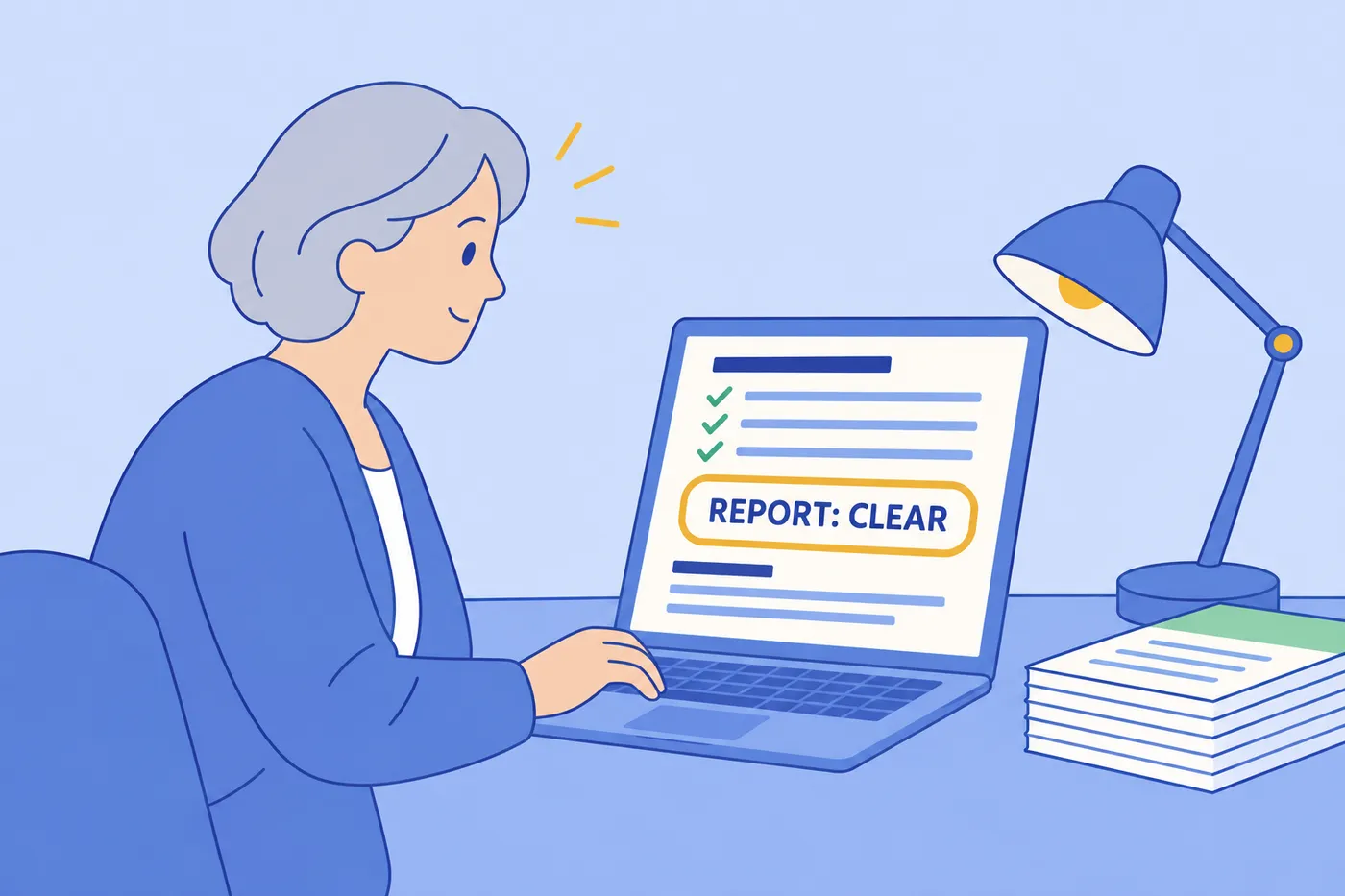
Report completion and your start date are separate questions
When the provider says its report is complete, ask the employer whether any review or offer conditions remain. Avoid making a major decision based only on a portal label. A start date should be confirmed with the hiring team along with any remaining conditions.
A recruiter can help identify the next step even when they cannot control the provider’s timetable. Record the answer as a specific action: “Employer reviewing report; update expected Friday,” rather than interpreting a week of silence as a particular result.
How to follow up on a pending background check
Use the contact and follow-up date provided by the employer. If the estimate passes, a short status request is reasonable. If you have a real deadline, explain it accurately instead of waiting silently or inventing another offer.
Fictional template: “Hi [Name], you mentioned that the screening update was expected around [date]. Could you confirm which steps remain and whether anything is needed from me? Please let me know the appropriate secure channel if you need documents. Thank you.”
Adapt the wording and do not promise a same-day response you cannot deliver. Before resigning, relocating, or withdrawing from other applications, review the confirmed offer terms, outstanding conditions, and your existing obligations. Ask for clarification rather than assuming a finished report resolves every issue.
Keep the wait organized
Track the request date, provider, current stage, expected update, and next action. Keep sensitive reports in an appropriate secure location; a general job tracker needs only enough detail to manage follow-up.
A spreadsheet, calendar, or Roleframe’s job tracker can hold the non-sensitive application notes. Choose a system you will keep current and continue other suitable applications at a pace that works for you while the outcome is uncertain.
Frequently asked questions
- How long does a company background check take?
Checkr gives three to five days as a typical provider estimate, but the package, sources, and employer review affect the timeline. Confirm the start date, whether the estimate uses business days, and the next update with your recruiter.
- What is the timeline for a Google background check?
Use the provider and timeline identified in your own Google recruiting process. A third-party estimate does not establish the screening package, provider, or completion date for your application. Ask the recruiter what remains and when to expect an update.
- What documents can help when a former employer has closed?
Ask the screening provider which alternatives it accepts before sending anything. Offer letters or employment records may be relevant, but acceptance and required details vary. Use the approved secure channel and clarify whether unrelated information can be redacted.
- Is a long background check a bad sign?
Timing alone does not establish the outcome. Ask which step is pending, whether information is needed from you, and when the next update is expected.
- How long does a check take for a government job?
Ask the hiring agency which process is involved and use its guidance. Employment screening, suitability review, and security-clearance investigations should not be treated as one process with a single commercial turnaround estimate.
- Do background checks run on weekends?
Some automated activity may continue, while a step needing a person or record office can depend on operating hours. Ask whether the estimate is in calendar or business days and how holidays affect your request.
- Can I still be hired if the report contains a concern?
A concern does not by itself establish the final decision. What can be considered depends on the information, role, and applicable rules. Review any report or notice you receive and dispute inaccurate information through the provider’s process.

Ready to start your new resume?
Writing a resume takes time, and even a polished one can miss what a hiring manager is looking for. Roleframe helps you build a clear, ATS-safe resume in minutes and tailor it to the job you want.


