What Does a Background Check Show for Employment?
Understand possible U.S. employment screening components, how to review discrepancies, and the steps to take when a background report contains an error.

On this page
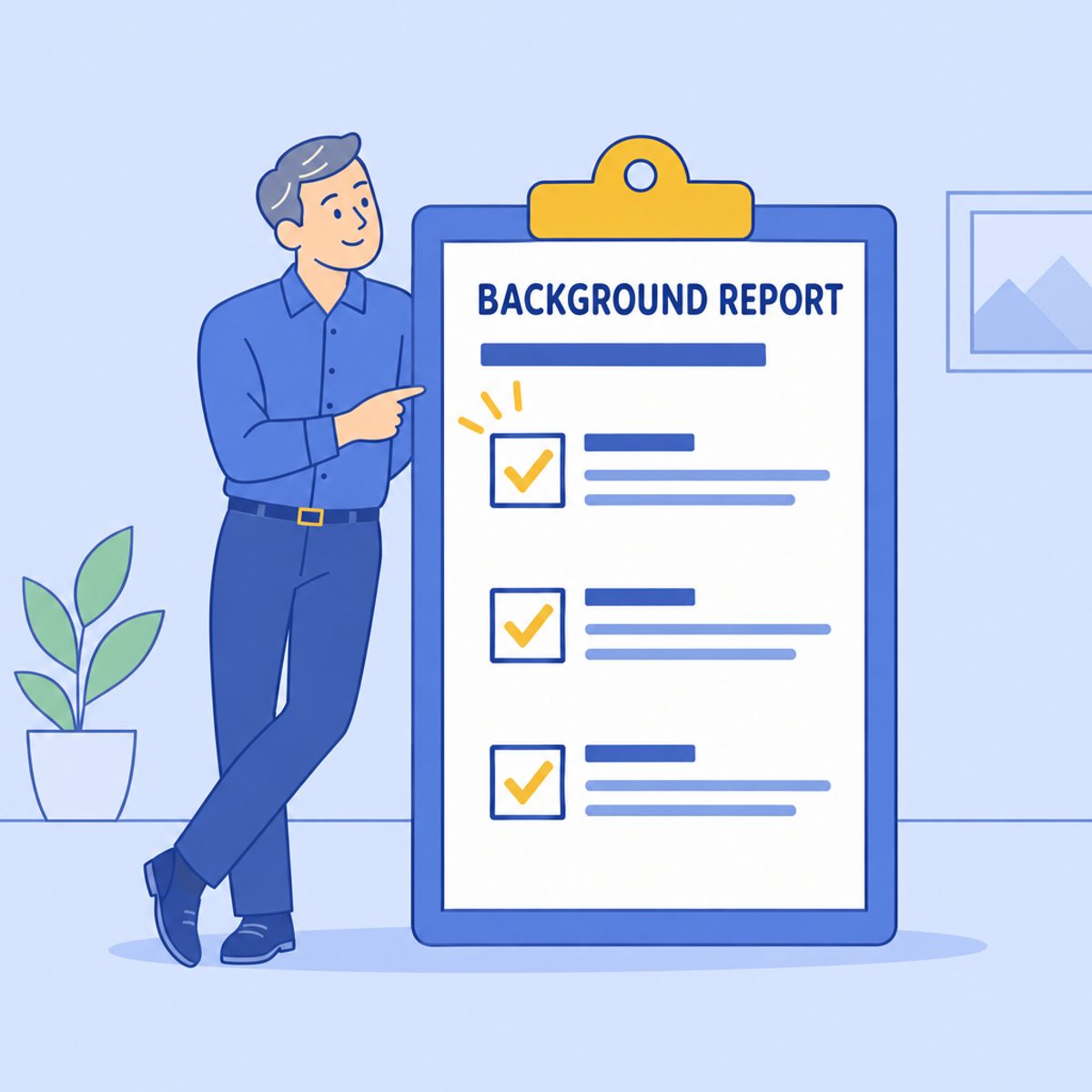
An employment background report can contain information such as criminal records, employment history, public records, or credit information, depending on the service and applicable rules. It is not one universal file that every employer receives. The Consumer Financial Protection Bureau’s explanation describes the range of employment reports and the role of consumer reporting agencies.
This guide focuses on U.S. hiring. Read the employer’s disclosure and ask which checks apply to your role. A check’s contents, the source’s accuracy, and what the employer may lawfully use are separate questions.
A report can also contain mistakes or unresolved information. Neither a matching name nor a status label should be treated as proof of a person’s identity, conduct, or eligibility without the appropriate verification.
What each type of check covers
The table explains common categories and useful questions to ask. It is not a promise that every package contains all of them or that a report is limited to this list.
| Component | What to clarify | How to prepare or review it |
|---|---|---|
| Identity-related checks or SSN trace | Which identity service is being used and what it establishes | Confirm identifiers through a secure channel; a trace alone is not identity verification |
| Criminal-record search | Which jurisdictions and types of records are included | Check identifiers, case details, and disposition for accuracy |
| Employment verification | Which employers and details will be checked | Use accurate dates and titles; clarify genuine discrepancies |
| Education verification | Which qualifications or attendance details are requested | Use the institution and credential names shown in your records |
| Professional credential check | Which authority and status the role requires | Check the actual credential, jurisdiction, and current status |
| Driving-record check | Which jurisdiction and role-related record is requested | Confirm the license details and review any reported record |
| Credit information | Whether it is permitted and included for this position | Review the disclosure and applicable local rules |
| Drug testing or other assessments | Whether there is a separate appointment, provider, or reporting process | Follow verified instructions and ask who receives the result |
An important distinction: Checkr explains that an SSN trace does not verify identity or confirm ownership of the number. It can provide possible names or addresses for further screening. Do not treat it as a complete identity check or assume that every associated item belongs to you.
What a report shows is different from what an employer may use
A reporting limit and a hiring-use restriction are different rules. Requirements can depend on the record, jurisdiction, role, and circumstances. A generic claim that everything disappears after seven years is unreliable, as is a promise that every conviction is always reportable or usable.
For a specific record, establish its status and the applicable rules. If something was sealed, expunged, dismissed, or otherwise resolved, check that the report accurately reflects the relevant information. Do not rely on an article’s general description to decide how to answer a legal disclosure question.
Credit and salary-history questions also require location-specific care. Ask what information is being requested and consult the relevant labor or consumer-protection authority if the request is unclear. Do not assume a job involving money gives unlimited access to financial information.
How to review a discrepancy without assuming dishonesty
A difference between records can have more than one explanation: an error, a company-name change, a title used internally, or information entered incorrectly. Review the actual item before deciding what it means. These examples show what to check:
- Employment dates: compare the report with your records and the form you submitted. Distinguish an approximate resume year from an exact date requested on a screening form.
- Job title: explain an official title and any truthful clarifying description without claiming a promotion or responsibility you did not have.
- Education: distinguish attendance, a completed degree, coursework, and a credential still in progress.
- Professional status: check the issuing authority and whether the credential is active, expired, pending, or subject to another status.
- Record attribution: verify that the identifiers and case details relate to you and that the reported outcome is accurate.
EEOC guidance on criminal records explains that an arrest alone does not establish criminal conduct and addresses discrimination concerns when employers use criminal history. It does not create one identical outcome for every record and every job.
Answer lawful questions accurately, but do not volunteer sensitive history based on a blanket instruction to “tell the recruiter everything first.” Read the question and check the rules that apply if you are unsure whether particular information must be disclosed.
Your rights if the report is wrong
The FTC’s employer guidance describes FCRA procedures when an employer uses a consumer reporting company. These include written disclosure and permission, providing the report and a Summary of Rights before adverse action based on it, and a later notice identifying the reporting company and dispute rights.
Read any notice promptly and note its dates. You can challenge inaccurate or incomplete information; the existence of a dispute does not justify assuming that every hiring deadline automatically stops.
- Identify the precise item you believe is inaccurate or incomplete. Save a copy of the report and notice.
- Follow the reporting company’s dispute process and provide relevant supporting records through its verified channel. Keep a dated record of your submission.
- Tell the employer that you have raised a dispute and ask how to submit a correction or request time for review. Do not assume a pause has been agreed.
- Ask for the corrected report to reach the employer when appropriate, and follow up on the actual response rather than assuming the dispute resolved itself.
The CFPB candidate guidance explains how to identify the reporting company and obtain reports from specialty agencies. For a deadline, a disputed legal restriction, or an unresolved adverse decision, consult the relevant agency or qualified local adviser with the actual documents.
How to prepare before a check
Preparation can reduce avoidable confusion, although it cannot prevent every reporting error or control an employer’s decision. Use this checklist before submitting the requested information:
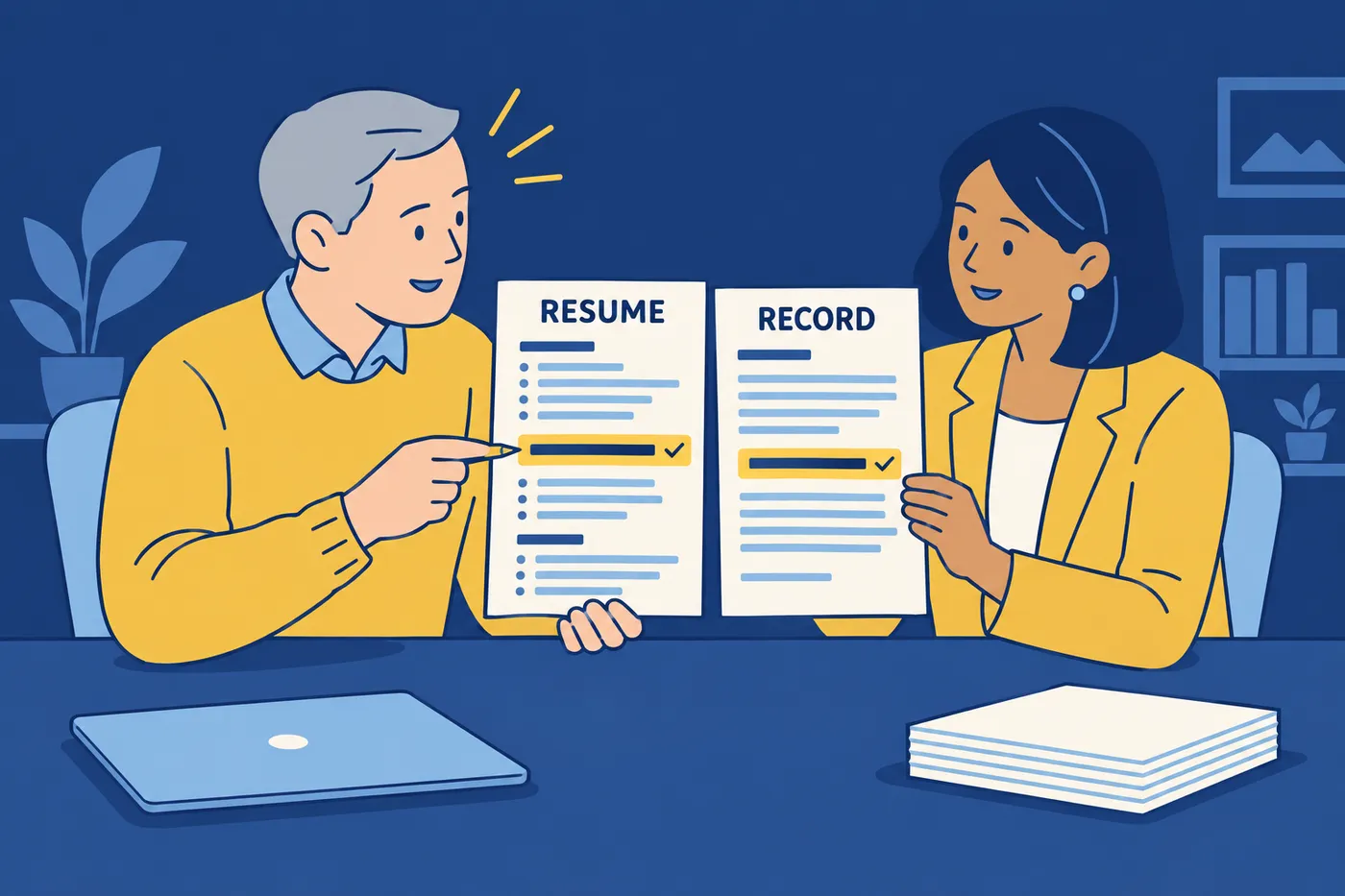
- Check employment dates, official titles, institution names, and earned credentials against your records. Do not invent precision when you are uncertain; ask how to record it.
- Keep relevant evidence available for an employer or institution that has closed. Ask what the provider accepts before sending sensitive pay or tax documents.
- Verify professional credential details with the appropriate authority before stating a status on your application.
- Read each disclosure question as written. A resume can summarize relevant work, while a screening form may request a different period or level of detail.
- Use the approved secure channel, confirm the recipient, and ask whether unrelated sensitive information can be redacted from supporting documents.
If an employment verification raises a question about a departure, keep your explanation factual and consistent with your records. The reason-for-leaving guide offers wording examples. A concise explanation should not turn into speculation about what a former employer might say.
Know which stage of the process you are in
The sequence depends on the employer and applicable rules. Do not assume all checks occur at the same point or that a conditional offer resolves every remaining requirement. Ask the hiring contact to identify the current stage:
- What screening is planned, and who provides it?
- What disclosure, authorization, or information is required from me?
- Which report components or follow-up requests remain outstanding?
- Has the employer completed its review, and what conditions or notices remain?
A provider’s “complete” status and an employer’s hiring decision are separate. Ask what the label means and when the employer expects to update you. Record any real deadline or outstanding task instead of treating timing alone as a good or bad result.
The next step while you wait
Keep the submitted resume and application form so you can explain what you provided. A resume editor can help organize that material, but it cannot verify your history against official records or prevent a screening company’s error.
Track the provider, submission date, expected update, and next action in a calendar or job tracker. Store sensitive reports appropriately rather than copying detailed criminal, financial, or medical information into general application notes.
Frequently asked questions
- Does a background check include social media?
It may, depending on the service, and an employer may also review public material independently. Ask what the disclosed screening covers. Do not assume every employer receives a social-media dossier or that all information gathering follows an identical process.
- Will a past employer say why I left?
The information provided depends on the source, its policies, applicable rules, and what was requested. Ask what verification covers and keep a truthful account of your work history. Do not assume only dates and title will be shared.
- Does a background check show past salary?
Some employment information services can contain compensation information, but access and hiring use depend on the service and applicable rules. Do not assume salary is always included or always hidden. Clarify the request and check local salary-history restrictions when relevant.
- How far back does a background check go?
There is no single lookback period for all records, roles, and jurisdictions. Reporting limits and rules on employer use can differ. Check the applicable requirements for the specific information instead of applying a universal seven-year rule.
- Do arrests without convictions appear?
They may appear depending on the search and applicable reporting rules, but an arrest is not proof of criminal conduct. Check the record’s status and accuracy and seek appropriate guidance if you believe its reporting or use is improper.
- Can every employer run a credit check?
Requirements and restrictions depend on the location and circumstances. Read the disclosure, ask whether credit information is part of the report, and check the relevant authority’s rules. A finance-related title alone does not answer the legal question.
- Do pending charges show up?
They may be included in some criminal-record searches subject to applicable rules. Check that the report accurately identifies the person, case, and current status. A pending charge and a conviction are different facts and should not be treated as interchangeable.



Ready to start your new resume?
Writing a resume takes time, and even a polished one can miss what a hiring manager is looking for. Roleframe helps you build a clear, ATS-safe resume in minutes and tailor it to the job you want.


