Networking Tips: What to Say, Who to Ask and How to Follow Up
Practical networking tips with sample messages, contact-planning examples, questions for short conversations and a manageable follow-up routine.


On this page
Networking means building professional relationships through conversations, shared information and help offered over time. A useful first step is to decide what you want to learn and choose someone whose experience relates to that question. You can be honest about a job search while respecting the other person's time and right to decline.
The tips below are a suggested routine, not rules that guarantee a reply or a job:
- Start with people you know, then consider acquaintances and new contacts with relevant experience.
- Explain your purpose honestly. For an informational conversation, ask about the work; when contacting a recruiter about an advertised role, it is appropriate to say you are applying.
- Make each request specific: one question, a short call or an introduction the person is comfortable making.
- Thank people who help, and share a relevant update when you have one.
- Offer useful information or help when you can, without making it a condition of receiving help.
What good networking looks like
A useful interaction can produce a clearer understanding of a role, feedback on an application or an introduction. An immediate job offer is only one possible outcome, and it is not something a contact owes you.
Compare these fictional messages. "Hi, I'm looking for a job. Do you know of anything? Resume attached." This might be appropriate for a recruiter who has asked to hear from candidates, but a new acquaintance has little context for how to help.
A more focused version is: "Hi Dana, I saw you moved to Atlas Health last year, congratulations. I'm looking at clinical operations roles and trying to understand how operations teams at health startups are structured. Could I ask you two questions by email, or arrange a short call if that suits you?" It states the subject and gives the recipient a choice about replying.
How to network starting from the people you know
Start by listing people you know, then add acquaintances and relevant new contacts. The three rings below are a planning aid; you do not have to contact everyone or use them in a fixed order.
| Ring | Who belongs here | What to ask them for |
|---|---|---|
| Ring 1: close contacts | Friends, family, current and former coworkers, people who already like you | Honest feedback, market intel, and introductions to their contacts |
| Ring 2: looser ties | Classmates, alumni, former managers, neighbors, people from clubs, sports, faith groups or volunteering | Short conversations about their field, company or path |
| Ring 3: new contacts | People at target companies, speakers at events, second-degree LinkedIn connections | One specific question or a 15-minute informational call |
Acquaintances may know people or organizations outside your closest circle. A 2022 study described by MIT found that weaker connections on LinkedIn could help job mobility, with effects varying by tie strength and industry. That does not establish that most openings come from acquaintances or that any individual message will lead to a job.
Here is a fictional example. Maya, a marketing coordinator aiming for a content marketing role, puts her former agency manager, two ex-coworkers and a cousin in B2B software sales in her first ring. Her second ring includes people from her college marketing club, an alum in demand generation, a freelance-copywriter neighbor and a teammate from a recreational sports league who works in HR. Her third ring includes two content leads at target companies and a speaker from a webinar she attended.
Your list may be much smaller. Start with the names you have, choose one person whose experience fits your question, and keep a note of why you want to contact them.
What to say, word for word
The fictional scripts below show how to state your connection, give brief context and make one specific request. Replace names and experiences with accurate details. A short message is a useful starting point; there is no universal sentence count or reply-rate formula.
Reconnecting with a former coworker
"Hi Marcus, it's been a while since the Brightline days. I saw your team's launch announcement last week and thought of you, congrats. I'm starting to look at product operations roles and I'd value your read on the market right now. Any chance you have 15 minutes in the next couple of weeks? Happy to work around your schedule."
The launch mention gives Marcus context for why you thought of him. Use it only if you actually saw the announcement. If you have nothing recent to reference, say what you remember working on together.
Asking an alum for a short call
"Hi Ms. Rivera, I found you through the Ohio State alumni directory. I graduated in 2024 with a finance degree and I'm weighing a move from audit into FP&A, which is exactly the switch you made. Could I ask you a few questions on a 15-minute call? Any week works for me."
A shared school explains how you found the person; it does not guarantee interest or a reply. Name the specific thing about their path that made you pick them. "You seem successful" is flattery; "you made the move I'm trying to make" is a reason.
Asking a friend for an introduction, with a forwardable note
Two messages. First, the ask to your friend:
"Hey Sam, you mentioned your teammate Priya works on the data platform at Northwind. I'm applying there and would love 15 minutes with her about how the team works. Would you be comfortable forwarding her a short note from me? No pressure at all if not."
Then the forwardable note, written so Sam can send it untouched:
"Hi Priya, Sam suggested I reach out. I'm a data analyst with four years in retail analytics, and I'm looking seriously at Northwind's analytics openings. I'd value 15 minutes on how the data team is set up and what makes people succeed there. Happy to fit your calendar, and thanks either way."
A forwardable note reduces the writing needed from Sam. Let Sam decide whether to forward it, and ask before sharing anyone’s contact details. If you need a longer written introduction, say for a hiring manager rather than a peer, a letter of introduction is the fuller format.
Approaching someone after a talk or at an event
In person, skip the biography and react to what they just said:
"I liked your point about onboarding being a retention lever. I'm moving from support into customer success, and that's the part of the job I'm trying to understand. How does your team actually measure it?"
Then the next-day message: "Hi Jordan, we spoke after your onboarding talk at the CS meetup yesterday. Your point about measuring time-to-first-value stuck with me. If you ever have 15 minutes, I'd love to hear how you built that metric. Either way, thanks for the talk."
For the one-line introduction of yourself that these conversations open with, use a prepared pitch rather than improvising. Our elevator pitch examples cover that line by situation, so this page won't repeat it.
Informational conversations: the 15-minute call
An informational conversation is a chance to learn about a role, team or industry from someone with relevant experience. Suggest a short call, such as 15 or 20 minutes, and agree on the time together. Near the end, check whether they need to leave rather than assuming they can continue.
Questions to choose from:
- "What does the work actually look like day to day, versus what the job description says?"
- "Which skills matter most on your team, and which ones do people overrate?"
- "How did you get in, and what would you do differently now?"
- "If you were in my position, what would you do in the next three months?"
- If appropriate: "Is there anyone else you think I should talk to, and would you be comfortable introducing us?"
An introduction is optional. The person may not know someone suitable or may prefer not to share a contact. Thank them for the conversation either way.
Keep an informational call focused on what you agreed to discuss. If there is a specific opening and a reason the person can assess your fit, you can ask about the referral process without assuming they will endorse you. For example: "I noticed the analyst opening on your team. Would you feel comfortable reviewing my background for a possible referral? I understand if you would rather not." Follow any application instructions and never describe a referral as a way to bypass required screening.
Networking for shy people: events without the dread
If networking feels uncomfortable, planning a small amount of structure can help. You might prepare an opening question, arrange to attend with someone you know, or choose a quieter format. Pick a level of participation that suits your energy and access needs.

- Set a small personal goal, such as introducing yourself to one or two people, and leave when you need to.
- Consider arriving early if a quieter room is easier for you, or ask the organizer about the format in advance.
- Ask about work, interests relevant to the event, or how someone entered the field. Listen and allow them to end the conversation.
- Volunteer if the role appeals to you. An assigned task can provide a natural reason to speak to attendees.
- Try a one-to-one call or coffee if large mixers are uncomfortable. Neither format is universally better.
Fictional openers and exit lines for three common settings:
| Setting | Opening line | Exit line |
|---|---|---|
| Career fair | "Hi, I'm a final-year data analytics student. I read that your team is growing its reporting function. What are you mainly looking for at this fair?" | "Thanks, this was useful. What's the best way to follow up with you directly?" |
| Professional association meeting | "First time here for me. How long have you been coming, and is there a session you'd recommend?" | "I want to catch the next talk. Could we connect on LinkedIn? I'd like to continue this." |
| Local meetup | "What are you working on at the moment?" (then listen, and ask one follow-up question) | "I promised myself I'd meet a couple of new people tonight, so I'll keep circulating. Really glad we talked." |
Try an opening and an exit line in a low-pressure setting before using them at a larger event. Familiar contacts can decline too; treat practice as a way to become more comfortable with a conversation, rather than a way to eliminate rejection.
Follow up, then keep in touch
Choose follow-ups that fit the conversation rather than imposing a fixed schedule on every contact.
Send a specific thank-you. A note the next day is a reasonable goal when someone has given you time: "Thanks for speaking with me. Your explanation of agency and in-house roles helped me narrow my search. I appreciate it."
Share a relevant update. If you acted on advice, you could write: "I contacted the two agencies you mentioned and have an interview next week. Thank you for pointing me toward them." This is a fictional example; only report an outcome that actually happened.
Keep future contact natural. Share something relevant when it arises, congratulate them on news they have made public or offer help you can realistically provide. Respect their preferred channel and how often they respond.
Record what you discussed and any commitment you made. A spreadsheet works; Roleframe's contact tracker is another option for organizing your contacts. Review your notes before sending a follow-up.
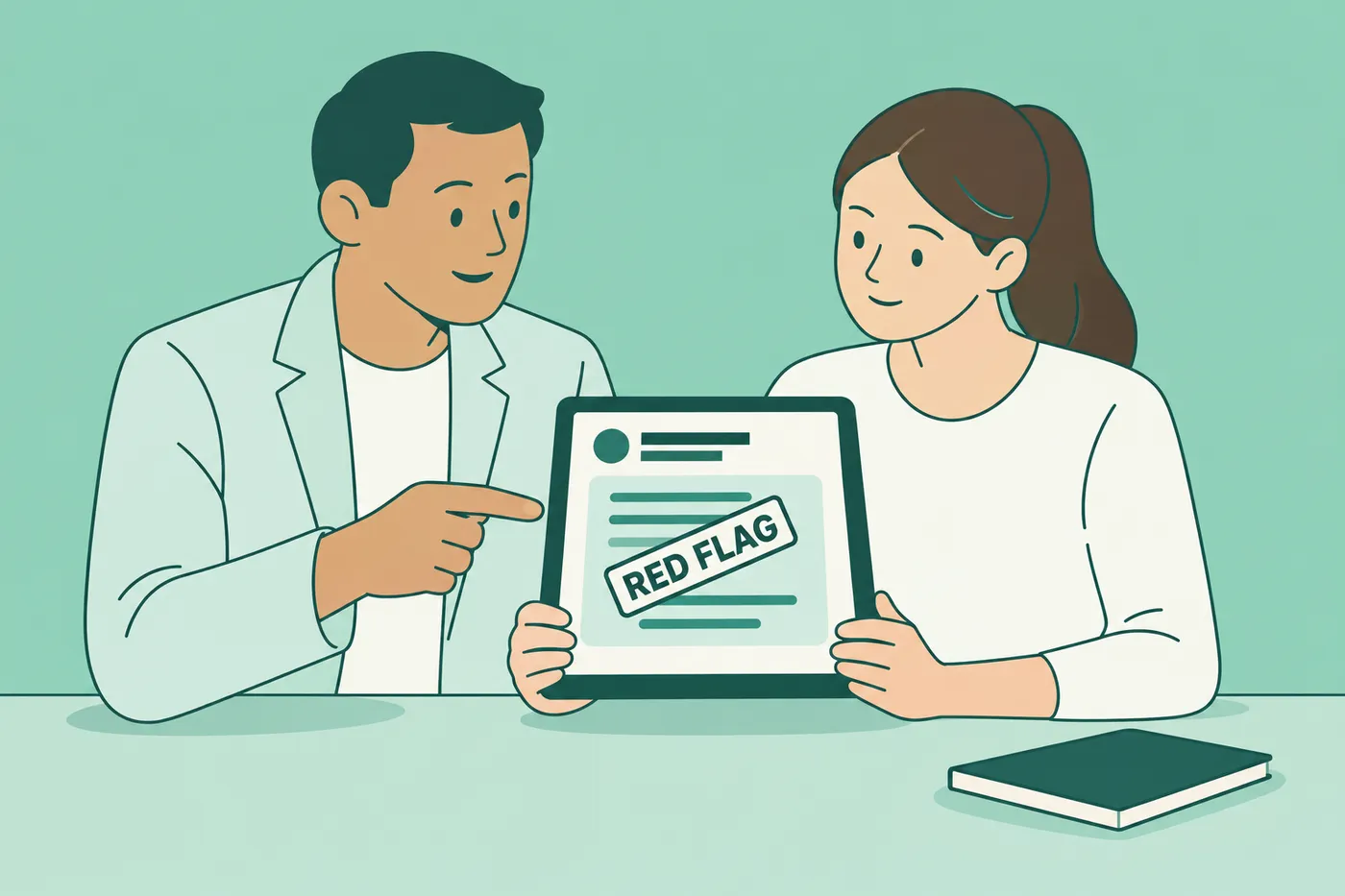
Red flags: in your own outreach, and in other people's
Before sending outreach, check whether it is specific, accurate and proportionate to your relationship. These habits can make a request difficult to respond to:
- Asking a new acquaintance to find you a job without saying what kind of work you seek.
- Attaching a resume when the conversation does not call for one. For a recruiter inviting applications, sending a resume may be appropriate.
- Reusing a message without checking the name, relationship and details.
- Repeated requests after someone has declined or stopped responding.
- Promising a follow-up or introduction and then forgetting to send it.
- Asking someone to endorse skills or experience they cannot honestly assess.
Check unfamiliar recruiters and openings independently. The U.S. Federal Trade Commission's job-scam guidance warns against paying to get a job and fake-check schemes that ask you to send money onward. Verify the employer through its own website or established contact channels before sharing sensitive information. A paid career-coaching service is different from a demand for payment to secure an advertised job; evaluate the service and its terms separately.
Use practical habits, not a universal networking percentage
Numbered frameworks such as the "7 steps," "5 P's" or "3 C's" can be memory aids, but their wording depends on the author. Choose a routine you can sustain: identify relevant people, ask a clear question, follow through and offer help when you can.
Do not use the often-repeated "70% of jobs are found through networking" as a forecast for your own search. A meaningful percentage needs a defined population, a date and a method for deciding what counts as networking. The LinkedIn research linked above studies connection strength and job mobility; it does not establish that universal percentage.
A contact may help you understand a team or learn about an opening. A referral still depends on the employer's process and does not guarantee that a hiring manager will review or accept your application. Continue applying through the stated channels alongside your conversations.
The next step: get it out of your head
Write down a few contacts, choose one relevant question and send a message you are comfortable standing behind. Record the response and any next step. You can use Roleframe's contact tracker to organize people and the job tracker to organize applications. Always verify a saved job's details against the employer's current posting. For a broader routine, see our job search plan.
Frequently asked questions
- How do you increase your networking skills?
Practice small, specific conversations. Prepare one question, listen to the answer and send any follow-up you promised. Try different formats, such as an alumni call or a professional event, and notice which help you learn and build relationships. There is no required personality type or guaranteed timetable.
- Is it true that 70% of jobs are found through networking?
Do not treat that figure as a universal fact. It needs an identifiable source, population and definition of networking. The LinkedIn study described by MIT concerns connection strength and job mobility, not the percentage of all jobs filled through networking.
- What are networking red flags to avoid?
Avoid repeated pressure, misleading familiarity and requests for an endorsement someone cannot support. Check unfamiliar job offers independently. The FTC warns against paying to obtain a job or sending money onward from an employer's check.
- How long should a first networking message be?
A few sentences are a useful starting point: explain your connection, give relevant context and ask one clear question. Add more detail when the recipient needs it, and avoid a long biography before the request.
- Should you attach your resume to a networking message?
Attach it when the recipient asks, when a recruiter invites candidates to send one, or when it is relevant to an agreed referral conversation. For a first informational request to an acquaintance, offering to send it later may be more appropriate. Use the format the recipient requests.
- How soon should you follow up if someone doesn't reply?
If no timeframe was agreed, one short follow-up after about a week is a reasonable option. For example: "Checking back in case this got buried. No worries if the timing is bad." If there is still no reply, let the request rest; silence may reflect workload or lack of interest.



Ready to start your new resume?
Writing a resume takes time, and even a polished one can miss what a hiring manager is looking for. Roleframe helps you build a clear, ATS-safe resume in minutes and tailor it to the job you want.


