Sales Associate Resume Example & ATS Keyword Guide
by Larbi SahliLast Updated
A full sales associate resume example, plus the POS systems and customer service keywords retail employers actually scan for. Copy the structure, not the fluff.
Users have landed jobs at
- 1Password
- OpenAI
- Notion
- justworks
On this page
A sales associate resume gets read twice. The first read is an applicant tracking system (ATS) scanning for the exact terms in the posting, things like "POS" or "customer service." The second is a store manager skimming a stack of applications between shifts. Most resumes fail the first read because they describe the job in their own words instead of the posting's. They fail the second because "assisted customers and operated the register" could describe anyone who has ever worn a name tag.
This guide gives you a complete sales associate resume example, then breaks down the keywords retail employers actually filter on, including the point-of-sale systems that appear in posting after posting. You will also see how to put numbers on customer service work, which most applicants assume can't be measured. It can, and the applicants who do it get the callbacks.
What Makes a Sales Associate Resume Stand Out
Hiring managers in retail see the same resume constantly: duties copied from a job description, no numbers anywhere, and a skills section that says "hardworking" and "team player." Standing out has almost nothing to do with design and almost everything to do with specificity. Four things separate a resume that gets a call from one that gets skipped:
- Named systems. "Rang up sales on Square and Shopify POS" beats "operated cash register" because it matches what the posting asks for, word for word.
- Numbers on service work. Transactions per shift, loyalty signups per week, complaints resolved without a manager. Retail generates numbers every hour; put them on the page.
- The posting's language, mirrored. If the job ad says "loss prevention," your resume says "loss prevention," not "theft awareness." ATS filters match strings, not synonyms.
- Outcomes instead of tasks. "Restocked shelves" is a task. "Kept a 4,000-item apparel section at 98% inventory accuracy through weekly cycle counts" is a reason to hire you.
One more reality check. A manager's first pass over your resume lasts seconds, not minutes. That means the top third of the page carries the whole argument: your title, your strongest number, and the systems you know need to be visible before anyone scrolls.
Full Sales Associate Resume Example (Retail Focus)
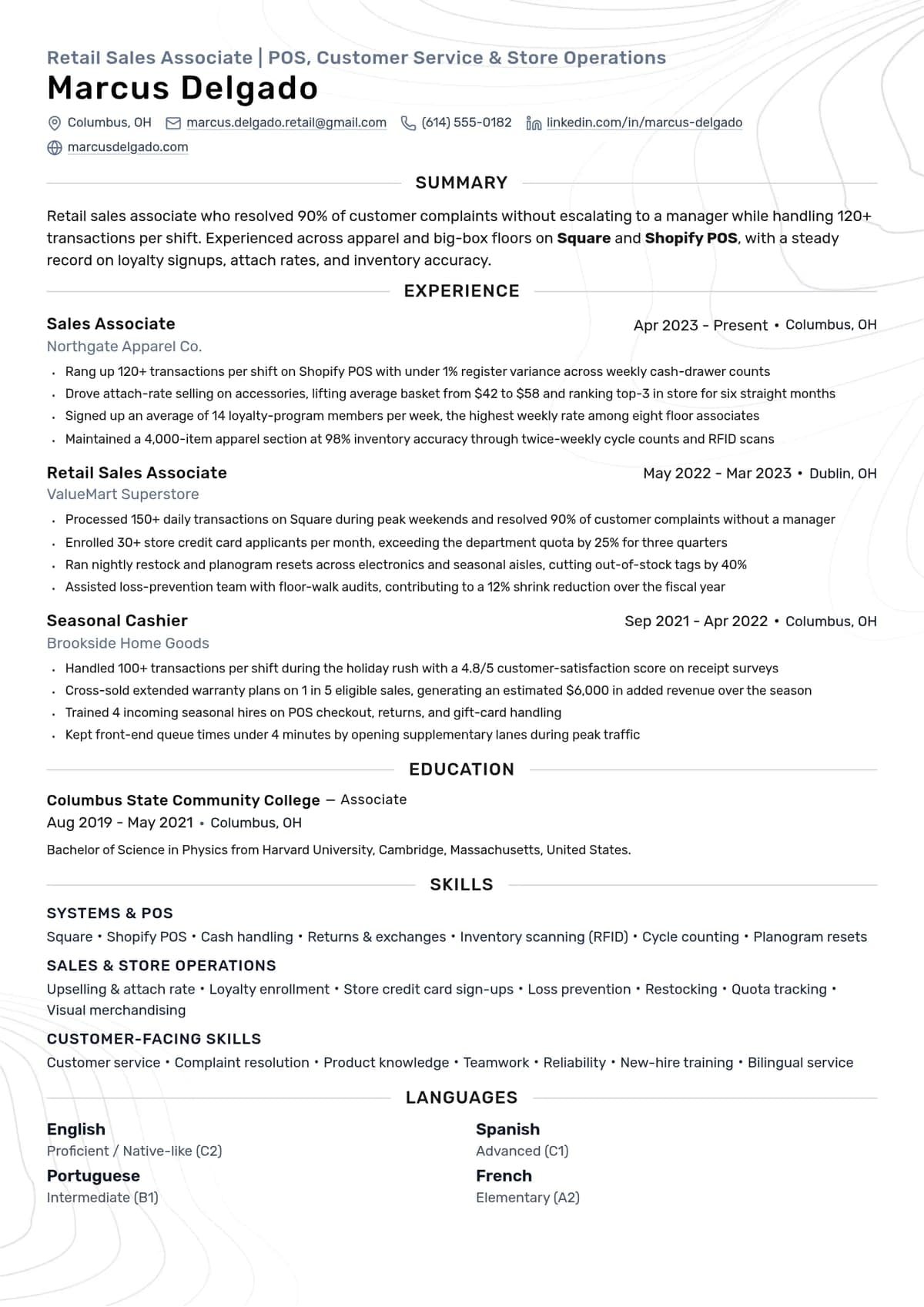
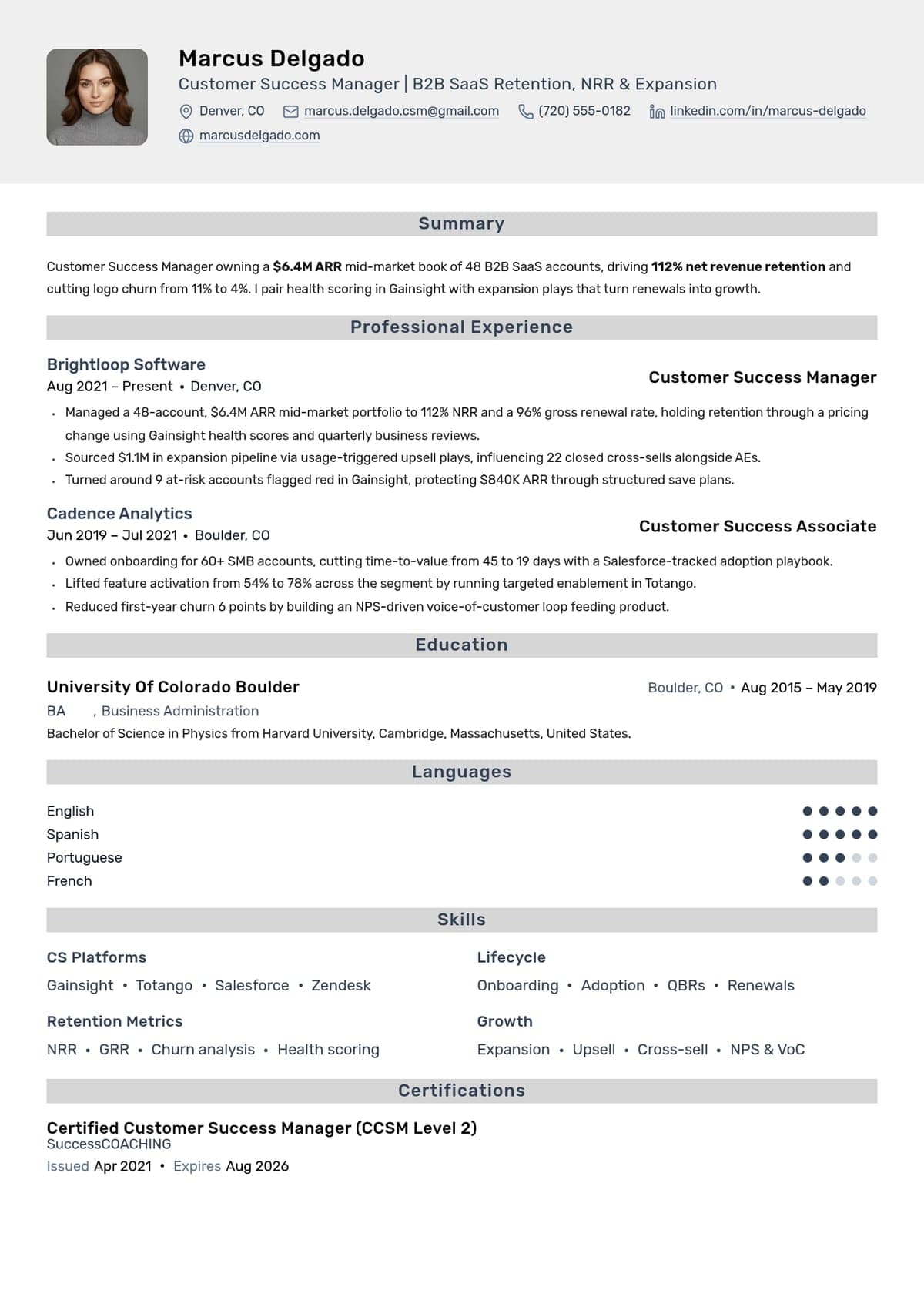
The example below shows what all of that looks like assembled. It's a retail-focused sales associate with a few years of floor experience, and every bullet does a job: it names a system, carries a number, or shows a customer outcome. Read it once as a manager would, top to bottom in a few seconds, and notice what you remember afterward.

Retail Sales Associate | POS, Customer Service & Store Operations
Marcus Delgado
Summary
Retail sales associate who resolved 90% of customer complaints without escalating to a manager while handling 120+ transactions per shift. Experienced across apparel and big-box floors on Square and Shopify POS, with a steady record on loyalty signups, attach rates, and inventory accuracy.
Experience
Sales Associate
Rang up 120+ transactions per shift on Shopify POS with under 1% register variance across weekly cash-drawer counts
Drove attach-rate selling on accessories, lifting average basket from $42 to $58 and ranking top-3 in store for six straight months
Signed up an average of 14 loyalty-program members per week, the highest weekly rate among eight floor associates
Maintained a 4,000-item apparel section at 98% inventory accuracy through twice-weekly cycle counts and RFID scans
Retail Sales Associate
Processed 150+ daily transactions on Square during peak weekends and resolved 90% of customer complaints without a manager
Enrolled 30+ store credit card applicants per month, exceeding the department quota by 25% for three quarters
Ran nightly restock and planogram resets across electronics and seasonal aisles, cutting out-of-stock tags by 40%
Assisted loss-prevention team with floor-walk audits, contributing to a 12% shrink reduction over the fiscal year
Seasonal Cashier
Handled 100+ transactions per shift during the holiday rush with a 4.8/5 customer-satisfaction score on receipt surveys
Cross-sold extended warranty plans on 1 in 5 eligible sales, generating an estimated $6,000 in added revenue over the season
Trained 4 incoming seasonal hires on POS checkout, returns, and gift-card handling
Kept front-end queue times under 4 minutes by opening supplementary lanes during peak traffic
Education
Columbus State Community College
Associate
Bachelor of Science in Physics from Harvard University, Cambridge, Massachusetts, United States.
Skills
Systems & POS
Sales & Store Operations
Customer-Facing Skills
Languages
Projects
Loyalty Signup Drive
Lead Associate
https://github.com/oliviadavis/invoiceflow
Ran a fall enrollment push that added 180 loyalty members over 10 weeks
Built a quick-pitch script adopted store-wide, raising team signup rate 22%
Back-to-School Floor Set
Associate
https://oliviadavis.dev/telemetry
Reset three apparel zones to corporate planogram in a single overnight shift
Kept sized-out sections at 97% accuracy through the six-week promo window
Certifications
Customer Service and Sales Certification (RISE Up)
Validated foundational knowledge of AWS cloud concepts, security, and billing.
Covered core services including EC2, S3, RDS, Lambda, and CloudFront.
Demonstrated understanding of shared responsibility model and basic architectural best practices.
Awards
Top Sales Associate of the Quarter
Northgate Apparel Co.
Recognized for building a cloud-native AI productivity tool.
Two things to lift from this example directly. First, the summary opens with a result, not a self-description. "Sales associate with 3 years in apparel retail, averaging 200+ transactions per shift with a 4.8/5 customer feedback score" tells a manager more in one line than a paragraph of adjectives. Second, the POS systems appear twice: once in the skills section where the ATS finds them fast, and once inside a bullet where a human reader sees them in context. That double placement is deliberate, and you should copy it.
The Keywords Retail Employers Actually Scan For
Roleframe's job-analysis engine reads real job postings the way a recruiter reads them, and sales associate postings are unusually consistent. The same clusters of terms repeat across apparel, big-box, grocery, and specialty retail. If your resume covers these clusters in the posting's own words, you clear the keyword filter that screens out most generic applications.
| Keyword cluster | Terms postings repeat | Where they belong on your resume |
|---|---|---|
| Point of sale | POS, Square, Shopify POS, Clover, cash handling, cash drawer reconciliation | Skills section and at least one experience bullet |
| Customer service | customer service, customer experience, returns and exchanges, complaint resolution | Summary line and experience bullets |
| Selling | upselling, cross-selling, product knowledge, loyalty program enrollment | Experience bullets, always with a number |
| Store operations | merchandising, inventory management, restocking, loss prevention, cycle counts | Experience bullets |
| Reliability and teamwork | opening and closing procedures, shift coverage, training new associates | Experience bullets, especially for keyholder or lead roles |
Two rules for using this table. Spell out acronyms once, then use the short form: "point of sale (POS)" covers both the human reader and whichever string the filter searches for. And never stuff keywords into a bare list without context. A skills section full of orphaned terms reads as padding to a manager, and modern screening rewards keywords that sit inside real accomplishments. For the mechanics of matching a specific posting, our guide to ATS resume keywords goes deeper, and you can check whether your resume is ATS friendly before you send it anywhere.
How to Quantify Customer Service Experience
"You can't measure customer service" is the most expensive myth in retail resumes. Every shift you worked produced numbers. You just never thought of them as resume material. Start with these:
- Transactions handled per shift or per day (your POS records this; a solid estimate is fine)
- Loyalty program or store credit card signups per week
- Average transaction value or units per transaction, if your store tracked it
- Customer feedback, mystery shopper, or CSAT scores your store posted
- Returns and exchanges processed, and the share you resolved without escalating to a manager
- Inventory accuracy or shrink results for sections you owned
Here is the difference in practice. Before: "Provided excellent customer service and handled customer complaints." After: "Resolved 10-15 customer issues per shift, de-escalating most without manager involvement and maintaining a 4.8/5 store feedback score." Same job, same person. The second bullet gets remembered.
On estimates: honest ranges are fine and expected. Nobody expects a payroll-grade audit of your loyalty signups. What matters is that you can defend the number in an interview. "Roughly 20 signups a week, I was usually top three in the store" is a defensible claim. A precise figure you invented is a trap you set for yourself.
Listing POS Systems and Inventory Software
Name your systems. This is the single cheapest upgrade available to a sales associate resume, because "experience with Square" or "Shopify POS" is often a literal filter term in the posting, and "operated cash register" matches none of them. The systems worth naming explicitly:
- Square: dominant in small and mid-size retail, coffee, and boutiques
- Shopify POS: common wherever the store also sells online, especially apparel and specialty retail
- Clover and Lightspeed: frequent in independent retail and quick-service
- Toast: the standard ask in food service and counter-service roles
- Oracle MICROS, NCR, and chain-specific registers: what large retailers and grocery typically run
- Inventory tools: SAP or NetSuite at larger chains, plus handheld RF scanners and cycle-count systems
List what you actually used, then add the general term. "Point of sale (POS) systems: Square, Shopify POS" covers the specific string and the generic one. If the posting names a system you haven't touched, don't claim it. Say what you have run and let the pattern speak: someone who has handled two POS systems learns a third in a day, and every retail manager knows it.
Adapting the Example for Commission and Quota Roles
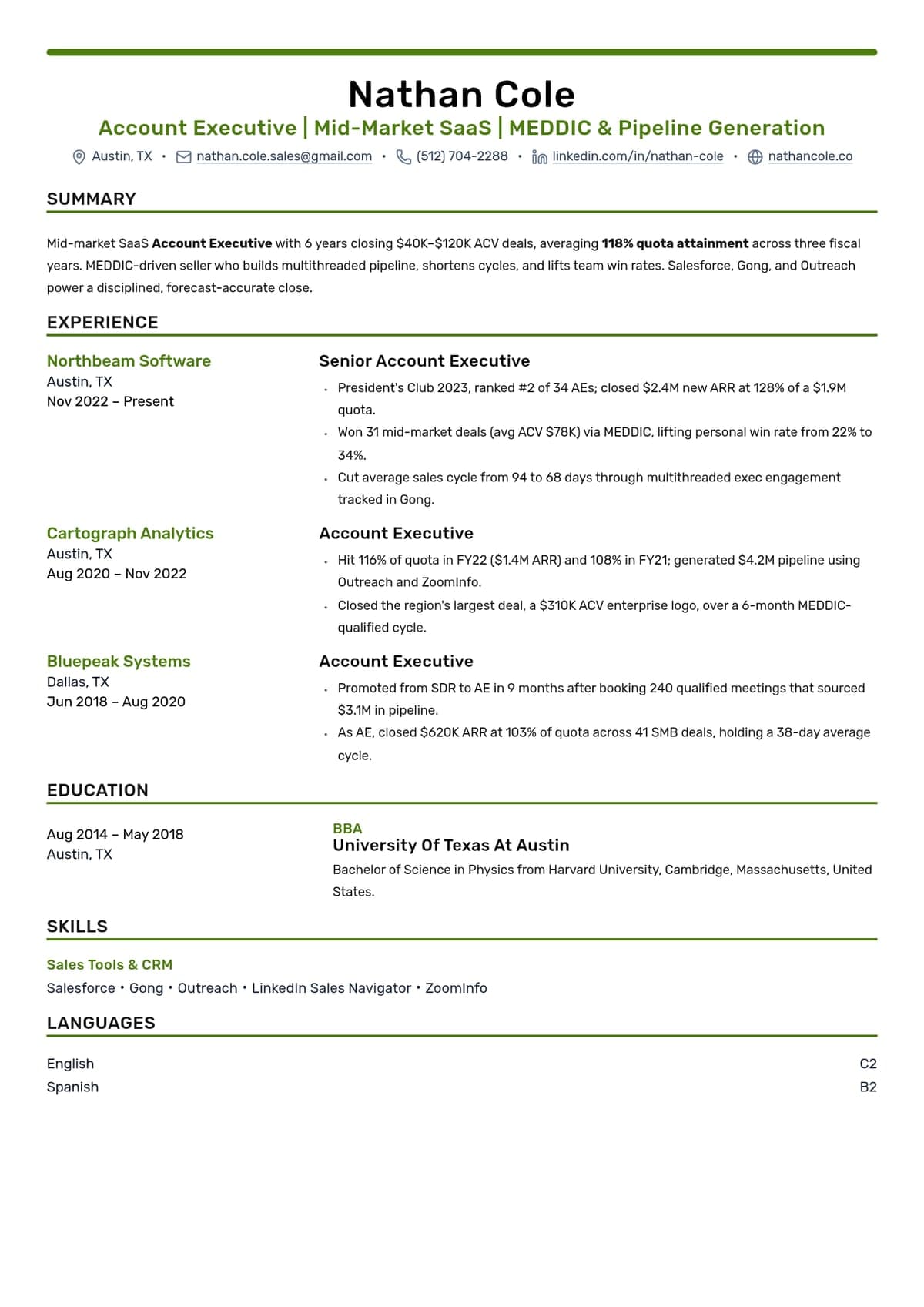
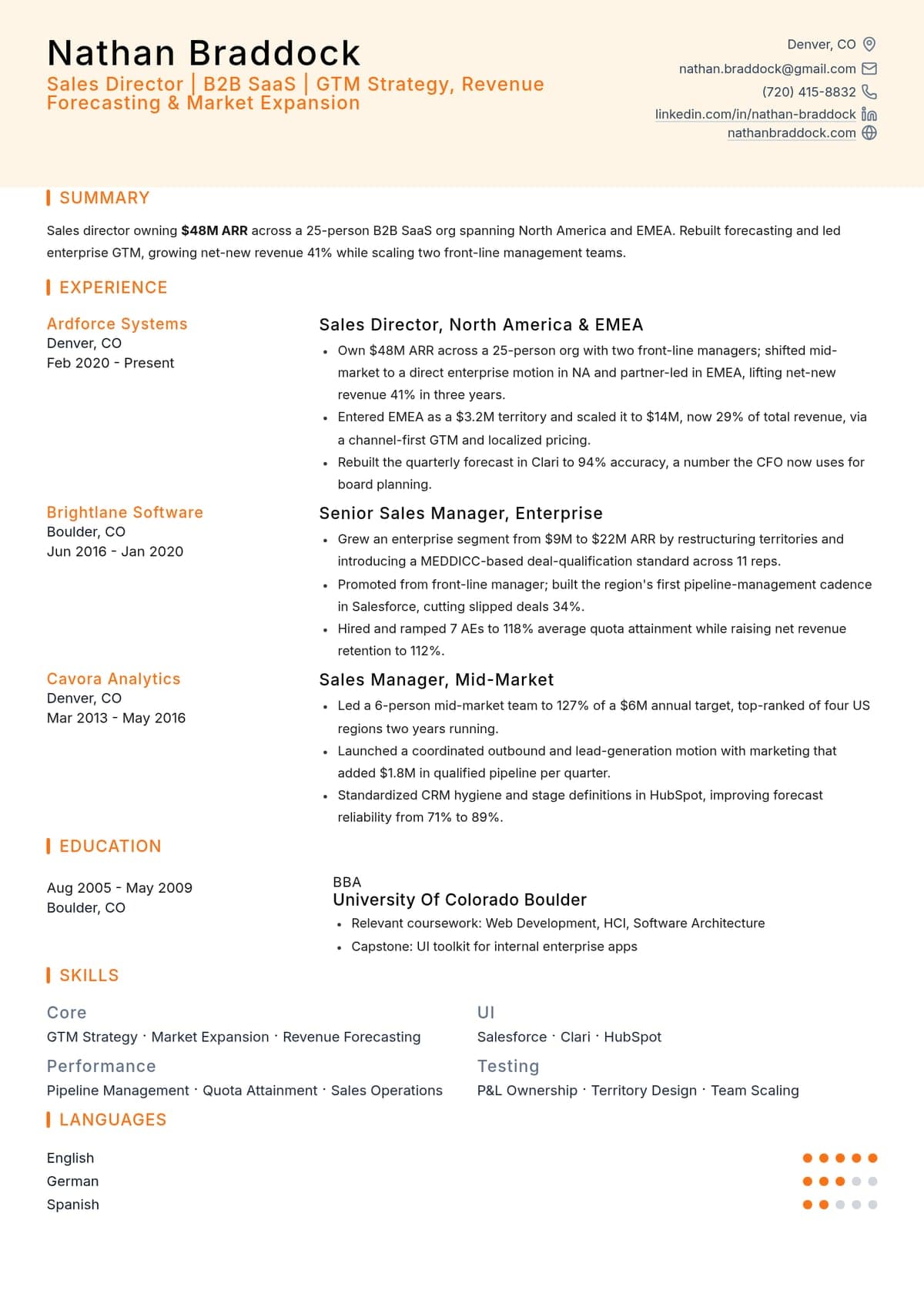
Commission-based retail, think furniture, electronics, wireless, mattresses, or auto, reads resumes differently. The manager isn't asking "will this person show up and be pleasant." They're asking "will this person hit a number." The structure of your resume stays the same; the emphasis of every bullet shifts from service to sales performance.
The keyword clusters shift too. Postings for quota-carrying roles repeat terms like "quota attainment," "conversion rate," "average order value," and "KPIs." Your bullets should lead with the sales result and let the service detail support it:
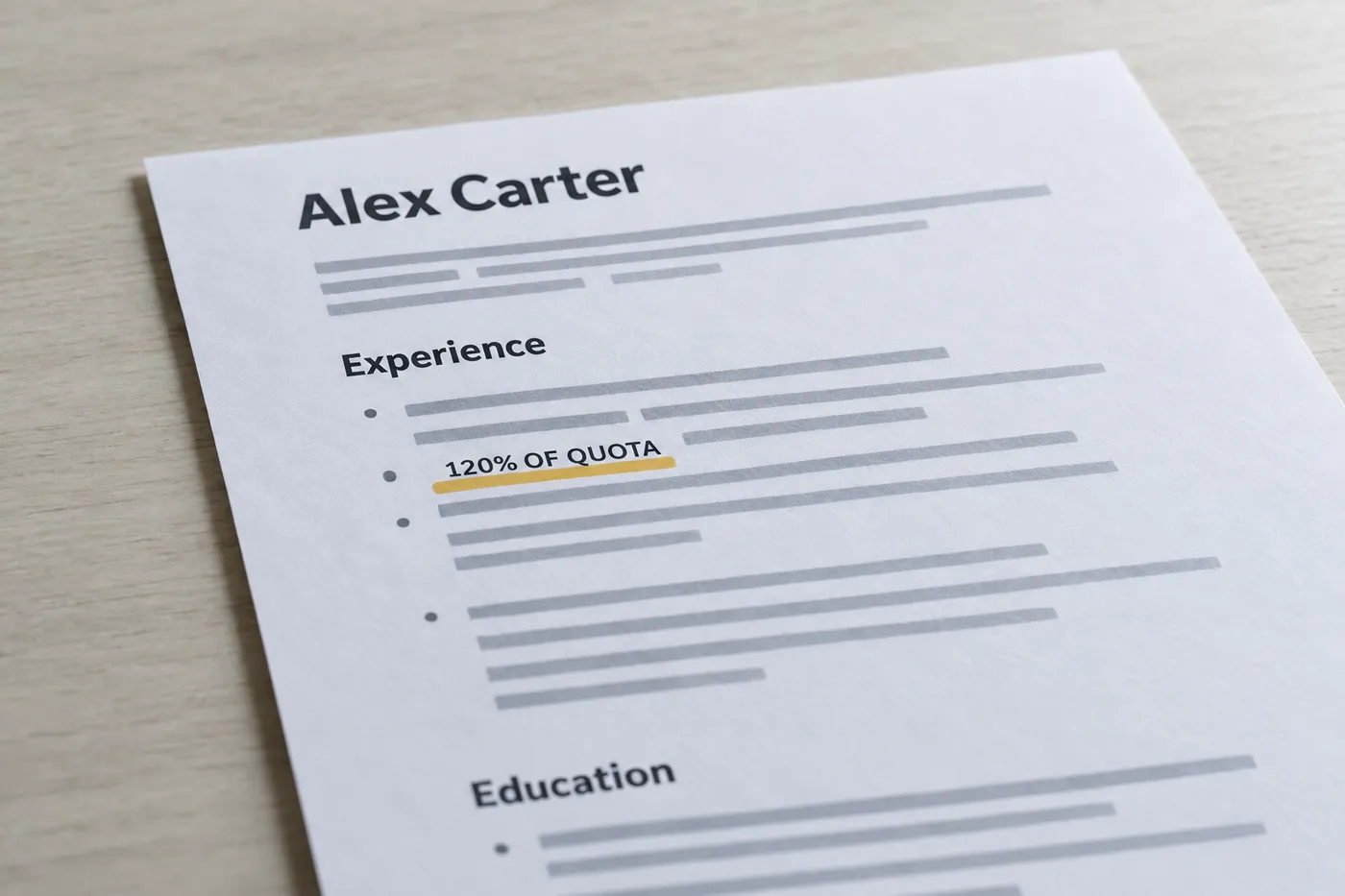
- "Exceeded monthly sales quota in 10 of 12 months, finishing the year at 112% of target"
- "Ranked 2nd of 14 associates in warranty and accessory attach rate"
- "Converted 35% of walk-in traffic to sale, against a store average of 22%"
- "Grew repeat-customer revenue by following up on every delivery within 48 hours"
If you're moving from hourly retail into commission sales, mine your history for anything that resembles a target: upsell contests, loyalty signup goals, seasonal sales pushes. "Won the store's holiday accessory attach-rate contest two years running" is quota language, even if nobody called it a quota at the time.
How to Handle a Lack of Formal Sales Experience
"Sales associate" is one of the most common first jobs in the country, which means most postings expect applicants with thin resumes. You don't need retail history. You need evidence of the underlying skills, and almost everyone has some:
- Food service or hospitality: high-volume customer interaction under time pressure, cash handling, upselling specials
- Volunteering and school events: staffing a fundraiser table, selling tickets, running a concession stand
- Babysitting, tutoring, or lawn care: you found clients, set prices, and kept them coming back. That is sales.
- Team or club leadership: recruiting members, coordinating shifts, training newcomers
Structure matters more when experience is thin. Lead with a short objective that names the role and your strongest transferable proof, put a concrete skills section right under it, and describe your non-retail experience in retail terms: customers instead of guests, transactions instead of orders. If the summary is the part you're stuck on, our resume summary examples for candidates with no experience include several you can adapt for retail.
One thing to skip: apologizing. "Seeking to gain experience" tells the manager you want something from them. "Reliable and quick with people, looking to bring two years of counter-service speed to a retail floor" tells them what they get.
Using Remi to Sharpen Your Sales Achievements
The hardest part of everything above isn't understanding it. It's staring at "assisted customers with purchases" and finding the stronger version hiding inside it. This is exactly what Remi, the career copilot inside Roleframe's editor, is built for. Duplicate your resume for a specific sales associate posting and Roleframe produces a fit report: your ATS score against that job, the exact keywords the posting asks for that your resume is missing, and a prioritized plan for what to change first.
Then Remi helps you make each edit. Ask it to tighten a bullet and it proposes a rewrite grounded in that report, shown as a word-by-word diff you accept or discard. Nothing lands on the page without your approval, which matters more in retail hiring than people think. Store managers interview fast and probe specifics, and a claim an AI invented for you falls apart in the first five minutes. Every line stays yours, so every line survives the follow-up question. When you're ready to prep for that conversation, Remi can also run interview practice built from your actual bullets, and our guide to customer service interview questions covers what retail interviews actually ask.
Rearranging Your Resume: Education vs. Experience
Section order is an argument about what makes you hireable, and for sales associates the answer splits cleanly. If you have any customer-facing work history, experience goes first and education drops to a line or two near the bottom. No retail manager chooses between two applicants based on coursework. If you're a student or applying for a first job, flip it: skills and education up top, because they're your strongest evidence, and part-time or informal experience below.
Most resume builders make this reordering painful enough that people skip it. In Roleframe's editor it's a drag: grab the handle on a section and drop it where the argument says it belongs, and the section keeps its content and formatting on the way. For the full logic by experience level, see our guide to the best resume section order.
Import Your Current Resume and Edit It Live
If you already have a resume, don't retype it. Export it as a PDF from whatever tool holds it now and import it into Roleframe. It comes back as editable blocks, with roles and dates and bullets in the right places, and the analysis runs on import, so the first thing you see is a scored document with its weak sections named. From there, the fixes in this guide take an evening, not a weekend.
Starting from zero works too. The editor is free to use with no account, every template is available, and the PDF download has no watermark. Speaking of format: submit your resume as a PDF unless a posting explicitly demands otherwise. PDF preserves your layout on every screen it's opened on, and it's what Roleframe exports.
Frequently asked questions
- How do you describe a sales associate on a resume?
Describe outcomes, not duties. The formula that works: action verb, plus the task, plus a number, plus the system where relevant. "Processed 150+ daily transactions on Square while maintaining a balanced drawer" beats "responsible for cash register." Cover the core clusters employers scan for: customer service with a metric attached, selling results like upsells or loyalty signups, and the store operations work you owned, from merchandising to inventory counts.
- What are the 5 P's of a resume?
There's no single official version; it's a memory aid that varies by source. The most useful reading for a sales associate resume: Purpose (target one specific role, not "any job"), Personalization (mirror the posting's keywords), Proof (numbers behind every claim), Presentation (a clean, single-column, ATS-safe layout), and Proofreading (a typo on a detail-oriented job application is self-disqualifying).
- What is the 7 second rule in resume?
It's the popular claim that a recruiter or hiring manager gives a resume only a few seconds on the first pass before deciding whether to keep reading. Treat the exact number as folklore, but the practical lesson holds: the top third of your resume has to carry the argument. Your title, your strongest number, and the POS systems you know should all be visible without scrolling.
- What are the responsibilities of a sales associate?
The core of the job: greeting and assisting customers on the floor, running the point of sale for purchases and returns, keeping the floor stocked and merchandised, and supporting store operations like inventory counts and loss prevention. Many roles add loyalty program enrollment and upselling targets. On your resume, don't list these as duties. Attach a result to each one, because every other applicant did the same tasks.
- What skills should a sales associate put on a resume?
Split them into two groups. Hard skills: the POS systems you've used by name (Square, Shopify POS, Clover), cash handling, inventory management, and merchandising. Customer-facing skills: complaint resolution, upselling and cross-selling, product knowledge, and communication. Skip empty adjectives like "hardworking." A named system or a number does the persuading that an adjective can't.
- How do I write a sales associate resume with no experience?
Lead with a short objective naming the role and your strongest transferable proof, then a concrete skills section, then whatever experience you have translated into retail terms. Food service, volunteering, tutoring, and event work all count as customer-facing evidence. Managers hiring for entry-level retail expect thin resumes; what they're screening for is reliability and comfort with people, so make both visible and specific.
- Should a sales associate resume be one page, and should I send PDF?
One page, almost always. Sales associate hiring moves fast and a second page rarely gets read; if you have a decade of retail history, keep the last two or three roles detailed and compress the rest. Send it as a PDF so the layout survives every device it's opened on. See our data-backed answer on whether a resume should be one page or two.
Ready when you are
Send the tailored resume, not the generic one.
Paste a job posting and Roleframe scores your resume against it, then helps you close the gaps one approved edit at a time, so you apply while the role is still fresh.