Should You Put 'References Available Upon Request' on a Resume?
by Larbi SahliLast Updated
Recruiters assume you have references, so the phrase wastes a line. Here's what to put in that space instead, and when employers actually ask.

On this page
No. Delete "references available upon request" from your resume. Every recruiter already assumes you have references, so the line adds zero information while burning space you could spend on skills and keywords the applicant tracking system (ATS) actually matches against the job posting. Employers will ask for references when they need them, usually at the offer stage, and never by scanning your resume for permission.
Why this phrase wastes valuable resume space
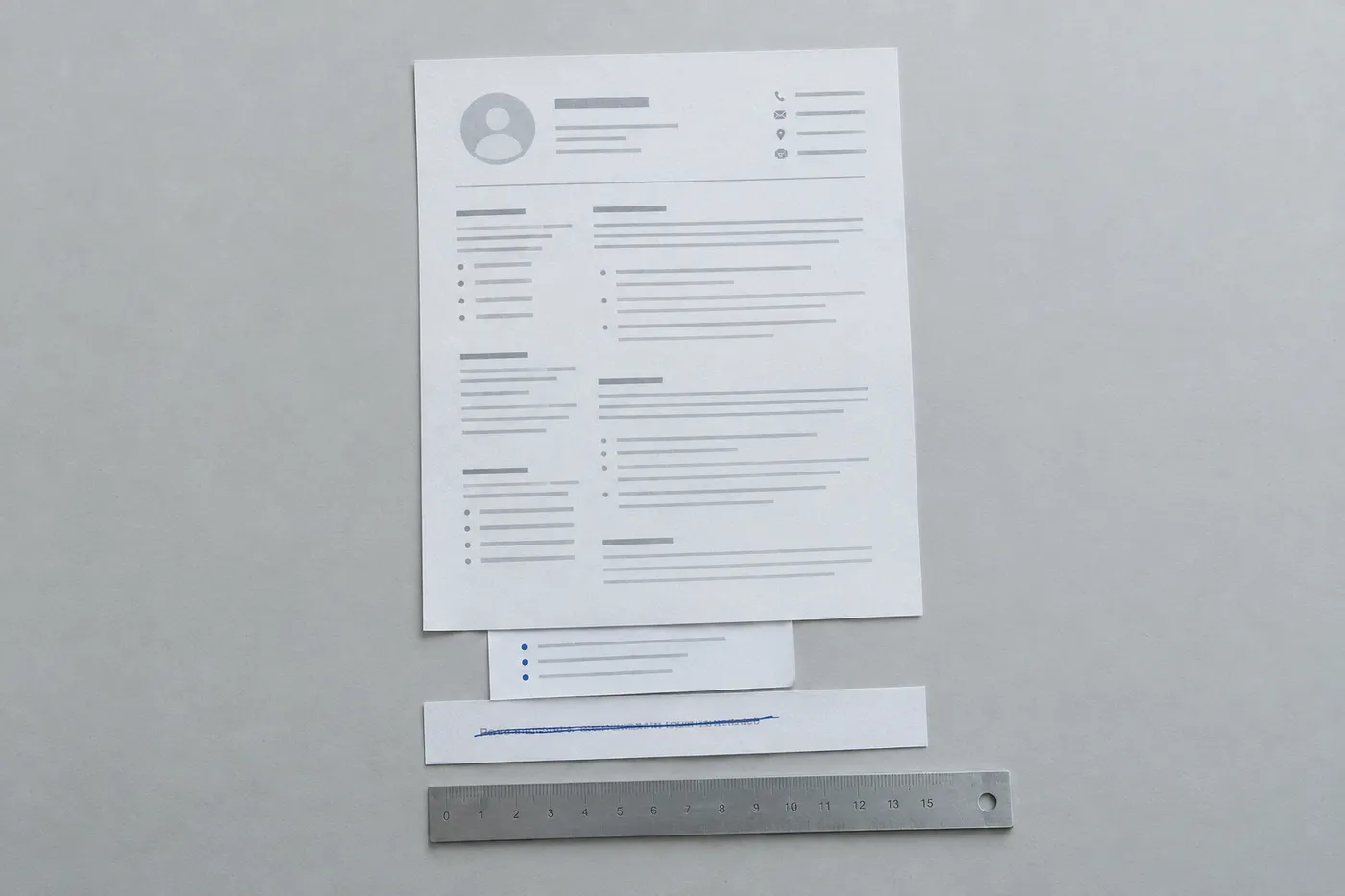
A resume is a fixed-size argument for hiring you. On a one-page resume, a line for "references available upon request" plus its section heading can eat two or three lines, roughly the same footprint as an entire accomplishment bullet or a row of six hard skills. You are trading evidence for a formality.
The phrase also tells the reader nothing they did not already know. No hiring manager has ever seen a resume without the line and concluded the candidate refuses to provide references. Withholding references when asked would end a candidacy on the spot, so stating that you won't withhold them is like writing "will show up to the interview."
There is a subtler cost too. The phrase is a fossil from typed resumes of the 1980s, and recruiters read resume conventions as signals of how current you are. Alongside an objective statement and a double-spaced address block, this line quietly dates you. That matters most for career changers and returners, exactly the people who can least afford to look out of touch.
When do employers actually ask for references?
Reference checks happen late, and on the employer's initiative. The typical sequence looks like this:
- You apply. Nobody looks at references. The resume is screened for skills, experience, and keyword relevance to the posting.
- You interview. Still no references. The panel is forming its own judgment.
- You become a finalist. Now the recruiter emails you asking for two or three references, often with a form or a link to a checking service like Checkr or SkillSurvey.
- You get an offer, sometimes contingent on the references clearing.
Notice what never happens in that sequence: nobody consults your resume to find out whether references exist. The request comes through email or the applicant portal, addressed to you directly. Some online applications have a dedicated references field, and that field, not your resume, is where names and contact details belong when they are required up front.
The practical move is to prepare a separate reference sheet now: a one-page PDF with the same header as your resume, listing three to four references with name, title, company, relationship to you, email, and phone. Keep the file ready, warn your references that calls may come, and send the sheet only when asked. Putting contact details on the resume itself exposes your references' phone numbers and emails to every job board and ATS database your resume lands in, which is a poor way to thank someone doing you a favor.
What to put in that space instead
The freed-up lines should go to whatever the job posting rewards. In practice that means one of three things, in this order of priority:
- Hard skills the posting names. If the job asks for Excel, Salesforce, SQL, or a forklift certification and your resume doesn't say so explicitly, that's a keyword gap a recruiter filter can screen you out on. Two lines of targeted skills beat two lines of boilerplate every time.
- A quantified bullet you cut for space. If you trimmed "Reduced onboarding time from 10 days to 4" to fit the page, that bullet does more for you than any formality.
- A certification or tool with its own line. Licenses and certifications are frequent ATS filter fields, and burying them costs interviews. If you're unsure where they go, see our guide on where to put certifications on a resume.
The logic is straightforward: an ATS and a skimming recruiter both evaluate your resume against the specific posting. A line that matches a requirement moves your ranking; a line that matches nothing is dead weight. Since "references available upon request" matches no requirement in any job description ever written, replacing that line with even two or three relevant hard skills directly raises how much of the posting your resume covers. For a full breakdown of what belongs in that section, our resume skills section examples show what to keep and what to swap, and the hard skills vs. soft skills guide explains why the hard skills should win the space fight.
How ATS systems treat reference sections
An ATS parses your resume into structured fields: contact info, work history, education, skills. A "References" section maps to none of the fields that scoring and filtering run on. The parser either files the text into a miscellaneous bucket or discards the section entirely. Either way, the phrase contributes nothing to your keyword match or your ranking against other applicants.
Compare that to a skills section, which most ATS platforms parse into discrete, searchable terms that recruiters filter on directly. When a recruiter searches their pipeline for "QuickBooks" or "Kubernetes," candidates whose resumes contain the term surface, and everyone else doesn't. Every line of resume real estate is either feeding that match or sitting it out. The references line always sits it out.
One caveat worth stating plainly: don't swing to the opposite extreme and stuff keywords into an invisible wall of text. Recruiters open the resumes the ATS surfaces, and a keyword dump with no evidence behind it dies in that seven-second human skim. The goal is coverage of real requirements with skills you genuinely have, formatted so both the parser and the human can read them. Our guide to making a resume ATS-friendly without ugly design covers the formatting side, and always submit as a PDF unless the employer explicitly asks otherwise, since a PDF preserves your layout exactly.
How to find what belongs in that space for each job
Deleting the line is the easy half. The harder half is knowing which skills and keywords should take its place for the specific job in front of you, because the answer changes with every posting.
This is what Roleframe is built for. Paste the job posting, and the fit report scores your resume against it: the exact keywords the posting asks for, which ones your resume already covers, which are missing, and a prioritized plan for closing the gaps. Instead of guessing whether "stakeholder management" or "Jira" deserves the two lines you just reclaimed, you see which gap is actually costing you match coverage on this application. Remi, the career copilot inside the editor, can then help you rework a bullet or the skills section to close a named gap, with you approving every change before it lands in the document.
The broader habit matters more than any single edit: keep one master resume per target role and spin off a tailored version for each application. Our guide on base resumes and tailored versions walks through the workflow.
Frequently asked questions
- Is "references available upon request" outdated?
Yes. The phrase dates to the era of typed, mailed resumes, when stating your willingness to provide references was a courtesy. Modern hiring assumes references exist and requests them at the finalist stage through email or the applicant portal. The consensus among recruiters and career advisors today is to leave the line off entirely, and keeping it can make a resume read as dated.
- What can I say instead of "references available upon request"?
Nothing. There is no better phrasing because the sentiment itself is redundant; every employer already assumes it. The correct replacement is not an alternative sentence but better content: hard skills from the job posting, a quantified accomplishment, or a certification. If you feel a resume looks unfinished without a closing line, that's a layout problem, and the fix is rebalancing your sections, not adding filler.
- Is it "available upon request" or "available on request"?
Both are grammatically correct. "Upon request" is slightly more formal and more common in US usage; "on request" is more common in UK and Australian English. The distinction doesn't matter for your resume because you shouldn't write either one. Save the phrasing question for contexts where the line belongs, like a rental application.
- Should I list my actual references on my resume instead?
No, that's worse than the phrase itself. Listing references on the resume consumes far more space, exposes your references' personal contact details to every database your resume enters, and invites premature calls before you've briefed them. Keep references on a separate one-page PDF with the same header as your resume, and share the file only when an employer asks.
- Do I need references on my resume at all?
No. A resume needs contact information, experience, skills, and education; everything else earns its place by matching the job. References belong in a separate document you provide on request, or in the dedicated field some online applications include. If a posting explicitly says to include references with your application, follow the instruction, but attach them as a separate page rather than folding them into the resume itself.
- Should I mention references in my cover letter?
No, for the same reason. A cover letter has one job: connecting your specific experience to this specific role. A sentence about references answers a question nobody asked yet and spends words you need for evidence. The only exception is a referral, which is different: if a current employee referred you, name them in the opening line, because a warm referral is one of the strongest signals in hiring.
- What if a job application specifically asks for references up front?
Provide them in the field or attachment the application requests, not on the resume. Some government, education, and healthcare employers do collect references at the application stage. Use your prepared reference sheet, confirm your references know applications are going out, and match each reference to the role where possible: a former manager carries more weight than a peer for most positions.



Ready when you are
Send the tailored resume, not the generic one.
Paste a job posting and Roleframe scores your resume against it, then helps you close the gaps one approved edit at a time, so you apply while the role is still fresh.