How to Become a Dental Hygienist: School, Licensing Checks and First Job
How to become a dental hygienist: CODA-accredited school, the NBDHE and clinical exams, plus a state licensing checklist to verify before you enroll.

On this page
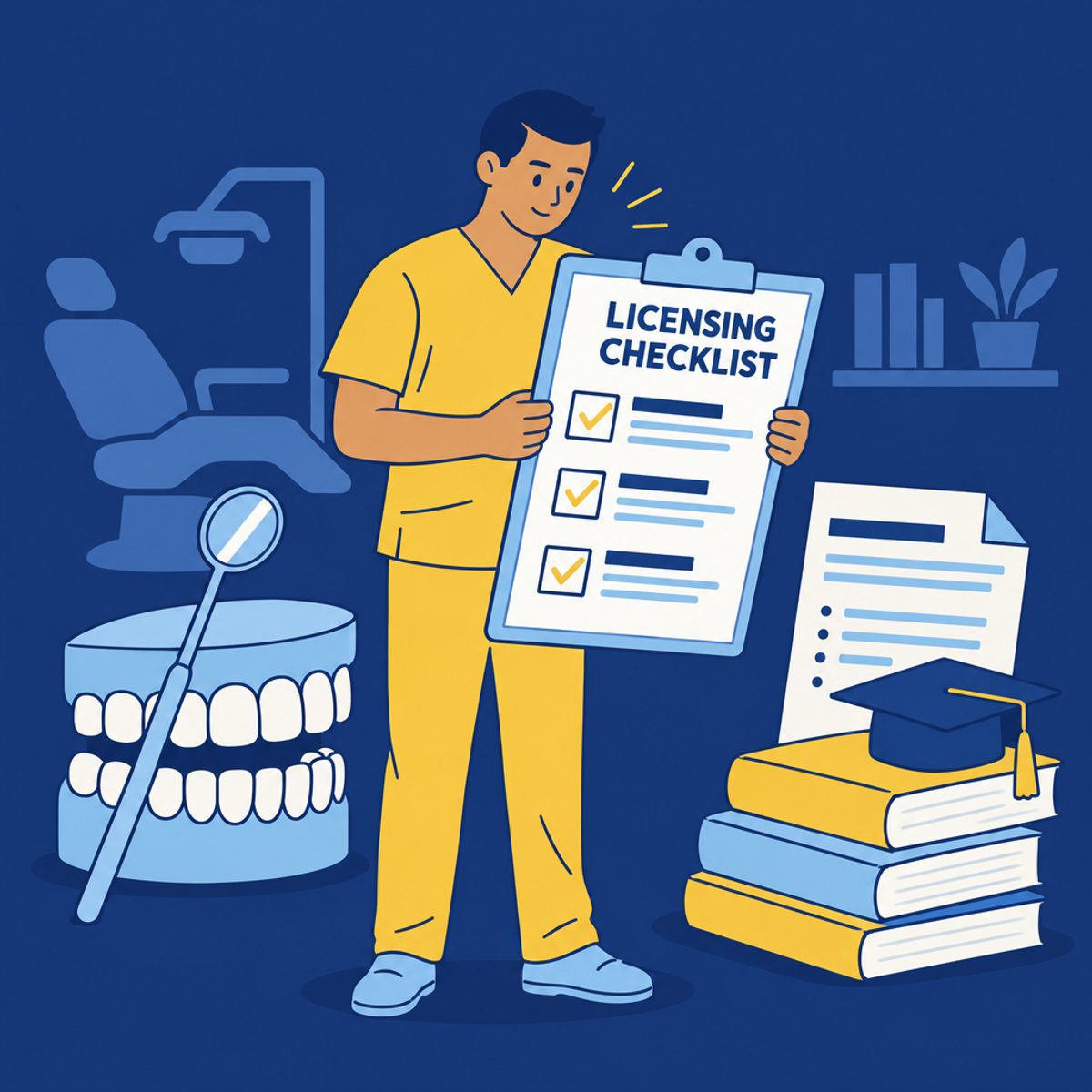
To become a dental hygienist, plan education, examinations and state licensure separately. CODA accreditation is the usual program check; the JCNDE administers the NBDHE written examination, and your intended state’s dental board decides whether you qualify for a license.
Check the board’s requirements before choosing a school, especially if you are moving states or trained outside the United States. The worksheet below helps you match the school, accepted examinations and licensing application.
Dental hygienist vs. dental assistant: pick the right target first
The two roles share an operatory and little else. A dental hygienist is an independently licensed clinician who provides preventive care, takes radiographs within the state's scope of practice, and educates patients, after completing an accredited degree program and passing national and clinical examinations. A dental assistant supports the dentist chairside, and the training path is typically shorter, with requirements that vary by state.
| Question | Dental hygienist | Dental assistant |
|---|---|---|
| Education | CODA-accredited degree program; an associate degree is the common entry route, with bachelor's programs also available | Varies by state; often shorter programs or on-the-job training |
| Exams and licensing | National Board Dental Hygiene Examination (NBDHE) plus a state or regional clinical exam, then a state license | Requirements set by each state and typically lighter |
| Daily work | Preventive clinical care, assessments, radiographs within state scope, patient education | Chairside support, instrument prep and sterilization, front-office tasks in many practices |
| Career comparison | Compare local hygiene vacancies, hours and benefits | Compare assistant vacancies separately; duties and training differ |
Dental assisting can provide useful exposure to a practice before you choose hygiene education. It does not itself confer a hygiene license. Ask the receiving program about any prerequisite or transfer credit, and check the board’s education requirements separately. The assistant resume example shows how to describe assistant experience without claiming hygiene credentials.
Entry routes: associate, bachelor's, and bridge programs
Entry-level associate programs combine science coursework, laboratory learning and supervised patient care. Entry-level bachelor’s programs also prepare students for initial practice, with additional degree coursework. Compare the complete calendar, including prerequisites and any waitlist, rather than assuming every two-year degree takes two years from application to licensure.
Degree-completion programs are designed for hygienists who already have entry-level education, and often licensure. Check their admission requirements; a completion degree is not automatically a route from no dental training to initial licensure.
Ask each program about science prerequisites, recency rules for earlier coursework, clinical requirements and admission dates. Your goal is a program that meets the board’s education rules and your actual schedule.
Verify the program before you enroll: accreditation, clinic, admissions
Verify CODA accreditation for the specific program and campus through the accreditor’s directory, then confirm its acceptance with the intended licensing board. Special or internationally trained applicant routes require their own review. A school’s institutional accreditation alone does not answer whether its hygiene program meets your licensing requirements.
After that check, ask the program about clinical placements and admissions:
- Clinical training setup: does the program run its own patient clinic, how early do students start treating patients, and who is responsible for recruiting patients for your required cases, you or the school?
- Admission requirements in writing: prerequisite courses, minimum grades, entrance exams, observation hours, and application deadlines, which often fall many months before the program starts.
- Outcomes the program will state: board pass rates and job placement, asked for directly and in writing rather than taken from a brochure.
That last question about patient recruitment matters more than applicants expect. In programs where students must find their own patients for required procedures, your clinic schedule depends on other people showing up. Ask how the program handles cancellations and whether unmet patient requirements delay graduation.
The state verification worksheet: three checks, three authorities
Each licensing jurisdiction sets its own application requirements. Fill in this worksheet for the state where you intend to practice, and repeat the check before graduation if rules or your destination change.
| Check | Who controls it | What to confirm |
|---|---|---|
| School accreditation | CODA (through the American Dental Association) | Your specific program appears on the current CODA listing. Confirm the campus, the program name, and the degree level. |
| Examination eligibility | JCNDE for the NBDHE; the regional or state testing agency for the clinical exam | Which clinical examination your target state accepts, what graduation status you need to register, and whether the state accepts the exam format your region administers. |
| Licensing | Your target state's dental board | The full application requirements: exams accepted, jurisprudence test, CPR certification, background check, fees, and continuing-education rules for renewal. |
The NBDHE fulfills or partly fulfills the written-examination requirement; passing it is not a state license. Ask the board which clinical examination or other accepted clinical-assessment route applies to your application and whether it requires jurisprudence, CPR, background screening or additional documents.
A license from one state does not automatically authorize practice in another. Check endorsement, licensure-by-credentials and any available Dentist and Dental Hygienist Compact privilege directly with the destination board. State participation, operational availability and individual eligibility are separate checks; confirm the applicable route before planning a move.
For a Missouri application, use the Missouri Dental Board’s current new-applicant checklist and fee schedule rather than transferring another state’s exam or fee requirements.
Dental hygienist school costs and the clinical schedule
Sticker tuition is the start of the math, not the end of it. When you compare programs, ask each one for an itemized cost sheet covering every line below, because the gap between programs often hides in the non-tuition items.
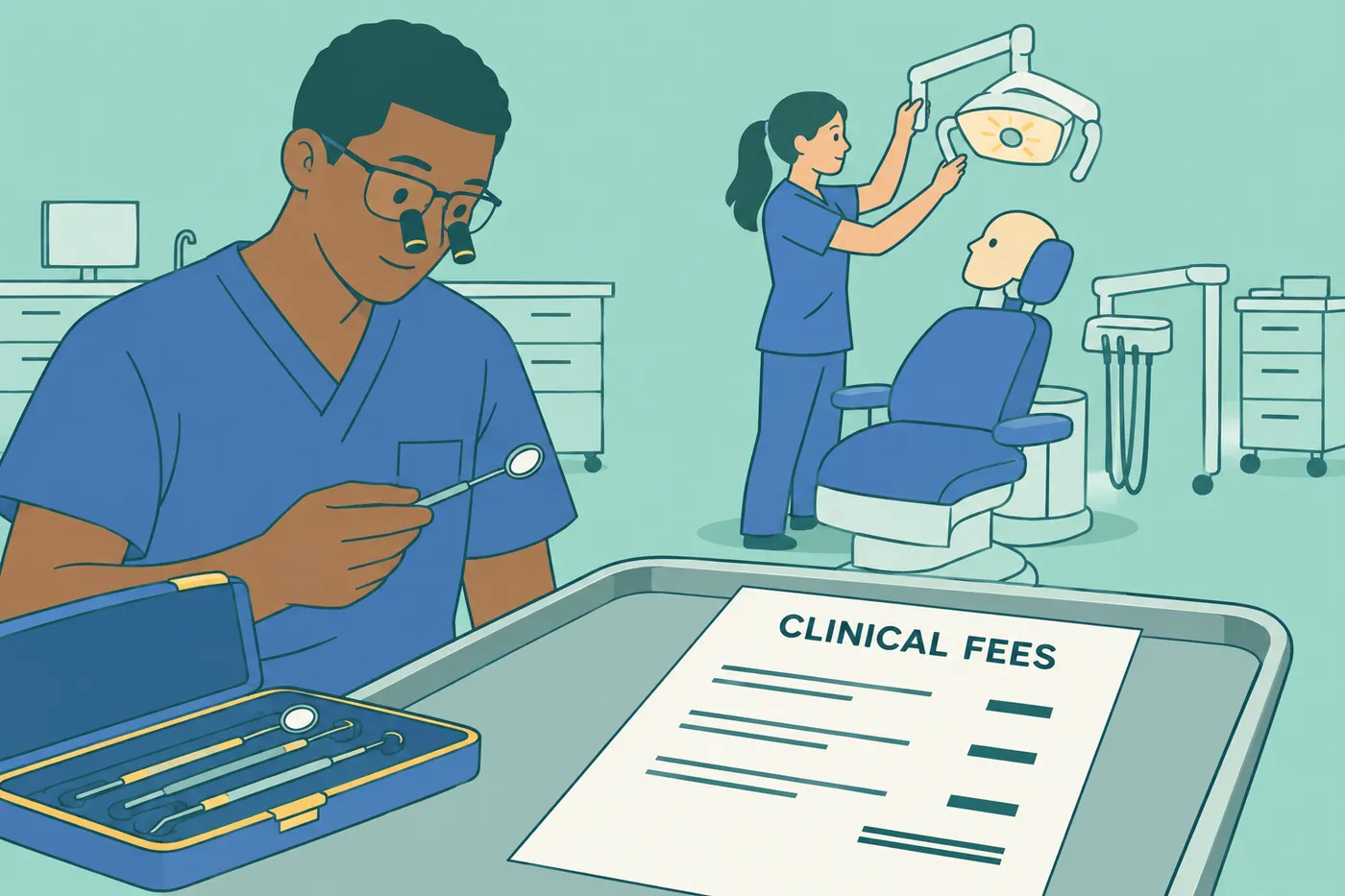
- Full tuition and prerequisite costs at your actual residency rate, with the program’s credit count
- Instrument kits and loupes, which students usually purchase
- Lab, clinic, and technology fees charged per term
- Uniforms, immunizations, and background-check fees required before clinic
- National board and clinical examination fees, paid to the testing bodies
- State application, jurisprudence and initial-license fees from the relevant board’s current schedule
- Student liability insurance where the program requires it
Ask for a semester-by-semester calendar showing prerequisites, clinic days and expected graduation. Clinical attendance and patient availability can affect completion, so ask how the program handles cancellations and unmet case requirements. Match that calendar to your work and caring commitments before accepting a place.
Document your clinical experience as you go (without patient identifiers)
Use the program’s approved secure records for patient-care encounters and required competency documentation. Ask how to obtain an authorized aggregate summary of completed clinical learning for applications. Keep patient-level case information, identifiers, photographs and clinical records out of personal job-search notes, resumes and AI tools.
An application summary can identify the skills signed off, supervised role, general practice setting and approved aggregate experience. Distinguish observing, assisting and performing under supervision. Use only totals you are allowed to share and can substantiate.
Track nonpatient credential details separately: education completion, examination status, CPR and state licensure dates. The credential-placement guide can help arrange them accurately.
Your first dental hygienist job: resume and interviews
State your licensing status precisely. A student, exam candidate and licensed hygienist have different statuses; show the issuing state and credential only when earned. Present supervised procedures and case categories from approved training records, without patient identifiers or invented volumes.
The dental hygienist resume example can help structure education, clinical training and credentials. Select evidence relevant to the actual practice vacancy. For an interview, prepare examples about teamwork, following infection-control procedures and responding appropriately to a patient concern. Submit the file format the employer requests.
Frequently asked questions
- Is it easier to become a dental hygienist than a dentist?
The education routes differ substantially, but shorter does not mean easy. Hygiene education includes science, supervised clinical practice and licensing requirements. Compare the duties and complete education commitments rather than treating either role as a shortcut to the other.
- How do you become a dental hygienist in Missouri?
Check the Missouri Dental Board’s current application instructions for the education, examinations, jurisprudence and supporting documents required for your applicant category. Confirm the accepted clinical assessment and current fees before scheduling exams. A national written exam result alone does not issue a Missouri license.
- What is the highest pay for a dental hygienist?
There is no single maximum that applies to every employer. Compare current local offers by hourly rate, guaranteed hours, benefits and employment arrangement. BLS state, metropolitan-area and percentile data offer context, but national medians are not promised starting salaries.
- What disqualifies you from being a dental hygienist?
The relevant licensing board determines eligibility under its law. Education, exam, conduct and background issues can require review. Ask the board how a particular circumstance is assessed before investing in training; a generic internet list cannot decide your application.
- Does passing the NBDHE give you a license in every state?
No. It addresses the written-examination component. Your intended licensing board determines the remaining education, clinical-assessment, application and other requirements and issues the license.
- Can you work as a dental hygienist with on-the-job training instead of a degree?
Do not assume chairside work or a short course qualifies you for hygiene practice. The usual entry route is accredited dental hygiene education and the board’s licensing process. Applicants with unusual or international education should ask the board and JCNDE about their specific review routes before enrolling.



Ready to start your new resume?
Writing a resume takes time, and even a polished one can miss what a hiring manager is looking for. Roleframe helps you build a clear, ATS-safe resume in minutes and tailor it to the job you want.


