How Early Should You Be for an Interview?
by Larbi SahliPublished
When to arrive for an interview: a useful 10–15-minute in-person default, video and security exceptions, and a message to send if you are late.
On this page
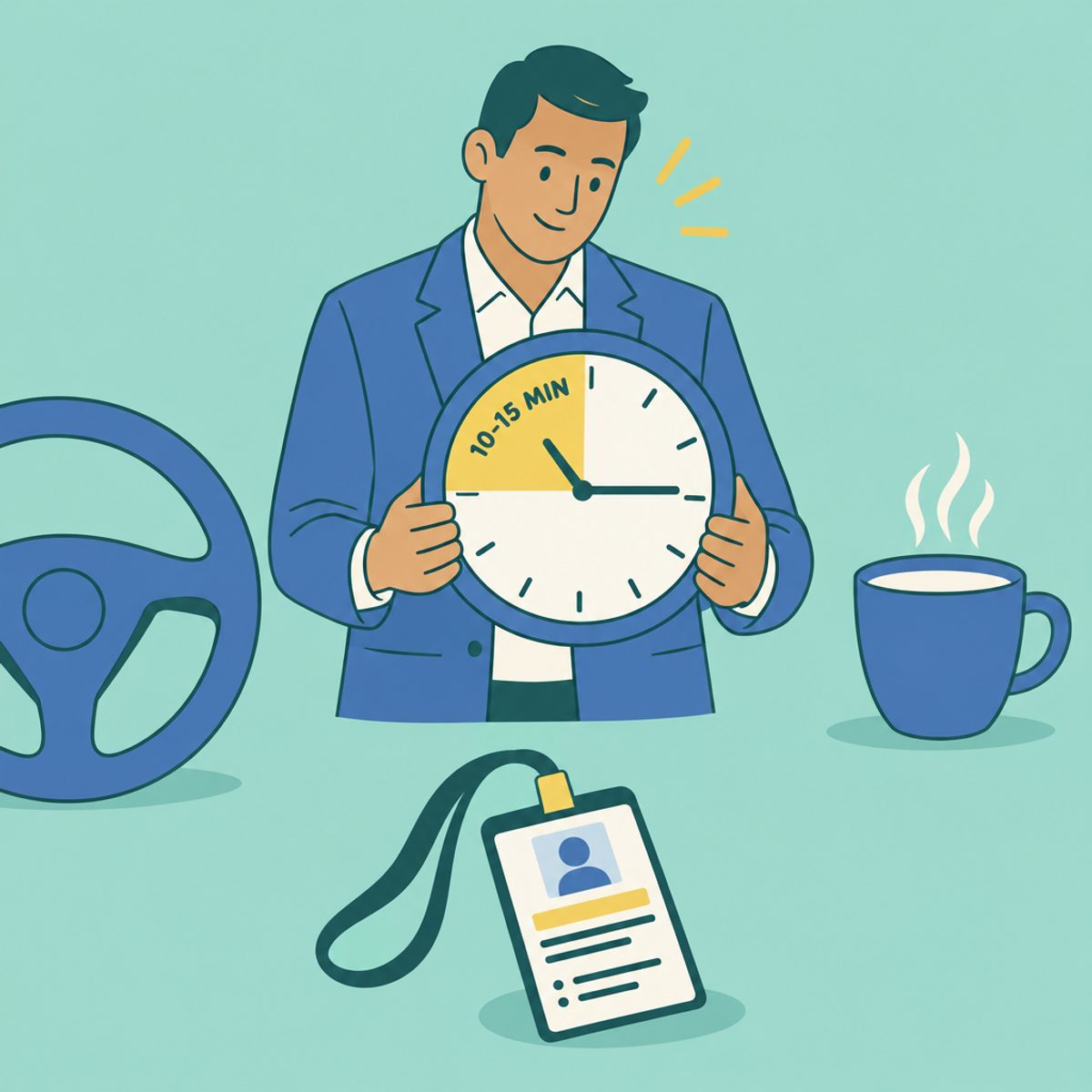
Follow the invitation first. If it gives no arrival instructions, checking in about 10 to 15 minutes early is a useful default for an in-person interview, as Harvard's career center recommends. Reach the area earlier to allow for travel, parking and finding the entrance. For video, test your equipment in advance and follow the employer's joining instructions; a few minutes early is usually enough when no instruction is given.
Why 10 to 15 minutes, not 30
Plan separately for reaching the area and checking in at the interview location. Allow time for traffic, transit, parking and finding the entrance. At reception, follow the time the employer requested.
A short buffer can give you time for a sign-in process and a moment to settle. Checking in much earlier than requested may be inconvenient if no waiting space is available. If you arrive early, ask reception where you can wait.
Research the route using the transport you will take on the day. If a dry run is possible, try it at a similar time of day and allow for delays.
If you arrive much earlier than planned
Arriving in the area early can give you a useful travel buffer. If you are substantially ahead of the requested check-in time, wait somewhere suitable nearby. Security screening or an assessment day may require earlier check-in, so the invitation takes priority. Use the spare time to prepare:
- Wait in a cafe, your car or another suitable nearby place if you are ahead of the requested check-in time.
- Review the posting and examples you prepared.
- Find the restroom if needed.
- Silence your phone before the interview.
- Check in at the time requested, or about 10 to 15 minutes early when no instruction is given.
A small office may have limited waiting space. Follow the requested arrival time and ask where to wait if you are early.
Virtual interviews: test hours before, join minutes before
Test the platform, camera, microphone and meeting link in advance. Follow the employer's joining instructions. If none are provided, be ready a few minutes before the start; Harvard suggests 1 to 2 minutes early for virtual interviews. Check whether a waiting room or connection process requires extra time.
Try unfamiliar software soon after receiving the invitation, so you have time to resolve an update or access problem. On the day, check the equipment again before the scheduled start.
- Open the actual meeting link, not just the app, to confirm it resolves.
- Check camera angle (lens at eye level), microphone and lighting that faces you rather than sits behind you.
- Clear or blur the background and turn off notifications on every device in the room.
- Keep the interviewer's email and phone number on paper or on your phone, not buried in the same browser as the call. If the link fails, you want to message them within a minute.
Phone interviews: confirm who calls
Confirm whether the interviewer will call you or whether you should dial a number. Be ready in a quiet place a few minutes before the appointment, with a charged phone, resume and notes. If you are calling, follow the invitation's instructions and scheduled time. If you are expecting a call, answer professionally around the appointment window.
Large sites with security: budget for the badge desk
A corporate campus, hospital, government office or factory may involve visitor parking, a badge desk, identification checks or security screening before you reach the interview room.
Ask the recruiter for the exact building and entrance, where to park, what identification to bring, and how much time to allow for security. Follow the requested site-arrival time even if it is earlier than the usual reception window. Keep the recruiting contact's details ready.
Panel interviews and assessment days: follow the schedule
A panel interview involves several people's calendars, so build a travel buffer and follow the requested check-in time. Do not assume the panel can extend the session if you are late.
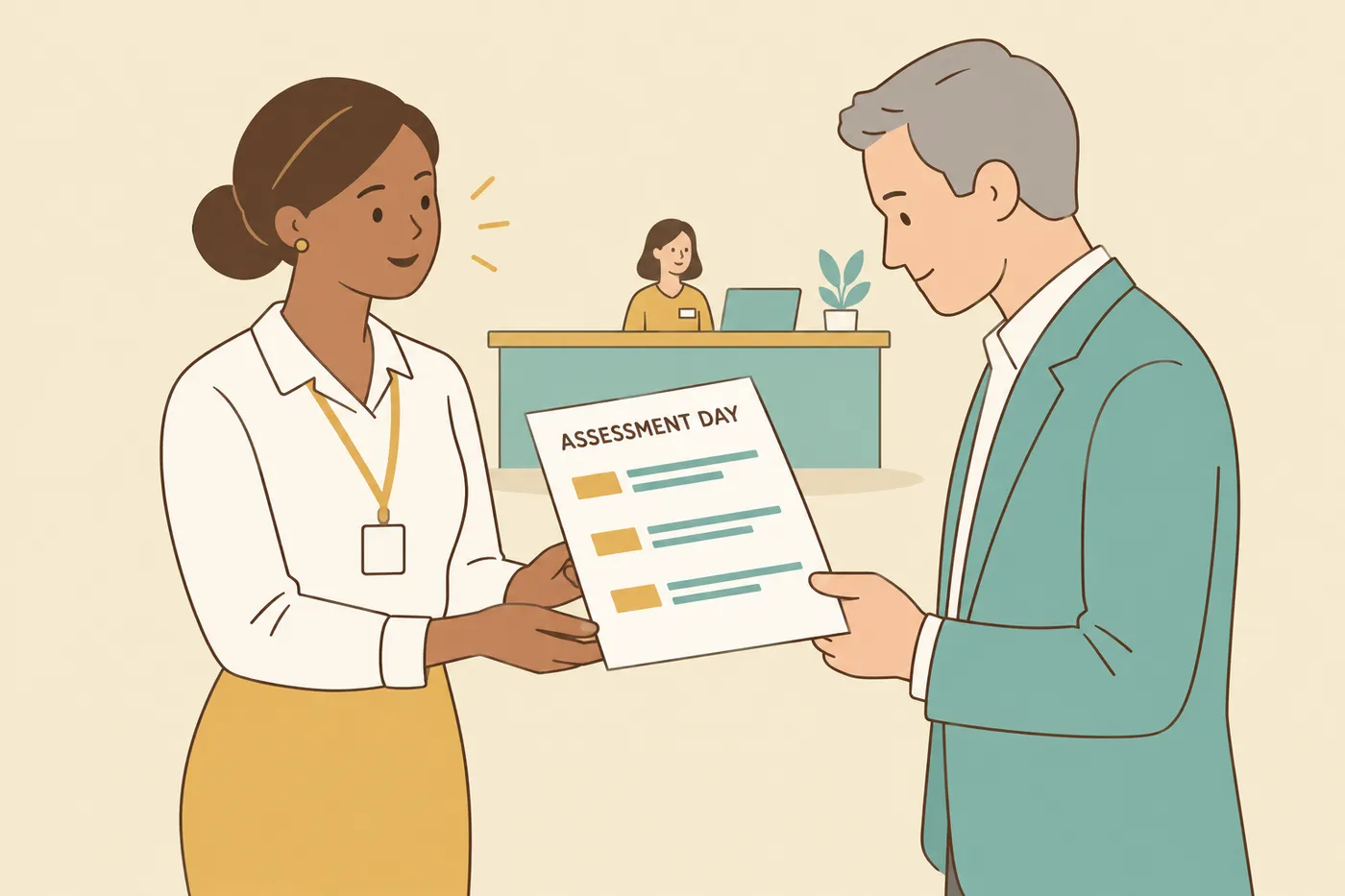
Assessment days and group sessions may begin with a scheduled briefing. Arrive by the time stated in the invitation so you receive the instructions. Prepare questions about the role's priorities, how success is measured and the team's work. Our guide to questions to ask during an interview offers more examples.
Running late: send this message now
As soon as you expect a delay, contact the interviewer or recruiting contact using the invitation's contact details. Give a brief apology, a realistic arrival estimate and the option to reschedule. Avoid promising a revised time you are unlikely to meet.
Here is a fictional message to adapt with your own name, appointment and timing:
"Hi Dana, this is Sam Alvarez. I am scheduled to interview with you at 2:00, and I am delayed in standstill traffic. My realistic arrival estimate is 2:25. I am sorry for the delay. Would you prefer that I come in late, or should we reschedule?"
If the video link fails, message your contact promptly: "My meeting link is not loading. I can switch to a phone call at this number or rejoin once it works. What would you prefer?" Ask which alternative works for them rather than assuming a phone interview is available.
If you are kept waiting without an update, ask your contact whether the appointment still works. An emergency or a delayed meeting may explain it. Consider the communication alongside the rest of your experience with the employer.
Arrival time is the easy part
After planning your arrival, prepare the examples you want to discuss and practice them out loud. In Roleframe's signed-in editor, Remi can provide interview practice using resume and job context, subject to the current plan and AI allowance. Treat AI questions and feedback as practice suggestions, and verify any proposed answer against your own experience.
Bring resume copies if useful for the setting, and send a concise thank-you message afterward when appropriate.
Frequently asked questions
- Is 30 minutes too early for an interview?
Arriving in the area 30 minutes early can be useful, but checking in that early may be inconvenient if the employer has not asked you to. Wait nearby when appropriate, then follow the invitation or use about 10 to 15 minutes as an in-person default. Security screening or an assessment day may require earlier check-in.
- Is 5 minutes early enough for an in-person interview?
Five minutes before the scheduled start may leave little margin for finding the room or checking in. If no arrival time is given, aim for about 10 to 15 minutes early. Follow any earlier or different instructions in the invitation.
- How early should you join a Zoom or Teams interview?
Follow the employer's joining instructions. If none are given, be ready a few minutes before the start; Harvard's career center suggests 1 to 2 minutes early for virtual interviews. Test your camera, microphone, connection and meeting link in advance, and check how any waiting room works.
- What are the 5 C's of interviewing?
There is no single standard definition. Lists may include competence, confidence, communication, character and cultural fit, but employers and schools use different frameworks. Use the definition provided by your interviewer or course. Prepare examples of your work, communication and judgment rather than treating one list as a universal scoring system.
- What is the 30-60-90 rule in an interview?
It is a way of answering "what would you do in this role" by laying out your first 30, 60 and 90 days. The first 30 focus on learning the role, the systems and the stakeholders; the next 30 on contributing with growing independence; the final 30 on delivering measurable results. Build yours from the job description and what the interviewer says the role needs, since it is a planning framework, not a script.
- What should you do if the interviewer is late or doesn't show?
Check the invitation, time zone, meeting link and recent messages. After a reasonable wait, contact the recruiter politely to confirm you are in the lobby or on the call and ask whether the appointment still works. Offer to reschedule if needed. Consider the explanation and communication alongside the rest of your experience with the employer.
Ready to start your new resume?
Writing a resume takes time, and even a polished one can miss what a hiring manager is looking for. Roleframe helps you build a clear, ATS-safe resume in minutes and tailor it to the job you want.


