Plumbing Apprenticeship: Hours, License Stages and Pay
How a plumbing apprenticeship really works: state registration rules, the documented hours boards require, the journeyman exam, and how pay steps up.

On this page
A plumbing apprenticeship is a paid, four-to-five-year job with a paper trail attached, and the paper trail decides when you get licensed. Most boards want somewhere between 8,000 and 10,000 documented on-the-job hours before they will seat you for the journeyman exam, and many states want you registered as an apprentice before your first hour counts. Do the work but botch the documentation and you can add a year to a program you already finished physically.
This guide walks the full arc, from the apprentice card some states require on day one through the hour log a board will actually accept, and on to what happens to your hours if you move states mid-program. It also covers what the brochures skip, like the driving record service shops check and the supervisor affidavit you need signed before you quit a job, not after.
What plumbing apprentices actually do
The job splits into two main lanes, and which one you land in shapes your first two years. New-construction crews run rough-in: reading isometric drawings, cutting and joining drain-waste-vent (DWV) stacks, setting water distribution lines and sleeving penetrations before the walls close. You learn code layout fast, and you learn to work around framers and electricians on a schedule someone else controls.
Service and repair is the other lane. You ride along on calls and diagnose problems in occupied homes, which means learning to explain a repair to someone watching you work. Service shops also expect clean paperwork, because every ticket you document ends up in the shop's field-service software and, eventually, in front of a customer.
Gas work is a third track that opens as you progress. Threading black iron and pressure-testing lines usually starts in year two or three under close supervision, and medical gas piping in hospitals is a specialty you certify into later, covered further down. Apprentices who pick up gas hours early tend to test better and earn more at journeyman, because gas endorsements are where shops are shortest on qualified people.
Registering before you touch a pipe
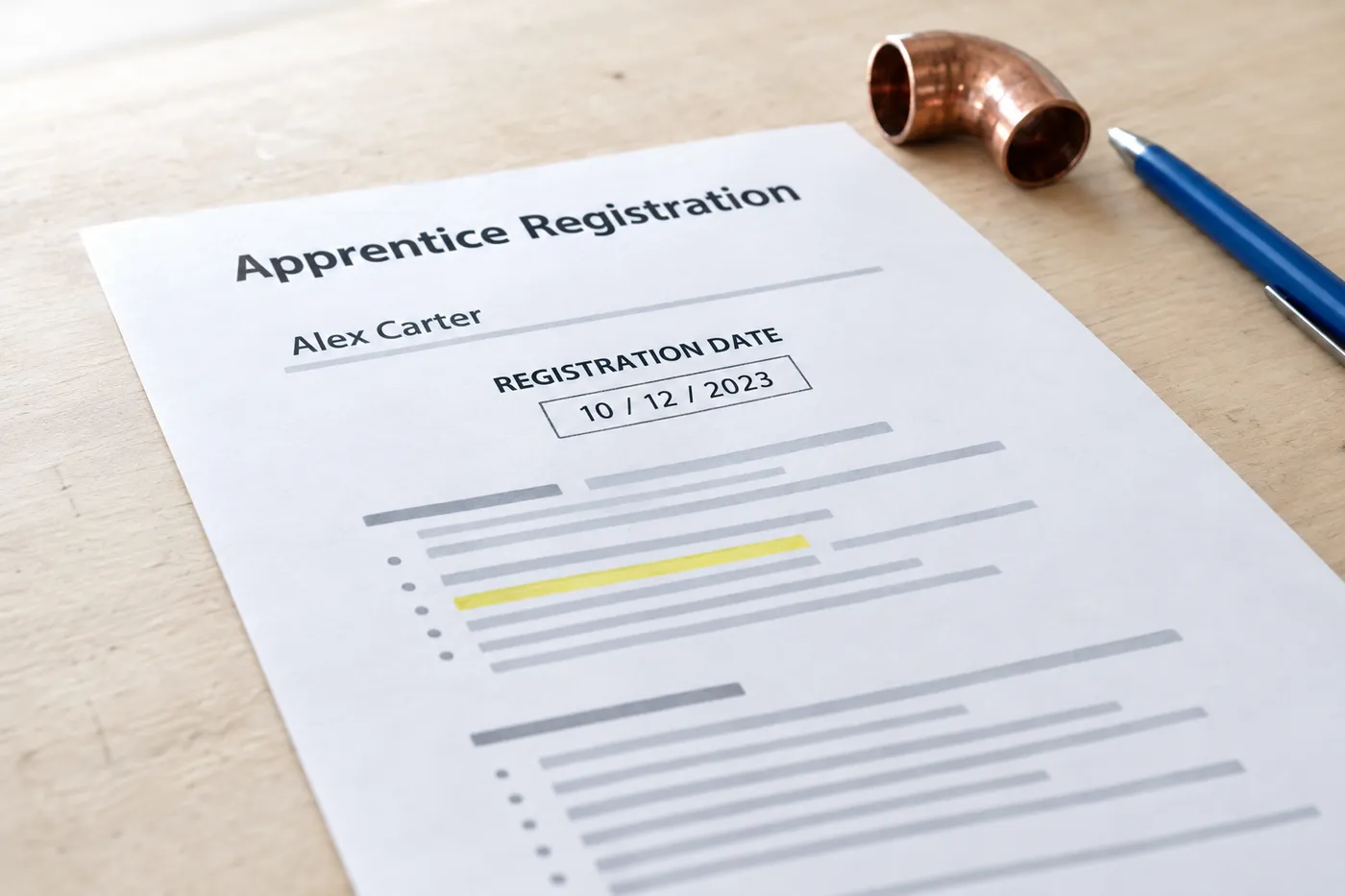
In many states, your hours only count from the date a licensing board registered you as an apprentice. That single fact catches more first-year apprentices than anything else in this article. Work six months for a shop that never filed your registration and, in a registration state, those six months may not exist as far as the board is concerned.
States run one of a few models, and you need to know which one is yours before your first shift.
| Registration model | How it works | Example |
|---|---|---|
| You register before you work | You apply to the state plumbing board yourself, pay a small fee and carry a registration number from day one. Hours before the issue date do not count. | Texas registers apprentices through its state plumbing board before they work |
| Your employer registers you after hire | The plumbing contractor files your registration with the board shortly after you start, and your clock runs from that filing. | Colorado puts the registration duty on the employer |
| The state apprenticeship office holds the agreement | You sign a formal apprenticeship agreement with the labor or workforce department, which tracks your hours and instruction. | Wisconsin runs plumbing apprenticeship through its workforce agency |
| No state registration | Licensing lives at the city or county level, so the rules depend on the municipal code where you work. | A handful of states, so verify locally before assuming |
Where a card or registration number exists, expect a modest fee and a renewal cycle, usually annual. Renewals are easy to forget in year three when nothing else about your status changes, so calendar it. A lapsed registration can pause your hour accrual the same way a late initial filing does, and boards rarely backdate.
Keep the registration number itself somewhere you can quote it. You will write it on permit paperwork and on your hour log, and later on your resume, where a shop owner reading applications treats a real registration number as the difference between an apprentice and someone who wants to become one.
Entry requirements: what programs actually screen for
The published plumbing apprenticeship requirements are short, and the unpublished ones decide who actually gets hired. Here is the full screen, including the parts no program prints.
- High school diploma or GED. Union programs verify it, and even where an open shop waives it for an experienced helper, the board may still require it at exam time.
- Minimum age, usually 18, because apprentices operate equipment and enter job sites with insurance requirements attached.
- An aptitude test for union programs. The joint apprenticeship and training committee (JATC) entrance exam leans on fractions and ratios, plus reading comprehension. Brush up on pipe-fitting math before test day; weak math is the most common reason otherwise strong candidates score low.
- A physical and a drug screen. Most shops run a pre-employment screen and reserve the right to random tests, since apprentices work on active job sites.
- A driving record check at service shops. This is the silent filter. Service apprentices drive company vans, the shop's insurer prices every driver, and a DUI or a stack of recent tickets can end a good application before the interview.
If your driving record is rough, target new-construction contractors first. Rough-in crews meet at the site or carpool, so the van question never comes up. Two clean years later, the service route reopens.
Program structure: four to five years, and the hours behind them
The standard program runs four to five years, built on 8,000 to 10,000 documented on-the-job hours depending on the state. The Bureau of Labor Statistics describes apprenticeship as the typical route into the trade, and registered programs are searchable through Apprenticeship.gov if you have not found a sponsor yet. State employment agencies and local union-management committees list openings too.
Classroom time runs alongside the field hours. Registered apprenticeship standards set a floor of 144 hours of related instruction per year, and union programs routinely run past it. United Association (UA) locals commonly schedule 216 to 246 hours a year, delivered as day-release classes or two evenings a week. That extra classroom time shows up later, in journeyman exam pass rates and in how quickly you can add a gas or medical gas endorsement.
The rhythm settles fast. You work full weeks, log hours against your registration, attend class, and every raise on the apprentice scale ties to a milestone you can point to in your log. Which is the real reason documentation matters, and why the next two sections exist.
Your state ledger: five answers that set your timeline
State rules differ enough that a national average will mislead you. Before you sign an apprenticeship agreement, look up five answers for the state where you plan to test. Boards revise these rules, so verify against the board's own page rather than a trade school's summary.
| Question for your state | Why it moves your timeline | Where the answer lives |
|---|---|---|
| Do apprentices register before working? | Hours worked before registration often do not count toward exam eligibility. | Your state plumbing board's apprentice page, or the labor department's apprenticeship office |
| How many documented hours before the journeyman exam? | Typically 8,000 to 10,000. The gap between a low-hour and a high-hour state can equal a year of full-time work. | The exam eligibility rules in the board's administrative code |
| How many years from journeyman to master? | Sets the earliest date you can pull permits under your own license in most states. | The master license requirements, usually on the same board page |
| Which plumbing code edition is adopted? | The exam references the adopted edition, which may be older than the newest code on the shelf. | The state's code adoption notice; the board will confirm which edition the exam uses |
| Which states does yours have reciprocity with? | Decides whether a mid-career move resets your clock or transfers it. | The board's reciprocity or endorsement list, which changes as agreements are signed and dropped |
The license ladder: apprentice, journeyman, master, contractor
Each rung is a legal status with its own scope of work, and the exam at each step tests the plumbing code your state has adopted. Two model codes dominate. Some states adopt the Uniform Plumbing Code (UPC), others the International Plumbing Code (IPC), and each pins its exam to a specific edition, often with state amendments. Study the adopted edition rather than the newest one, because venting tables and fixture-unit values shift between editions and the exam keys to the book on the state's books.
| Stage | What it lets you do | What it takes |
|---|---|---|
| Registered apprentice | Work under the supervision of a licensed plumber while your hours accrue. | Registration with the board where required, plus a documented hour log |
| Journeyman | Work without direct supervision and supervise apprentices. | The state's documented hour total and completed instruction, plus a passing score on the code exam |
| Master | Design systems and, in most states, pull permits and supervise journeymen. | A state-set number of years as a licensed journeyman, then a harder exam covering design and code administration |
| Contractor | Run a plumbing business, bid work and hire crews. | Usually a master license plus a surety bond and liability insurance, along with a business registration |
The journeyman-to-master gap varies by state, which is why it sits in the ledger above. In some states the wait is short; in others the required journeyman years stretch the timeline well past what you expected when you started. If owning a shop is the goal, look this number up now, because it changes which state you want to do your waiting in.
Documenting hours a board will accept
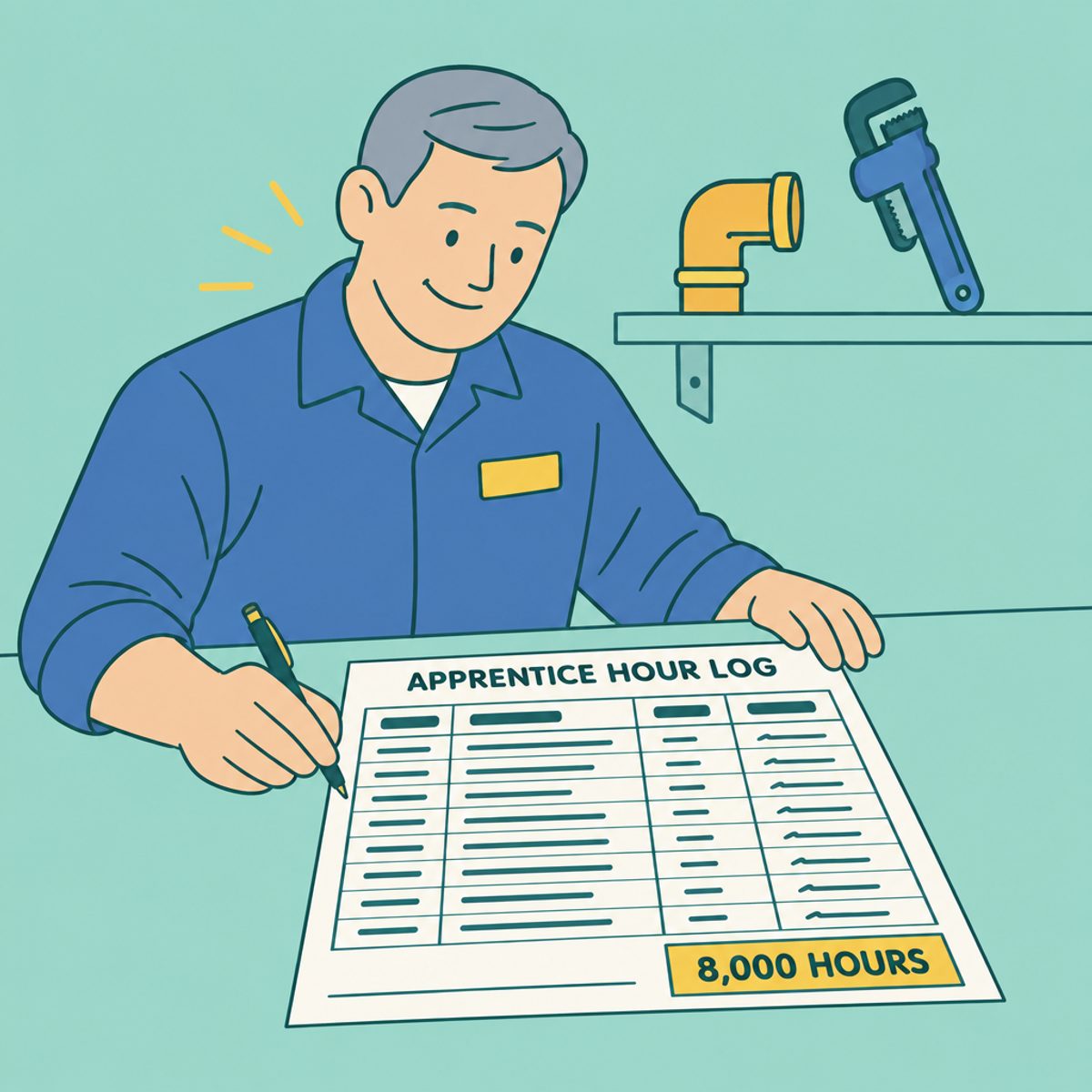
Treat your hour log like money, because it is. The board's file is not your backup; shops close and office managers move on, and the apprentice is the only person in the chain with a real stake in the record.
A log a board accepts has a few consistent features. Entries carry a date range and an hour total, signed or initialed by the supervising licensed plumber. Some boards want hours split by work category, so find out whether yours does before year one ends, rather than reconstructing three years from pay stubs. Monthly is the right cadence: current enough to stay accurate, infrequent enough that supervisors actually sign it.
The moment that breaks most records is changing employers. Before your last day, get a supervisor affidavit, a signed statement of your dates and total hours under that shop, on whatever form your board publishes, and get it notarized if the board asks. An affidavit signed on your way out takes ten minutes. The same affidavit chased eighteen months later, from a shop that changed owners, can take a season and sometimes never arrives. If a shop closes with your hours unverified, boards typically accept alternative evidence like pay stubs and tax records, but the standard is higher and the process is slow.
Certifications that raise your rate
Three add-ons consistently move an apprentice or new journeyman up the pay scale, because each one lets a shop bid work it otherwise could not touch.

- Medical gas installer, ASSE 6010. Hospitals and surgery centers cannot put uncertified installers on medical gas piping, so certified installers are scarce and billed accordingly. The credential pairs field experience with a brazing qualification and an exam, and it is worth pursuing as soon as your program allows.
- Backflow prevention assembly tester. Backflow devices need periodic testing by a certified tester, which turns into recurring, scheduled work a shop can build a service book on. Relative to the rate bump it brings, it is one of the fastest certifications to earn.
- Gas fitting endorsement. Several states license gas work separately from plumbing. An endorsement widens what your employer can send you to alone, and unsupervised billable range is exactly what raises get built on.
Pay: how the apprentice scale works, and the journeyman jump
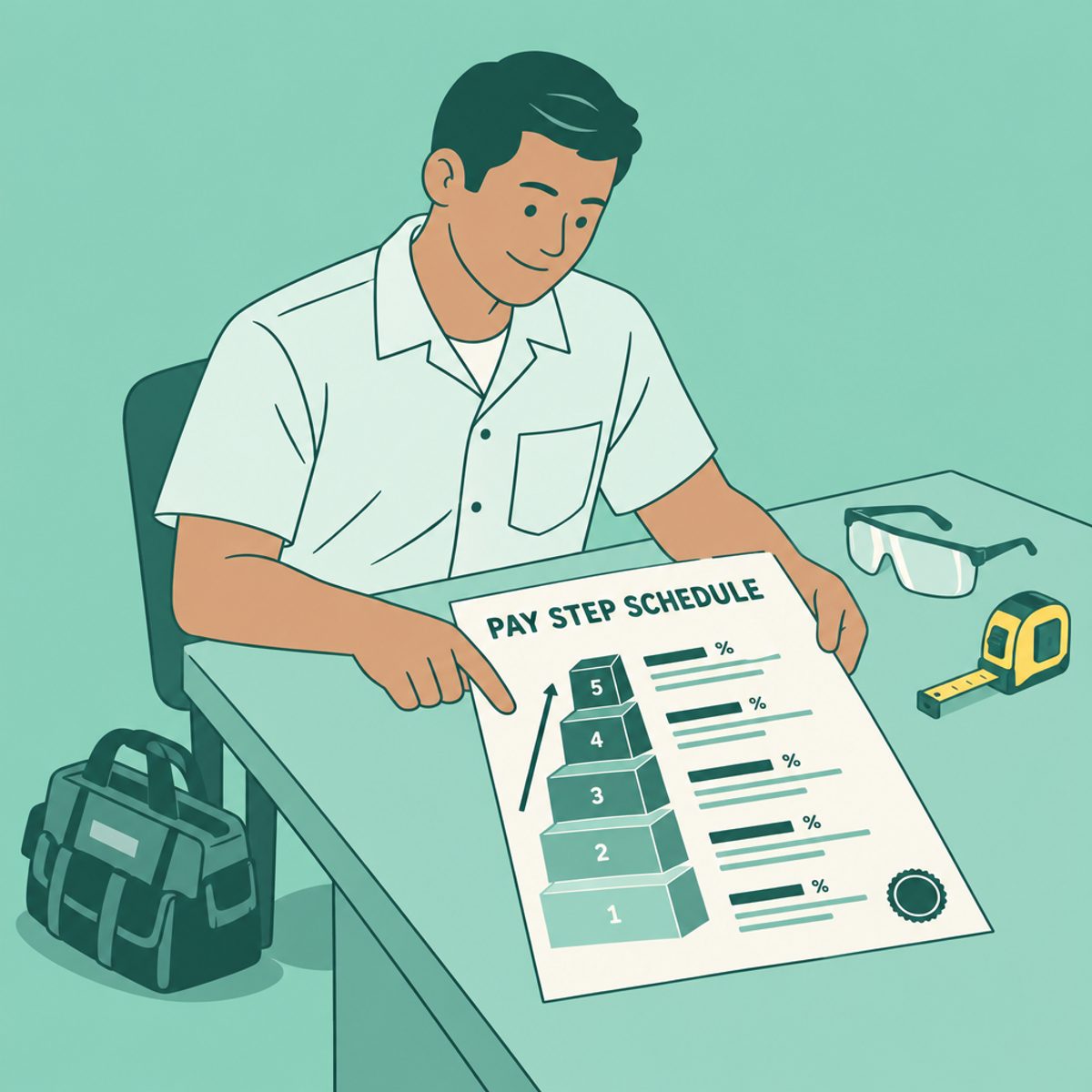
Plumber apprentice pay is a fraction of the local journeyman rate, stepping up on a published schedule tied to your hour and instruction milestones. Union programs print the whole scale in the collective bargaining agreement, so you can see year-four pay before you sign in year one. Open shops set their own steps, which is worth asking about directly in the interview. A shop that cannot tell you the raise schedule probably does not have one.
The jump that matters is journeyman. Passing the exam typically moves you to the full local rate at once, which is the largest single raise most plumbers ever get, and it is why an administrative delay in verifying your hours is a real pay cut. Every month your exam eligibility slips, you work at apprentice scale for journeyman-level output.
Union packages also carry benefits alongside the wage, typically health coverage and a pension, which changes the comparison with open-shop offers more than the hourly number suggests. Compare total packages, not hourly rates.
Moving states before you finish
Reciprocity is a license-level concept; hour transfers are a separate question, and the second one matters more mid-apprenticeship. Many boards will accept verified hours from another state's registered program, but the operative word is verified. Before you move, request a certified hour verification from your current board and keep your apprenticeship agreement and every signed log. Arriving in a new state with certified paper usually means your clock continues. Arriving with a promise that your old shop will mail something means it restarts more often than anyone admits.
Finished journeymen should check the destination board's reciprocity list before accepting an offer. Agreements are specific and they change, and because the adopted code edition differs between states, you may sit a local code exam even where reciprocity exists.
The application: your resume, your hour log and the calls a shop owner makes
Shop owners read apprenticeship applications fast, and they look for two verifiable things before anything else. First, your registration status, with the issuing board and number if your state uses one. Second, your hour total to date, because it tells them what you cost and what you can legally do. Put both in a licenses and certifications block near the top of the resume, above the work history, written as the issuing board's name and your registration number, plus your documented hours to date. Where that block sits depends on the rest of the page; this guide to placing certifications on a resume covers the logic.
Attach the hour log as its own PDF rather than pasting totals into the resume body. A one-page summary showing hours by year, with the supervising license numbers, reads as a professional record and separates you from applicants who estimate. Send everything as PDF so the formatting holds; Roleframe's free resume editor needs no account and exports a PDF that matches the editor exactly, which matters when your registration block has to read cleanly on a phone screen.
References get called in this trade, so choose people who pick up. The best reference is the journeyman who supervised you, named with permission, because a shop owner would rather hear "he shows up and his joints hold pressure" from a peer than read any summary you write. Skip the "references available upon request" line; here is why that line wastes space. List two names with phone numbers and tell both to expect a call.
Frequently asked questions
- How hard is it to get a plumbing apprenticeship?
Union programs are competitive: expect an aptitude test and an interview, and busy locals keep ranked waiting lists, so applicants often apply more than once. The open-shop route moves faster, since a contractor can hire you as a helper this month and register you once the paperwork clears. Improving your odds is concrete work. Take a math refresher before the JATC test and keep your driving record clean; a few months of paid helper or laborer experience helps too, so a job site is not new to you on day one.
- Is a plumbing apprenticeship worth it?
You earn while you train and finish with a license instead of debt, which inverts the college math. Demand also works in your favor. The training cycle is long enough that employers cannot quickly replace retiring journeymen and master plumbers, so a finished apprentice enters a market that structurally needs them. The Bureau of Labor Statistics describes apprenticeship as the standard route into the trade for a reason.
- Is 35 too old for a plumbing apprenticeship?
No, and shops often prefer older apprentices. A 35-year-old with a work history and a clean driving record, plus the ability to talk to customers, is a safer hire than an 18-year-old with none of those. The pay math still works because an apprenticeship is a paid job from day one, and you would hold a journeyman license by your early forties with decades of licensed earning ahead.
- How long is a plumbing apprenticeship?
Four to five years in most states, built on 8,000 to 10,000 documented on-the-job hours plus classroom instruction, with a floor of 144 instruction hours per year in registered programs. Your real timeline depends on documentation as much as time served. Hours often only count from your registration date, and a missing supervisor affidavit can push your exam past the date you physically qualify.
- Do apprenticeship hours transfer if I move states?
Often, but only as verified paper. Request a certified hour verification from your current board before you move, and keep your signed logs and apprenticeship agreement. The destination board decides what it accepts, and boards treat certified records from another registered program far better than reconstructed pay-stub evidence.
- Do I need a license or registration to work as a plumbing apprentice?
It depends on the state. Some require an apprentice registration from the state plumbing board before you work, others put the registration duty on your employer shortly after hire, and a few leave licensing to cities and counties entirely. Check your state board's apprentice page before your first shift, because in registration states, unregistered hours usually do not count toward the journeyman exam.
- Should I choose a union or an open-shop apprenticeship?
Both end at the same journeyman exam, so choose on training depth and timing. UA union programs run more classroom hours than the 144-hour floor and publish the wage scale in advance, with benefits included in the package; the tradeoff is a competitive entry process and possible waiting. Open shops hire faster and can offer more varied service experience, but you carry more responsibility for keeping your registration and hour log clean.


Ready to start your new resume?
Writing a resume takes time, and even a polished one can miss what a hiring manager is looking for. Roleframe helps you build a clear, ATS-safe resume in minutes and tailor it to the job you want.


