HVAC Technician Training: Apprenticeships, School, and Licenses
How HVAC technician training actually works: apprenticeship hours, EPA 608 certification, trade school trade-offs, and license rules in TX, FL, and CA.

On this page
There are two ways to pay for HVAC technician training. You can hand a school tuition and practice on lab equipment for free, or you can take an apprentice's wage and let a contractor pay you while you learn on live systems. Both roads end at the same place, a journeyman-level tech with an EPA card and a few thousand field hours. The difference is who carries the cost of the first two years.
Most articles on this topic are written by schools, so they only describe the tuition route. This one covers all three ways in, the single federal certification every tech must hold, and the license ladder in Texas, Florida, and California side by side, so you can compare the paid-tuition path and the earn-while-you-learn path on time and money in one read.
The three routes into HVAC work
Every working HVAC technician came in through one of three doors. A registered apprenticeship, where a sponsor pays you a rising wage while you log on-the-job hours and attend classroom instruction at night. A trade school or community college program, where you pay tuition first and job-hunt with a certificate. Or the oldest route of all, getting hired as a helper by a contractor who trains you on the truck.
None of these is the wrong answer, but they price out differently. Here is the honest comparison.
| Route | Typical timeline | Who pays | What you leave with |
|---|---|---|---|
| Registered apprenticeship | 3 to 5 years to journeyman level, earning from day one | The sponsor pays you; related classroom instruction is usually covered or low-cost | Journeyman-level hours on record, a wage history, often a union card or association credential |
| Trade school / community college | Certificate programs commonly run under a year; an associate degree runs two | You pay tuition, books, and tools, and you earn nothing during class hours | A certificate or degree, EPA 608 prep, lab time, but few or no verifiable field hours |
| Hired as a helper | Working within weeks; useful independently after a season or two | The contractor pays you a helper wage while you learn informally | Real field hours and a boss who knows your work, but no structured curriculum unless you add night classes |
My read after years of watching people enter the trade. If a registered apprenticeship is available in your area, take it. You graduate with the same skills a school graduate has, plus thousands of documented field hours, and you were paid the whole time instead of paying. The catch is that apprenticeship slots are competitive and intakes happen on the sponsor's calendar, not yours.
The school route makes sense in two situations. You cannot land an apprenticeship or helper job cold and need a credential to get in the door, or your state's contractor license rules give classroom education credit toward the experience requirement. The helper route works best if you already know a contractor willing to hire you, because it turns the waiting period into paid learning.
HVAC apprenticeship requirements: what a contractor checks before training you
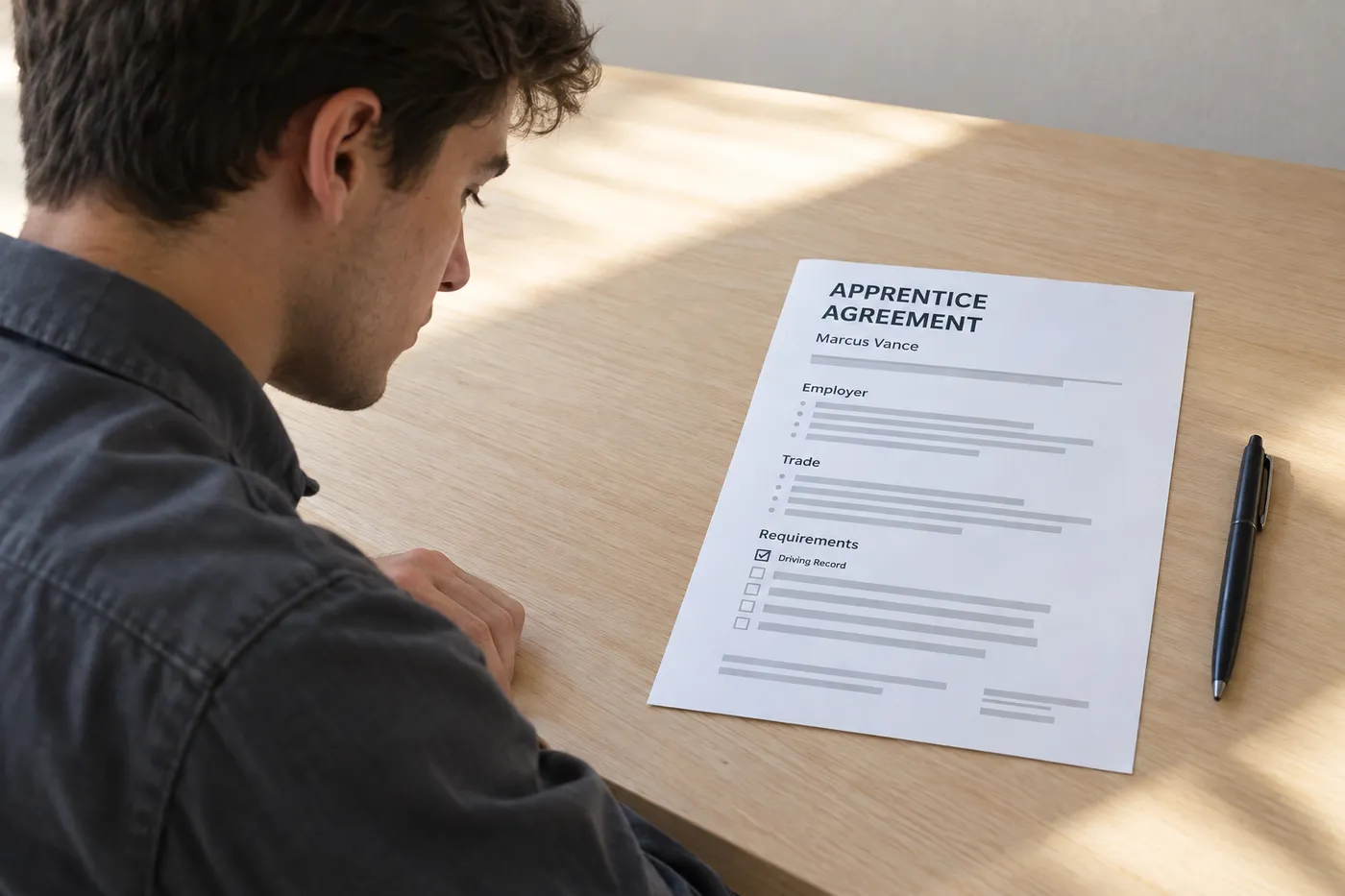
Before any sponsor invests two to five years of training in you, they screen for a short list of practical things. None of them is academic prestige. All of them are about whether you can legally and physically do the work on day one.
- Age 18 or older. You will handle regulated refrigerants and power tools on job sites, and federal rules on refrigerant work plus insurance requirements make 18 the effective floor at almost every shop.
- Working algebra. Load calculations, duct sizing, superheat and subcooling math, and electrical formulas like Ohm's law all show up in the first year of related instruction. You do not need calculus. You do need to solve for an unknown without freezing up.
- A clean driving record. Service techs take the company van home and drive it between calls all day. A DUI or a stack of moving violations makes you uninsurable, which makes you unhirable, regardless of your mechanical talent.
- Lifting and ladder capacity. Condensers, compressors, and coil sections are heavy, and rooftop units mean ladders and lifts. Sponsors will ask about it and many require a physical.
- Passing a drug screen. Commercial and industrial sites almost universally require one before you can badge in, and general contractors enforce it on their subs. Expect it at hiring and randomly after.
Notice what is not on the list. No degree requirement beyond a high school diploma or GED at most sponsors, and no prior HVAC knowledge. Sponsors would rather teach a reliable person from zero than untrain bad habits.
EPA Section 608 certification: the one federal requirement
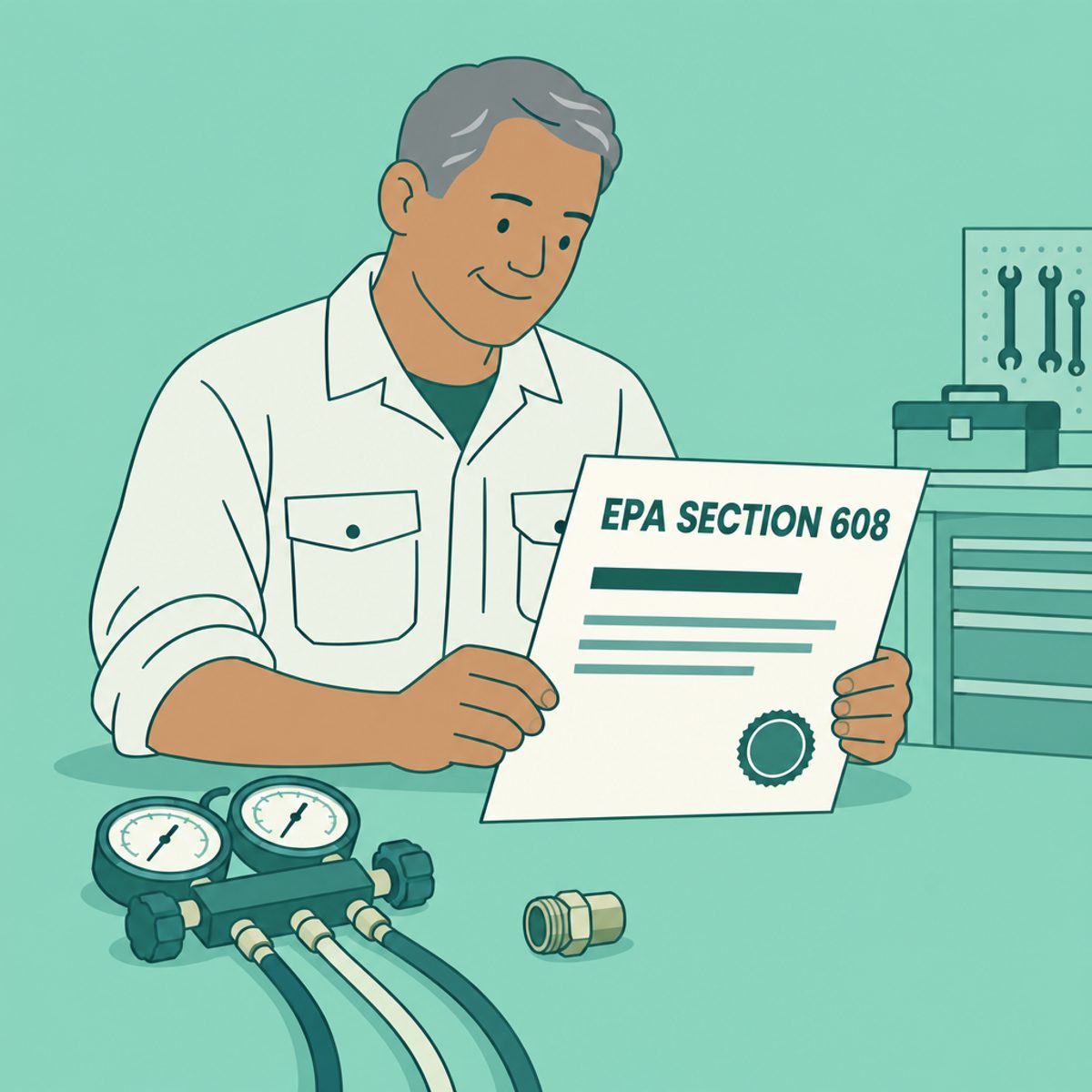
The only credential federal law requires of an HVAC technician is EPA Section 608 certification. Under the Clean Air Act, anyone who maintains, services, repairs, or disposes of equipment that could release regulated refrigerants must be certified. States add licenses on top, but 608 is the floor everywhere in the country, and the credential does not expire once you earn it.
The certification comes in four flavors, and which one you need depends on the equipment you touch.
- Type I covers small appliances, meaning factory-sealed units with a small refrigerant charge, think window units and domestic refrigerators.
- Type II covers high-pressure and very-high-pressure systems, which is most residential and light commercial air conditioning and heat pumps. This is the type most service work requires.
- Type III covers low-pressure systems, mainly the chillers you find in large commercial and institutional buildings.
- Universal is all three types passed together, and it is the one to aim for. It costs little more in study time and removes any question about what you are allowed to work on.
The exam is administered by EPA-approved certifying organizations. The two names you will run into most are the ESCO Institute, whose exams are proctored through schools and supply houses nationwide, and Mainstream Engineering, which offers proctored online testing. Every legitimate trade school and most apprenticeship programs build 608 prep into the first year, and the exam itself is a knowledge test on refrigerant handling rules, recovery procedures, and safety, not a hands-on practical.
When to sit it. As early as possible, ideally in your first few months. A helper with a Universal card can legally recover refrigerant and open systems under supervision, which makes you more useful on the truck and more hirable if you are applying cold. One current wrinkle worth knowing about: the industry is transitioning to A2L refrigerants, which are mildly flammable, and training programs are updating their recovery, charging, and leak-detection instruction to match. Ask any school you are considering whether its curriculum and lab equipment cover A2L systems. A program still teaching only legacy refrigerants is teaching you last decade's fleet.
Inside a registered HVAC apprenticeship
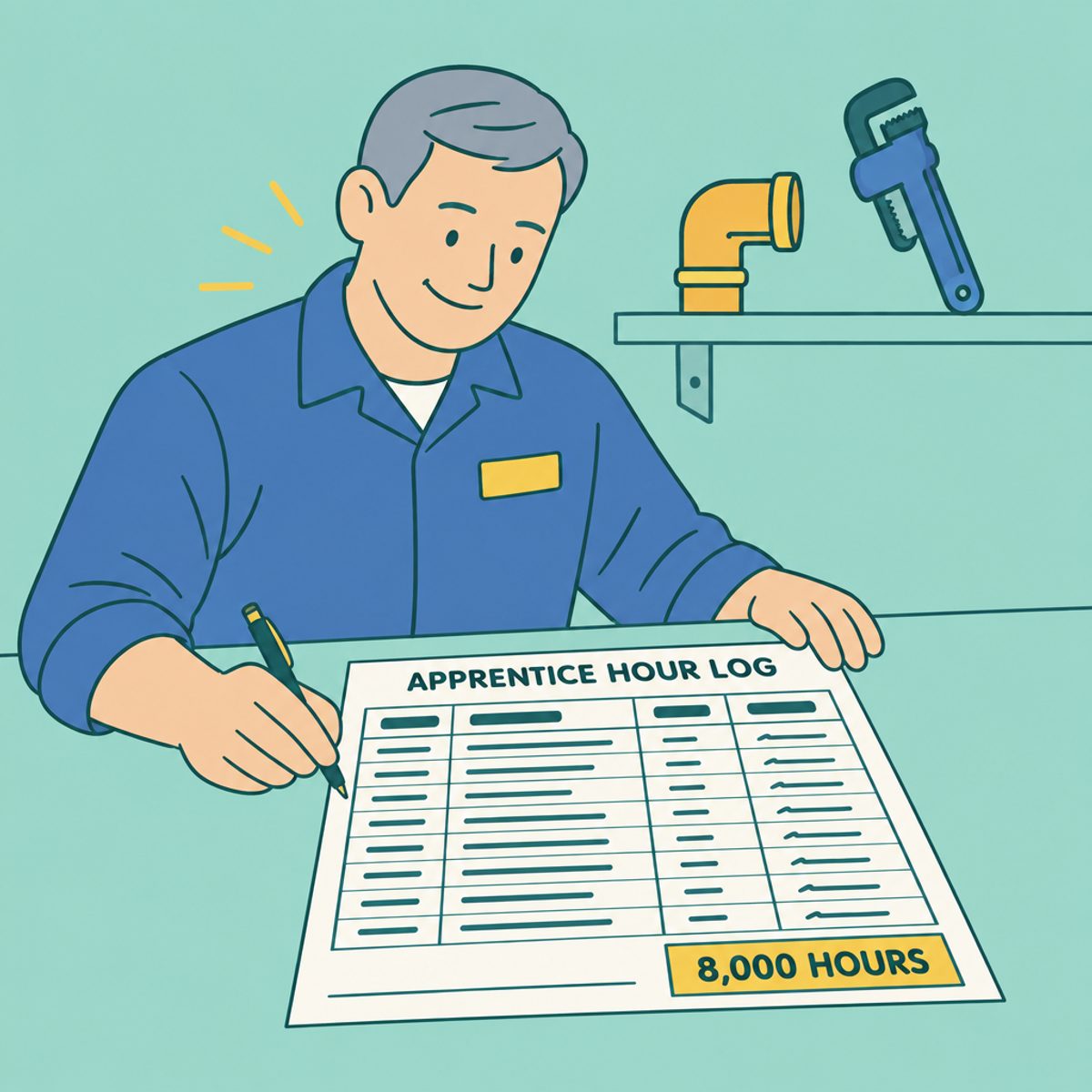
A registered apprenticeship follows a federal template. You log roughly 2,000 on-the-job hours a year, which is full-time work at a sponsor's shop, plus a minimum of 144 hours a year of related classroom instruction, usually two evenings a week during the school year. Most HVAC programs run three to five years, with four the most common, so you finish with several thousand documented field hours and the full classroom sequence in electrical theory, refrigeration cycles, controls, and code.
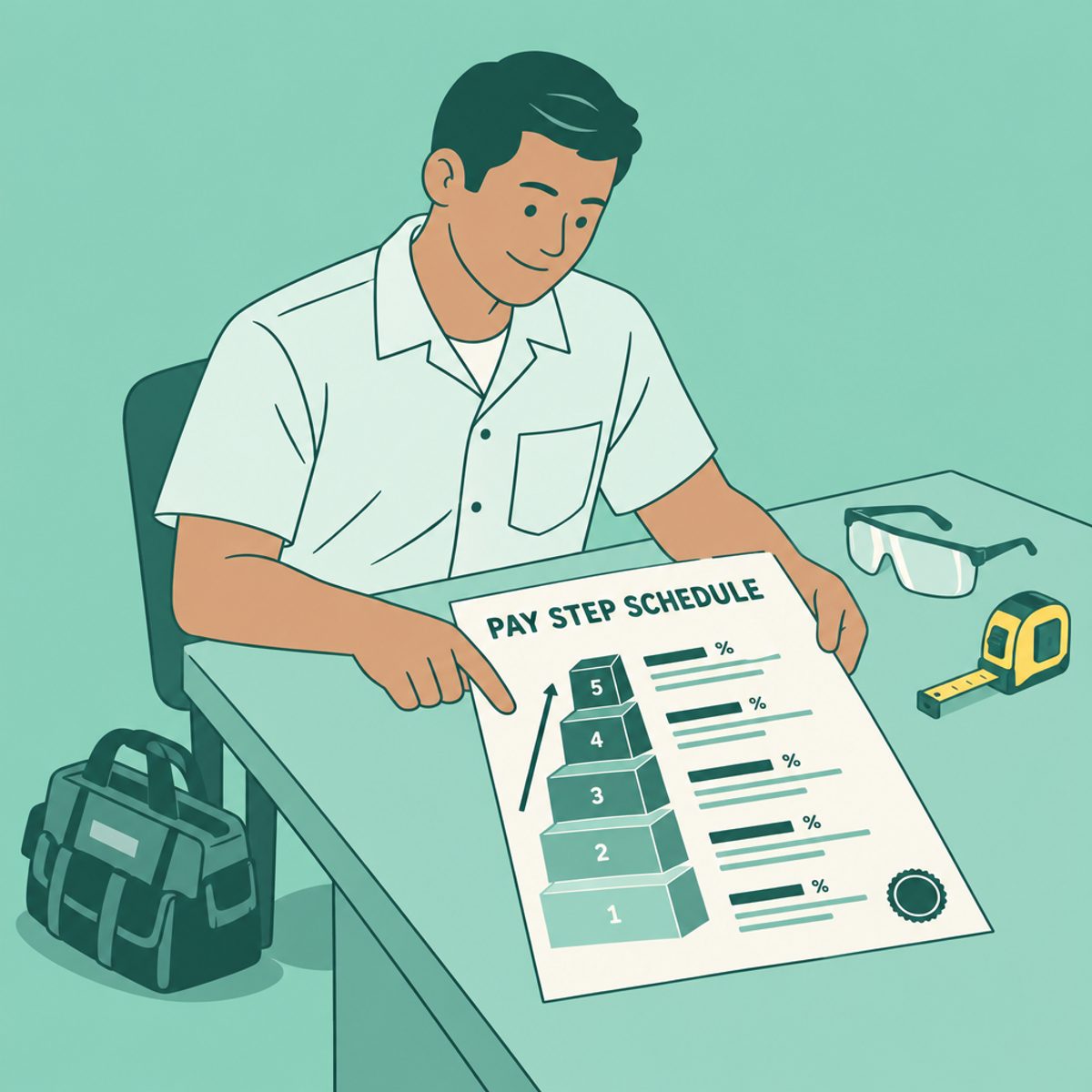
Your wage is structured as a percentage of the local journeyman rate, and it steps up on a published schedule, typically every six or twelve months or every 1,000 hours, as long as you are passing your classes and your hours are current. The exact percentage and step schedule vary by sponsor and region, so ask for the wage schedule in writing before you sign an apprenticeship agreement. A legitimate sponsor has one and will show it to you.
Who sponsors these programs matters, because it shapes where you work and what you earn.
- A union local, either SMART (sheet metal and HVAC) or the UA (plumbers and pipefitters, which covers HVAC service and pipefitting in many areas). Union programs typically have the most formal instruction and the most transparent wage scales.
- A merit-shop association chapter, usually ABC (Associated Builders and Contractors) or PHCC (Plumbing-Heating-Cooling Contractors), which runs the classroom side while member contractors employ the apprentices.
- A single large contractor running its own registered program, common among big mechanical and home-service companies.
- A community college acting as the related-instruction provider for one of the above, so your classroom hours may also count toward a certificate or degree.
Applying is straightforward but timed. Union locals and association chapters open applications on a cycle, often once or twice a year, and rank candidates on an aptitude test and an interview. If you miss a window, use the gap to get your 608 Universal card and a helper job. Both move you up the ranking at the next intake.
Trade school and community college: how long HVAC school takes and what it costs
How long is HVAC school? Certificate programs at community colleges and private trade schools commonly run six months to a year of instruction. An associate degree adds general education and more depth on commercial systems and takes two academic years. Online-only programs exist and can be shorter, but treat them as theory prep only. Nobody learns to braze a lineset or diagnose a failed contactor from a video.
On HVAC technician training cost, the spread is wide and the pattern is consistent. Community college certificates are the cheapest paid route, private trade schools charge several times more for a similar curriculum, and the sticker price rarely includes your hand tools, gauges, or exam fees. Before you enroll anywhere, ask three questions. What is the total cost including books, tools, and certification exams? How many hours of the program are hands-on lab versus lecture? And what percentage of graduates are placed with contractors, with names you can call?
Here is the part school marketing pages soft-pedal. A certificate proves you studied. It does not give you the field hours that state boards count toward journeyman or contractor licensing, and it does not make you productive on a service call. Every school graduate still starts as a helper or apprentice, just one who paid for a head start. The smartest version of this route is the hybrid, part-time evening classes at a community college while working days as a helper, so the tuition buys theory and the paycheck buys hours at the same time.
HVAC license requirements by state: Texas, Florida, and California compared
There is no national HVAC journeyman license. Each state, and in some states each county, decides when you first need a credential and who issues it. That makes the licensing question impossible to answer generically, so here it is worked through for the three states with the largest HVAC workforces. Rules change and boards publish the current versions, so verify the details on the board's own site before you plan around them.
| State | Issuing board | When you first need a credential | Registered apprenticeship hours | Path to the top license | Apprentice wage structure |
|---|---|---|---|---|---|
| Texas | Texas Department of Licensing and Regulation (TDLR) | Day one. Anyone doing air conditioning and refrigeration work under a licensed contractor must register with TDLR as a certified ACR technician. | Roughly 2,000 on-the-job hours per year plus 144 classroom hours per year, over a 3-5 year program | 48 months of practical experience under a licensed ACR contractor, then the contractor exam through TDLR | Set by the sponsor as a percentage of the journeyman rate, stepping up on the published schedule |
| Florida | Department of Business and Professional Regulation (DBPR) | No statewide tech license. Journeyman cards are issued at the county level, so requirements depend on where you work. | Same federal template, roughly 2,000 on-the-job plus 144 classroom hours per year | Class A or Class B air-conditioning contractor license through DBPR, based on documented experience plus the state exams | County journeyman programs and union locals publish step schedules; open-shop helper pay is negotiated directly |
| California | Contractors State License Board (CSLB) | None to work as an employee of a licensed contractor. Apprentices in registered programs are on file with the state's apprenticeship system. | Same federal template; California apprenticeships also carry state-set minimum wage steps | Four years of journey-level experience, then the C-20 Warm-Air Heating, Ventilating and Air-Conditioning contractor exam | Registered programs pay a published percentage of journeyman scale that rises each period |
Texas: TDLR registers you from your first day
Texas is the strictest of the three at the entry stage. You cannot legally do regulated ACR work, even as a brand-new helper, without registering with TDLR as a certified technician, and your employing contractor must hold the ACR contractor license. The registration is not an exam gate at the entry level, it is paperwork plus your employer's sponsorship, but it means your hours are on the record from day one. That record is what you later present when you apply to sit the contractor exam, which requires 48 months of practical experience under a licensed contractor. If you plan to own a shop in Texas someday, every documented month counts, so register properly and keep your own copies of everything.
Florida: DBPR licenses contractors, counties license journeymen
Florida splits the ladder. The state, through DBPR, licenses air-conditioning contractors in Class A and Class B, and that is the license that lets you pull permits and run a business. The journeyman stage lives at the county level. Some counties issue journeyman cards with their own experience and exam requirements, others barely regulate the tech level at all, and reciprocity between counties is inconsistent. Practical advice for a Florida entrant, find out which county you will actually work in first, then ask that county's licensing office what a journeyman card requires there. If you may move around the state, the DBPR contractor license is the credential worth building toward, because it travels statewide.
California: no tech license, a demanding contractor exam
California does not license individual HVAC technicians. As long as you work as an employee of a contractor who holds the CSLB C-20 classification, you need no personal state license beyond your EPA 608 card. Registered apprentices are enrolled with the state's apprenticeship system, which also sets minimum wage steps for registered programs. The gate arrives at the contractor stage. The C-20 requires four years of journey-level experience, verified by someone who can attest to it, plus trade and law exams. Two things trip up California applicants years later, undocumented experience because they worked cash jobs, and no one senior willing to sign the experience verification. Work for licensed shops and keep pay stubs, and the four years documents itself.
NATE, HVAC Excellence, and manufacturer training: what actually moves your rate
Beyond 608 and your state credentials, three kinds of voluntary certification exist, and they are not equal in payoff. NATE (North American Technician Excellence) is the one hiring managers recognize most, because it tests real diagnostic knowledge by specialty, and shops that advertise NATE-certified techs to homeowners will often pay a differential for it. HVAC Excellence certifications are respected in the schooling world and signal a solid theory foundation, which helps most at the hiring stage for newer techs.
Manufacturer training is the quiet earner. Factory courses from the major equipment brands on their inverter-driven and variable-speed lines, heat pump systems, and communicating controls make you the tech who can service the equipment nobody else in the shop understands. Dealers need those techs to keep their factory dealer status, which gives you direct pricing power at review time. The same logic applies to building controls and connected diagnostics on the commercial side, where the equipment is only getting more electronic. If you can pick one investment per year, alternate between a NATE specialty and a factory school.
When you list these on applications, placement matters. Certifications that a posting explicitly requires belong near the top of your resume, not buried at the bottom. There is a short guide on where to put certifications on a resume that covers the logic.

Pay progression: from first-period apprentice to service manager
Searches for HVAC apprentice pay per hour want a single number, and the honest answer is that no single number exists, because apprentice pay is defined as a percentage of the local journeyman rate, and journeyman rates vary enormously by region and by union versus open shop. What is consistent is the structure. You start at a fraction of the journeyman rate, you step up on a published schedule as your hours and classes accumulate, and you reach full scale when you top out. Before signing with any sponsor, ask two questions, what percentage do I start at, and when exactly do the steps happen. A sponsor who cannot answer in writing is not running a real program.
After journeyman, the ladder keeps going. A service technician who diagnoses well and communicates with customers becomes a service lead, running the harder calls and mentoring apprentices, usually with a rate bump and first pick of overtime. Above that sits service manager, dispatching the team and owning the department's numbers, which trades wrench time for salary and, at good shops, a share of department performance. The other branch is ownership, which is what the contractor license chapters above are really about. Overtime deserves a mention too, because HVAC is seasonal, and techs willing to work the summer crush and winter no-heat calls out-earn their base rate by a wide margin.
Coming in from another trade, the military, or a warehouse job
Career changers do well in HVAC, and sponsors know it. An electrician's helper already reads a wiring diagram. A military mechanic already documents work and shows up on time. A warehouse worker already lifts safely and passes drug screens without drama. The gap is never whether your background transfers, it is whether your application makes the transfer visible instead of leaving the reader to guess.
Your first application for a helper or apprentice slot needs to show a short, specific list of things.
- Reliability with evidence, meaning attendance, tenure, or a supervisor who will vouch for you, because sponsors lose money on apprentices who quit in year one.
- Any mechanical or electrical exposure, even adjacent, forklift maintenance, vehicle work, panel wiring, plumbing labor. Name the tools and tasks, not just the job title.
- Your EPA 608 card if you have one, listed prominently. It is the cheapest credible signal that you are serious about this trade specifically.
- A clean driving record, stated plainly, because it is a screening question every service shop asks.
- Physical readiness, phrased as fact rather than enthusiasm, attics, rooftops, ladders, and the lifting the work involves.
Write the resume in the language of the posting. If the ad says "install and service residential split systems," your bullets should use those words where they are true of your experience, because that is what the reader scans for. The technique is the same one office workers use against applicant tracking systems, and the guide on pulling resume keywords from a job description walks through it step by step. If you are switching from a different field entirely, the framing advice in how to write a career change resume applies directly to trades applications too.
One practical tool worth knowing. Paste an apprenticeship or helper posting into Roleframe alongside your resume and the fit report shows which of the posting's requirements your document already proves and which it is silent on, so you fix the gaps before you apply rather than wonder afterward. Send the finished resume as a PDF, which keeps your formatting intact on whatever screen the hiring manager opens it on.
Frequently asked questions
- How fast can you become an HVAC technician?
You can be working as a paid helper within weeks of deciding, since the entry requirements are age, a clean driving record, and passing a drug screen rather than a credential. Your EPA 608 card is realistic within your first couple of months of study. Being trusted to run service calls alone typically takes one to two busy seasons, and journeyman-level competence through a registered apprenticeship takes three to five years, paid the whole way.
- Can HVAC make $100,000 a year?
Some paths in the trade reach six figures, but not the average residential service tech in year three. The techs who get there are senior commercial service specialists stacking overtime, service techs at shops with sales incentives on replacements and maintenance agreements, service managers, and above all contractors who hold their own license and run a book of business. The contractor license chapters in this guide are the long-term answer to this question.
- Is becoming an HVAC tech hard?
The classroom side is manageable for anyone comfortable with algebra, since the math is formulas and unit conversions rather than abstract theory. The genuinely hard parts are physical, attics in August and rooftops in January, and diagnostic, working out why a system fails intermittently while the customer watches. People who like solving concrete puzzles under a bit of pressure tend to love it. People who wanted a desk job with tools usually wash out in year one.
- Is an HVAC certificate worth it?
It is worth it when it shortens your path to a paycheck, meaning you could not land an apprenticeship or helper job without it, or your program includes substantial lab hours, EPA 608 certification, and real placement relationships with contractors. It is not worth it as a substitute for field hours, because state boards count experience, not classroom time, toward journeyman and contractor stages. The best value is usually a community college certificate taken in the evenings while working days as a helper.
- What are the EPA 608 certification requirements?
You pass a proctored exam through an EPA-approved certifying organization such as the ESCO Institute or Mainstream Engineering. The exam has a core section on regulations and refrigerant handling plus a section for each equipment type, and passing all of them earns the Universal certification, which is the one to aim for. There is no experience prerequisite, no degree requirement, and the certification does not expire once earned.
- Do you need an HVAC license in every state?
No. EPA Section 608 certification is the only requirement that applies nationwide. Beyond that, states differ sharply, Texas registers technicians from day one through TDLR, California requires no individual tech license at all, and Florida pushes the journeyman stage down to its counties. Always check the licensing board for the specific state, and in Florida the specific county, where you plan to work.
- How much do HVAC apprentices make per hour?
Apprentice pay is set as a percentage of the local journeyman rate and steps up on a published schedule as your hours and classes accumulate, so the hourly figure depends on your region and sponsor rather than on a national number. Union programs publish their full wage scales, which makes them easy to compare. Whatever the sponsor, ask for the starting percentage and the step schedule in writing before you sign an apprenticeship agreement.

Ready to start your new resume?
Writing a resume takes time, and even a polished one can miss what a hiring manager is looking for. Roleframe helps you build a clear, ATS-safe resume in minutes and tailor it to the job you want.


