How to Use AI to Write a Resume Without Sounding Generic
Use AI to improve your resume with verified facts, practical prompts and bullet examples. Learn what to check before you submit.

On this page
Use AI as an editing assistant. Give it your real facts first: what you did, the results, the tools, and numbers you can verify. Ask for one bullet or section at a time, then check every line for accuracy and voice. The U.S. Department of Labor’s February 2026 Resume Essentials guide recommends using AI to develop and refine ideas while reviewing the result and keeping it grounded in your genuine experience.
Specific inputs give you something to check the draft against. A model can still add or change details, so compare its wording with your evidence instead of accepting a polished sentence on trust.
This guide offers a three-step workflow, prompts and explicitly fictional before-and-after examples from three fields.
Why AI resumes sound generic in the first place
Generic drafts often repeat the posting, rely on stock resume phrases, add unsupported details, or give every bullet the same shape. Employers are encountering more AI-assisted applications: Criteria’s August 2026 webinar reports that 92% of employers in its study with Lighthouse Research described AI-generated resumes as commonplace. This is a survey perception, not a measured share of resumes or proof that an employer can identify yours.
For more on the warning signs, see why an AI resume can sound generic. The workflow below focuses on providing evidence and checking the draft.
Step 1: Collect your facts before you prompt
Before prompting, build a fact sheet for each role: the work you did, results you can explain, numbers you can verify, tools you used and who benefited. Use only information you may disclose.
The following person, employer and results are fictional. The example shows the format; replace them with your own verified facts.
- Role: Customer support specialist, mid-size software company, 2023 to 2026
- Tasks: handled inbound tickets, wrote help-center articles, trained two new hires
- Results: brought my average first-response time under the team target; the articles I wrote cut repeat tickets on billing questions
- Numbers I can defend: roughly 40 tickets a day, 12 help articles published, 2 hires trained
- Tools: Zendesk, Confluence, internal billing admin
- Who it helped: customers got faster answers; the billing team stopped fielding the same five questions
Look for facts in performance reviews, goals, dashboards you were authorized to use, and your own work notes. Use only information you may disclose. Specific inputs make a draft easier to check, but a model can still add or change details, so compare the output with your fact sheet.
Step 2: Ask for small jobs, not a whole resume
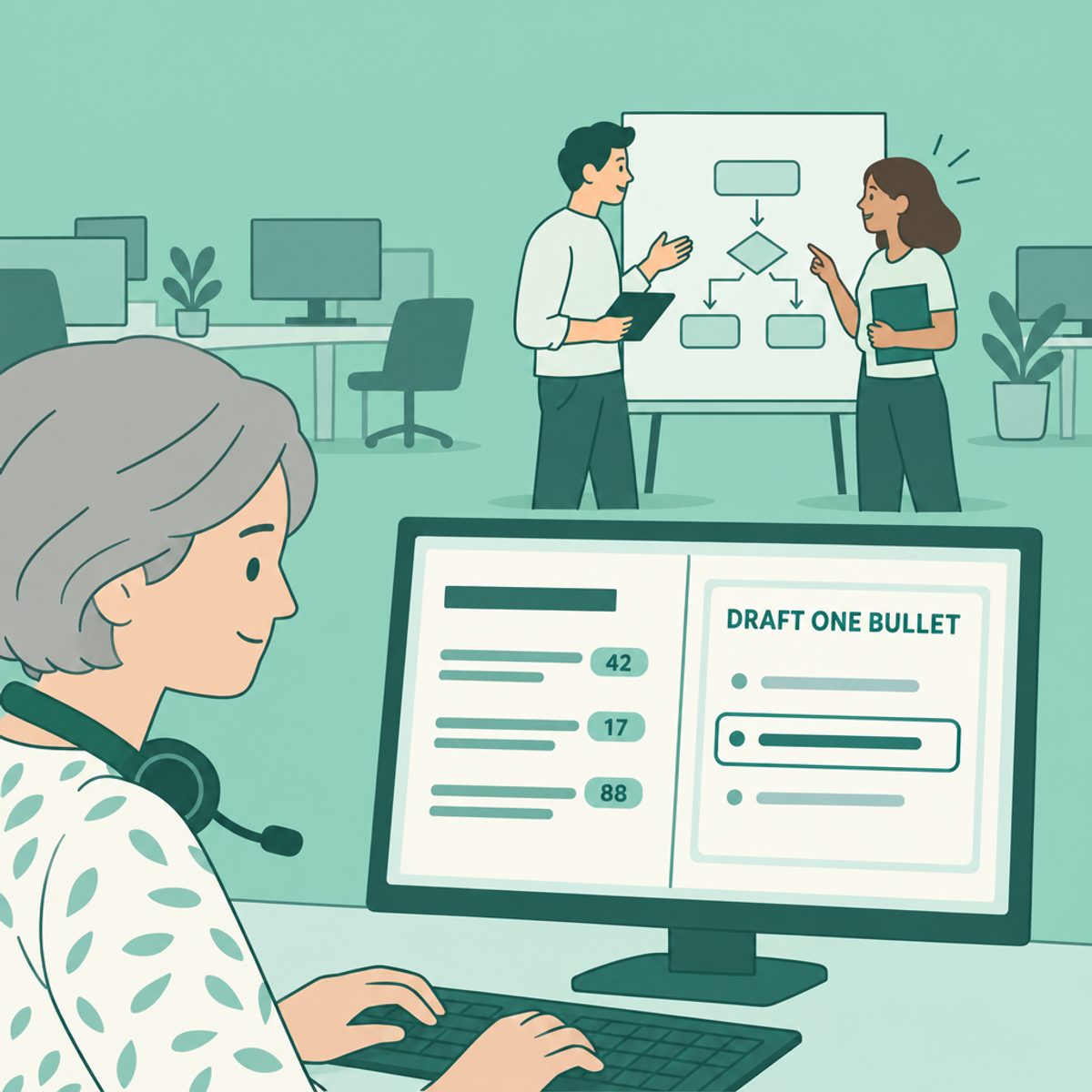
Start with a small request, such as one bullet or one section. Supply your fact sheet and the relevant posting, request two or three alternatives, and ask the tool to identify missing information instead of guessing. A smaller draft is easier to inspect than a whole resume produced at once.
Here are three prompts to adapt:
- "Here are my facts for one role and the job description I'm applying to. Draft three versions of a single bullet about the help-center articles. Start each with what I did and end with the result. If you need a fact I didn't give you, ask instead of guessing."
- "Rewrite this bullet to be shorter and more specific: [paste your current bullet]. Keep every fact exactly as written. Do not add adjectives or any number I didn't provide."
- "Compare my fact sheet against this job description and list the requirements I haven't addressed yet. Don't write anything for me, just list the gaps."
The third prompt helps separate requirements you can demonstrate from gaps you need to address. Treat its list as a starting point: the model can misread a requirement or miss evidence already in your facts. For more tailoring prompts, see using ChatGPT to tailor your resume.
Step 3: Edit like a recruiter reads
Make the important evidence easy to find on a quick scan. Ladders’ 2018 eye-tracking study reported a 7.4-second average initial screen among the recruiters it studied; that is one study’s initial glance, not the time every employer spends on a resume. For each drafted line, ask: Is it true? Does it show something specific I did? Would I explain it this way in an interview?
The examples below are fictional. Every bracketed number is a placeholder for a figure you can verify; remove the claim if you do not have that evidence.
Sales rep
Generic AI output: "Results-driven sales professional responsible for driving revenue growth and building strong client relationships."
Illustrative draft with verified inputs: "Closed [$X] in new business across [N] accounts last year, finishing at [N%] of quota; kept renewals at [N%] by running quarterly reviews with every account over [$X]."
This version gives a reader specific work and results to ask about. Replace each bracket with a figure you can explain, or remove that part of the sentence. Include renewal results only if you can support your contribution to them.
Nurse
Generic AI output: "Compassionate registered nurse dedicated to providing high-quality patient care in fast-paced environments."
Illustrative draft with verified inputs: "Carried a [N]-patient med-surg caseload per shift, precepted [N] new graduate RNs, and co-wrote the unit's updated fall-risk checklist after a safety review."
This example identifies the setting, responsibilities and contribution. Replace the brackets and include only duties you actually performed within your role and qualifications.
Analyst
Generic AI output: "Responsible for analyzing data and providing actionable insights to stakeholders across the organization."
Edited with real facts: "Built a weekly churn dashboard in SQL and Tableau that replaced a manual spreadsheet, saving the team [N] hours a week and flagging [N] at-risk accounts before renewal."
Notice the pattern across all three: the edit replaces an adjective with a noun, a duty with a result, and a vague scope with a named tool or setting. While you edit, cut the filler the model loves; our list of resume buzzwords to avoid covers the thirty worst offenders and what to write instead.
What never to hand to AI
You must supply and verify the evidence behind the wording.
- Numbers. Use figures from your own records or omit them. Check that the wording describes your contribution accurately.
- Skills and tools. Include only claims you can explain honestly. In Robert Half's March 10, 2026 release, 65% of surveyed U.S. hiring managers found candidate skills harder to verify amid increased applications, many enhanced or generated by AI. The survey was conducted in November 2025 among more than 2,000 U.S. hiring managers; it describes their experience, not every employer's response.
- Claims you cannot defend. Be ready to explain what you did, what others did and how you know the result. Do not accept a sentence just because it matches the posting.
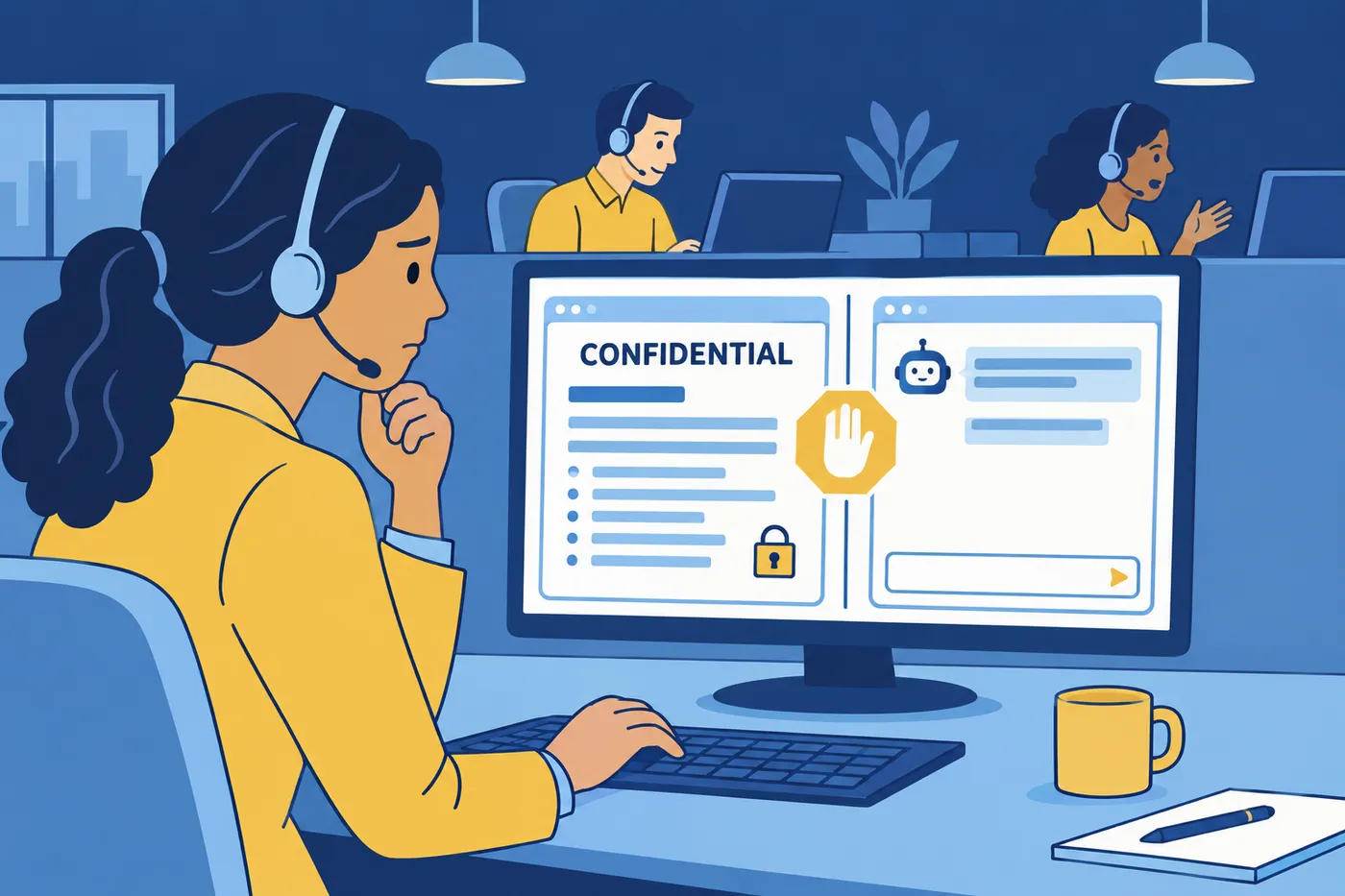
- Private or confidential details. Remove contact details that the tool does not need and information you may not disclose, including client names under NDA, internal figures and unreleased product details. Check the current tool and account data policies.
Submit the file type the employer requests. If PDF is accepted, export a text-based file and inspect every page for missing or clipped content. If the application asks for Word, use Word and check the final layout. After uploading, review any fields the portal filled from your file.
Can employers tell, and does it matter?
Do not assume AI use is always detectable, or that it is always invisible. We have not verified a method that reliably identifies every AI-written resume. Readers can still question vague wording, inconsistent details, or claims that do not hold up in an interview.
In Criteria and Lighthouse Research’s 2026 study of 998 employers, 33% said they were very confident that resumes reflected candidates’ true skills. That survey does not predict what a particular recruiter will think of your application. It reinforces the value of supplying specific, checkable evidence.
Follow any stated employer policy on AI assistance, including disclosure or restrictions. If the instructions are unclear and affect how you can complete an assessment or application, ask the recruiting contact.
Applicant tracking systems vary. They collect applications and may parse files, search records, apply employer-defined filters, or provide matching tools. Some workflows can reject candidates automatically; others assist a person’s review. A third-party keyword or match score cannot certify the employer’s decision. Use a readable layout, truthful terms from the posting, the requested file format, and the actual upload preview where available.
AI can help you revise a sentence or identify a possible gap. Your contribution is the evidence and judgment: verify the draft, remove unsupported additions, and make the final wording yours.
A tool built around this workflow
In Roleframe’s signed-in resume editor, live checks flag issues as you edit, and Remi can propose changes for you to review with Apply and Discard controls. Its rewrite workflow includes questions for missing facts and safeguards against unsupported additions. Those controls help you review a draft; they do not replace checking each number, qualification and claim yourself. Available AI assistance depends on the current plan and allowance.
Frequently asked questions
- Is it OK to use AI to write my resume?
AI can help brainstorm, revise and proofread when the employer permits it. Provide your own facts, check every claim, and personalize the wording. The Department of Labor’s 2026 Resume Essentials guide supports responsible assistance and warns against unreviewed output or fabricated experience. Follow any policy stated in the application.
- Can employers tell if you used AI?
They may notice generic language or inconsistencies, but we have not verified a detector that reliably identifies every AI-written resume. Avoid relying on either invisibility or detection as a strategy. Follow the employer’s policy and submit accurate wording you can explain.
- Which parts of a resume should I write myself?
You must supply and verify the facts: responsibilities, dates, qualifications, tools and results. AI can help phrase a bullet or summary, but it cannot confirm that those claims are true. Draft your summary from the strongest verified evidence and revise it into your own voice.
- Which resume format works best with AI screening?
A clear reverse-chronological layout with standard headings is a useful starting point for many nonacademic applications. Employer instructions take priority. Complex graphics or layouts can create parsing problems, so check the exported file and any application autofill. Use PDF or Word as requested rather than treating either as universally compatible.
- Should I use AI for my cover letter too?
If the employer permits AI assistance, provide your own facts and the posting, then verify and personalize any draft. Check names, qualifications, dates and company details. Follow any policy on disclosure or restricted use.


Ready to start your new resume?
Writing a resume takes time, and even a polished one can miss what a hiring manager is looking for. Roleframe helps you build a clear, ATS-safe resume in minutes and tailor it to the job you want.


