
Soft Skills for Resume (2026): List, Examples, and How to Prove Them
Soft skills are how you work: communication, collaboration, judgment, and reliability. They matter because recruiters hire for results, and results usually depend on how you work with people and handle problems.
This guide gives you a resume soft skills list you can copy, plus real communication skills resume examples and leadership skills resume examples you can adapt. The key is simple: do not just list a trait. Show proof in your bullets.
Instead of listing 'communication', show it in context. Example: 'Led weekly cross-team standups for 12 people across 3 time zones and published meeting notes that reduced follow-up questions.'
The Difference Between Hard Skills and Soft Skills
Hard skills are what you can do (tools, languages, methods). Soft skills are how you do the work (communication, prioritization, collaboration).
Most roles require both. Use hard skills to pass the initial screen, and use soft skills to prove you can operate inside a team and deliver outcomes.
- Skill acquisition: Hard skills are learned; soft skills are developed through experience
- Skill usage: Hard skills are used directly in your role; soft skills complement how you use them
- Skill showcase: Hard skills are demonstrated through work output; soft skills through how you work
- Skill measurement: Hard skills can be tested; soft skills are assessed via behavior
Quick rule: hard skills get you considered. Soft skills get you trusted.
Most In-Demand
Top Soft Skills Employers Want in 2026
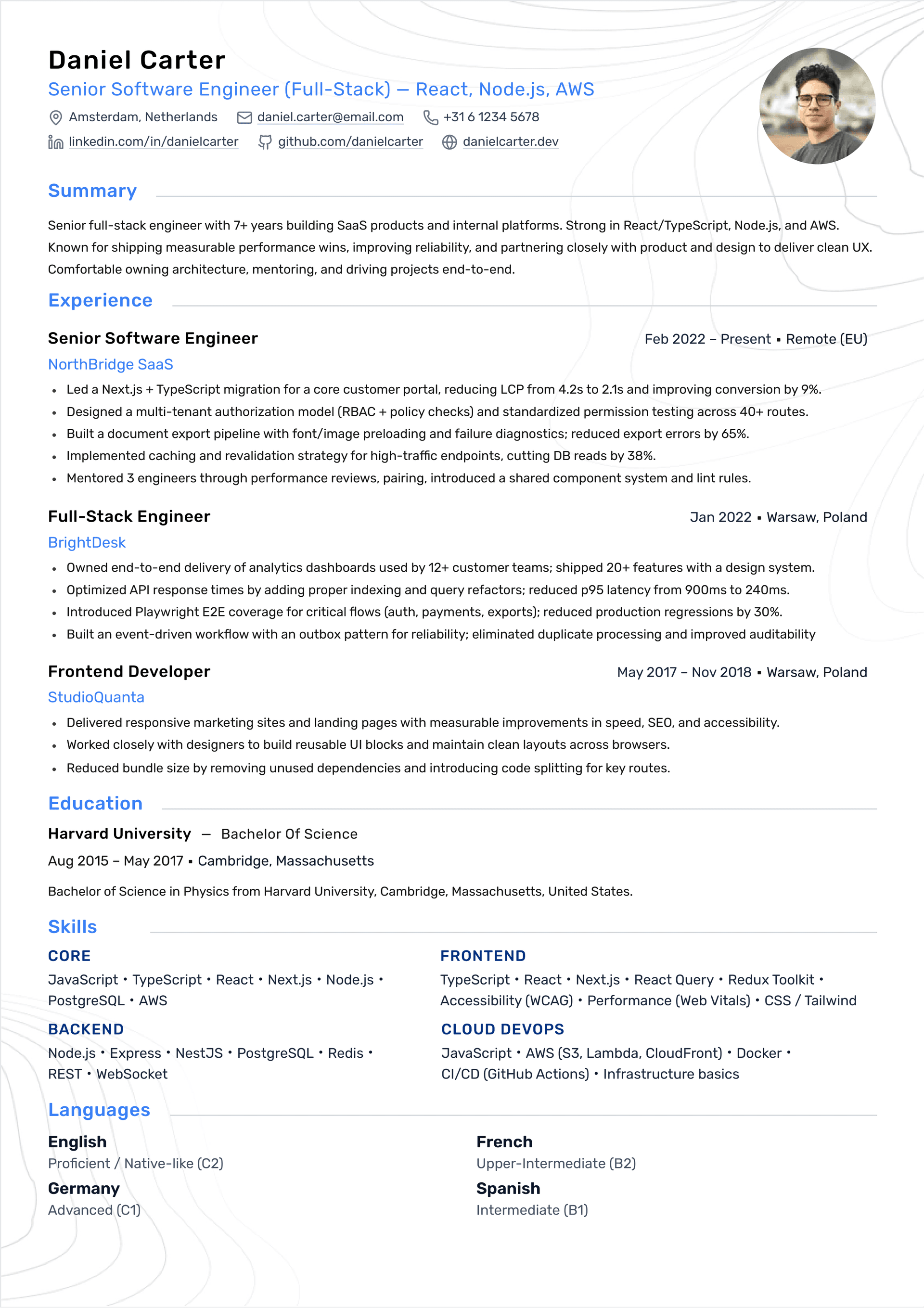
These are the soft skills that show up most often in job descriptions and interview feedback across many roles. Choose the ones that match the posting and that you can prove with examples.
- Communication: written, verbal, and presentation
- Problem solving: diagnose issues and propose options
- Collaboration: work effectively with teammates and stakeholders
- Adaptability: stay effective when priorities change
- Ownership: follow through and drive tasks to completion
- Critical thinking: evaluate tradeoffs and make sound decisions
- Organization: manage priorities and keep work visible
- Time management: plan work and hit deadlines
- Interpersonal skills: build rapport and handle conflict well
- Leadership: guide others and raise the team’s bar
How to List Soft Skills on Your Resume
The biggest mistake is a Skills section full of generic words like 'team player'. Recruiters skip those because they do not show evidence.
List a few relevant soft skills, but prove them in your Experience and Projects bullets. Use a simple structure: action + situation + outcome.
- Pick 3–5 soft skills that appear in the job posting
- For each, find a real situation where you demonstrated it
- Write a bullet using: Action + context + outcome
- Keep the Skills section short: 5–8 terms maximum, only what you can back up
- Mirror the job posting wording when it matches your experience
Bullet template: 'Coordinated X with Y to achieve Z'. Example: 'Coordinated QA and design to ship a new onboarding flow in 2 weeks, cutting user drop-off by 12%.'
Why Soft Skills Matter (ATS and Humans)
Many companies use an Applicant Tracking System (ATS) to search resumes by keywords. If a posting emphasizes 'cross-functional communication' and your resume never mentions it, you might miss searches or filters.
But the bigger reason soft skills matter is human. Hiring managers want evidence you can collaborate, prioritize, and deliver reliably. Treat soft skills as proof statements, not buzzwords.
Examples
Communication Skills Resume Examples
Communication is one of the most searched resume soft skills because it is easy to claim and hard to prove. These examples show what proof looks like.
Pick the closest pattern and swap in your context, tools, and outcome.
- Cross-team alignment: 'Ran weekly syncs with Design and Backend, unblocked dependencies, and kept delivery on schedule for a 6-week launch.'
- Written communication: 'Wrote short decision notes after meetings, reducing repeat discussions and speeding up approvals.'
- Customer communication: 'Explained technical constraints to non-technical stakeholders and proposed alternatives that met the deadline.'
- Documentation: 'Created onboarding docs and checklists that reduced ramp-up time for new hires.'
- Remote communication: 'Coordinated work across time zones with clear handoffs and async updates.'
If you list 'communication' in Skills, include at least one bullet that shows who you communicated with and what improved because of it.
Examples
Leadership Skills Resume Examples
Leadership does not require a manager title. It can be mentoring, ownership, raising quality, or guiding decisions.
Use these leadership skills resume examples to show impact without sounding like buzzwords.
- Mentoring: 'Mentored 2 junior teammates and reviewed PRs, improving code consistency and reducing review cycles.'
- Ownership: 'Owned a critical workflow end-to-end, coordinated stakeholders, and shipped on time with fewer regressions.'
- Raising quality: 'Introduced a simple checklist for releases that reduced production bugs and improved reliability.'
- Leading initiatives: 'Proposed and implemented a small refactor that improved performance and simplified maintenance.'
- Decision making: 'Evaluated tradeoffs, documented the decision, and aligned the team on the approach.'
Leadership reads best when it is tied to a result: quality, speed, reliability, or team effectiveness.
Placement
Where to Put Soft Skills on Your Resume
A soft skills list on its own is weak. Recruiters trust soft skills when they see them inside your Experience and Projects bullets.
Use your Skills section as a short index, then prove the same skills with one bullet each. This is consistent with common career readiness frameworks that emphasize behaviors, not labels.
- Skills section: 5 to 8 soft skills max. Pick the ones that match the job posting.
- Experience: add 2 to 4 bullets that show communication, ownership, and collaboration in context.
- Projects: add 1 to 2 bullets showing how you worked with others, handled ambiguity, or improved quality.
- Summary: mention one teamwork or leadership signal if it is true (for example, mentoring or cross-team work).
- Avoid: generic claims like 'team player' without proof.
If you list 'leadership' or 'communication', include at least one bullet that names who you worked with and what improved.
Writing
A Simple Resume Bullet Formula for Soft Skills
Soft skills become believable when they are tied to a situation and an outcome.
Use this structure for any role: action + context + what changed.
- Action: what you did (led, coordinated, resolved, documented, mentored)
- Context: who and what (team size, stakeholders, project, constraint)
- Outcome: what improved (speed, clarity, quality, reliability, customer experience)
Template: 'Coordinated X with Y to achieve Z'. Example: 'Coordinated design and QA to ship a release in 2 weeks, reducing support tickets the following month.'
Role Fit
Soft Skills by Role Level (Entry, Mid, Senior)
The same soft skill can look different depending on level. Entry level is about reliability and communication. Mid level is about ownership and cross-team execution. Senior level is about influence and decision making.
Pick the level closest to your target role and use the matching bullet patterns.
- Entry level: clear updates, asking good questions, taking feedback, finishing tasks reliably
- Mid level: owning a feature end to end, improving quality, coordinating dependencies
- Senior level: aligning stakeholders, mentoring, documenting decisions, raising standards across the team
A senior resume often reads like leadership and decision making, even when the role is individual contributor.
Examples
Resume Soft Skills Examples You Can Copy
Use these as patterns. Replace the context and outcome with your reality.
Do not force numbers if you do not have them. Concrete outcomes still count (fewer bugs, faster delivery, fewer repeated questions).
- Collaboration: 'Partnered with Design and QA to deliver a new flow on time, keeping requirements clear and reducing rework.'
- Ownership: 'Owned a feature end to end, tracked progress, and followed up after release to fix issues quickly.'
- Problem solving: 'Diagnosed the root cause of a recurring issue, proposed options, and implemented the fix without disrupting users.'
- Adaptability: 'Adjusted priorities during a tight deadline, communicated tradeoffs early, and still shipped the core scope.'
- Organization: 'Created a simple checklist and timeline that made work visible and reduced last-minute surprises.'
- Conflict handling: 'Aligned stakeholders on constraints, documented the decision, and moved the team forward.'
- Critical thinking: 'Evaluated multiple approaches, documented pros and cons, and recommended the option that reduced long-term risk.'
- Customer focus: 'Translated customer feedback into clear requirements and delivered improvements that reduced repeated complaints.'
If your bullet does not mention who you worked with or what improved, rewrite it. That is usually where the proof is missing.
Interview
Make Your Resume Match Your Interview
Soft skills are easy to claim and easy to test in interviews. If you add a soft skill to your resume, be ready to explain one story that proves it.
A good rule is one story per skill. Keep it short and specific so it is easy to repeat.
- Pick 3 soft skills from the job posting
- Write one short story for each using: situation, action, result
- Make sure the same story appears as a resume bullet or project bullet
- Practice telling it in 30 seconds
If you cannot tell a real story for a skill, remove it from your skills list.
Avoid These
Common Mistakes When Listing Soft Skills
Most soft skills sections fail because they read like a personality list instead of evidence.
Fixing these mistakes is often enough to make your resume feel more credible.
- Listing 15 to 20 soft skills with no proof
- Using vague phrases like 'team player' and 'hard worker'
- Repeating the same skill in multiple words (communication, communicator, people skills)
- Not matching the job description language when it fits your experience
- Using empty adjectives without context (great, excellent, strong)
- Claiming leadership without showing what you led
Keep your soft skills list short. Use bullets to do the convincing.
FAQ
FAQ: Soft Skills on a Resume
These are quick answers to the questions job seekers ask most often.
- How many soft skills should I list? 5 to 8, then prove 2 to 4 of them in bullets.
- Should I include soft skills for ATS? Yes when the job posting mentions them. Put the same wording in Skills and one bullet.
- Are soft skills more important than hard skills? No. Hard skills get you considered. Soft skills help you get trusted.
- Can projects prove soft skills? Yes. Mention collaboration, constraints, and what improved.
- What if I have no work experience? Use school, volunteering, and projects. Write them like real work: action, context, outcome.