
Backend Skills That Get Engineering Interviews
Backend resumes win when they show system ownership. Recruiters look for proof you can design APIs, model data, handle reliability constraints, and ship safely in production.
A strong skills section is not a long list. It is a map that explains your core stack and your seniority signals. Your Experience and Projects sections should prove the top skills with measurable outcomes.
This guide gives a modern backend skill taxonomy, examples for entry to staff level, proof-bullet patterns, ATS strategy, and formatting rules that parse cleanly.
Scale signals credibility. Mention request volume, data size, p95 or p99 latency, and failure rate when you can.
Backend Skills Taxonomy (What Recruiters Actually Scan)
Backend recruiters scan for clusters. The question is not whether you know a framework. The question is whether you can build and operate services that stay correct under load.
Use these clusters across most backend roles. Tailor the contents to the job description and your real experience.
- Languages and Frameworks: Shows your execution stack. Recruiters filter heavily by language because it predicts onboarding speed.
- API Design and Integrations: Shows how you expose systems safely. Includes REST, OpenAPI, GraphQL, gRPC, versioning, and idempotency.
- Data and Storage: Shows how you model, query, and scale data. Includes SQL, indexing, transactions, caching, and data consistency.
- Distributed Systems and Reliability: The seniority cluster. Includes queues, streaming, retries, circuit breakers, SLOs, and graceful degradation.
- Security and Compliance: Shows production readiness. Includes auth, access control, secrets management, and secure defaults.
Senior backend skills are about correct behavior under failure, not just feature delivery.
Core Backend Skills to List
Keep each category short and high-signal. Prefer skills you can prove in one bullet with scope and outcome.
- Languages: Python, Go, Java, Rust, Node.js (TypeScript)
- Frameworks: FastAPI, Django, Spring Boot, Express, Gin
- Databases: PostgreSQL, MySQL, MongoDB, Redis, DynamoDB
- APIs: REST, OpenAPI/Swagger, GraphQL, gRPC, WebSockets
- Messaging: Kafka, RabbitMQ, SQS, Pub/Sub
- Caching: Redis, CDN caching, cache invalidation strategies
- Auth: OAuth 2.0, JWT, OIDC, sessions, RBAC
- DevOps basics: Docker, CI, deployment pipelines
- Observability: structured logs, metrics, tracing, error tracking
Hierarchical Skill Listing by Career Stage
Backend skills should reflect your seniority. Entry-level resumes signal foundations and projects. Mid-level resumes signal shipping and integration maturity. Senior and staff resumes signal system design, reliability, and governance.
Use the examples below as templates. Keep wording concrete and avoid subjective labels like expert unless you back them with evidence.
Entry-Level Example (Foundations plus Projects)
Entry-level backend skills should show fundamentals, one primary language, one framework, and at least one real project. Focus on what you used in coursework, internships, or portfolio systems.
Avoid listing too many databases or clouds. Instead, show one project that proves you can build and deploy a working API.
- Languages: Python, JavaScript
- Framework: FastAPI or Express
- Data: SQL fundamentals (Postgres), basic indexing
- APIs: REST, OpenAPI basics
- Tooling: Git, Docker (basic)
- Project proof: Built a CRUD API with pagination, validation, and auth; deployed to a cloud free tier
Entry-level tip: tie skills to one project. The project is your evidence.
Mid-Level Example (Shipping plus Integration)
Mid-level backend skills should show you can ship production features, integrate dependencies, and keep reliability reasonable. Highlight API versioning, caching, database performance, and one messaging technology.
Include at least one quality signal: tests, observability hooks, or safe rollout patterns.
- Core: TypeScript (Node.js) or Python, REST APIs, OpenAPI
- Data: PostgreSQL, Redis caching, migrations
- Messaging: SQS or RabbitMQ, background jobs
- Auth: JWT, OAuth 2.0 flows, RBAC
- DevOps: Docker, CI (GitHub Actions), basic cloud deployment
- Quality: integration tests, rate limiting, structured logging
Mid-level tip: show integration maturity. Mention idempotency, retries, and database indexes when you can prove them.
Senior and Staff Example (Reliability plus System Design)
Senior and staff backend skills should be framework-aware but not framework-limited. Recruiters look for reliability practices and system thinking: SLOs, consistency tradeoffs, safe migrations, and incident response maturity.
List the systems you can design and operate, not every tool you have touched.
- Architecture: service boundaries, event-driven design, caching strategy, consistency tradeoffs, idempotency
- Reliability: SLOs, error budgets, retries and circuit breakers, graceful degradation
- Data: query tuning, indexing strategy, partitioning, migrations without downtime
- Security: access control, secrets management, threat modeling basics
- Platform: CI/CD, release gates, observability standards, runbooks
Senior tip: list skills that imply decision-making under constraints, not just implementation.
Skills vs Achievements (How to Prove Backend Skills)
ATS can match keywords in a skills list, but hiring managers trust proof. The best backend resumes list skills once, then prove them with scope and measurable results.
Use the before and after examples below to turn keywords into evidence.
- Before: PostgreSQL. After: Reduced p99 query latency from 800ms to 45ms by redesigning indexes, validating plans with EXPLAIN ANALYZE, and fixing slow joins in high-traffic endpoints.
- Before: Kafka. After: Increased throughput to 500K events per hour by implementing partition-aware consumers, idempotent processing, and dead-letter handling for poison messages.
- Before: OAuth 2.0. After: Hardened authentication flows by implementing OIDC-based login, short-lived access tokens, refresh rotation, and rate limits for sensitive endpoints.
If you cannot write one proof bullet for a skill, it probably does not belong in your skills list.
Backend Bullet Examples With Impact (Google XYZ Style)
Senior bullets should be measurable and specific. Use: Accomplished X as measured by Y by doing Z.
Prefer system metrics that map to user impact: p95 or p99 latency, error rate, cost per request, throughput, and deploy frequency.
- Accomplished a 75% reduction in p99 latency (800ms to 200ms) by adding missing indexes, rewriting hot queries, and tuning connection pooling.
- Accomplished zero message loss at 500K events per hour by designing idempotent consumers, retry policies, and dead-letter queues.
- Accomplished a 60% faster login path by caching session metadata and removing synchronous calls from the critical auth flow.
- Accomplished a 30% cost reduction by introducing caching and tightening API response payloads while preserving correctness.
- Accomplished higher reliability by defining SLOs and alert thresholds, then using error budgets to guide release cadence.
- Accomplished safer rollouts by introducing feature flags, backward-compatible contracts, and migration playbooks for database changes.
ATS Optimization Strategy for Backend Skills
Many ATS workflows rely on keyword search and filters. That is why exact wording matters. If the job posting says gRPC, your resume should say gRPC when it is true.
Keyword frequency can help, but contextual relevance prevents your resume from reading like keyword stuffing. Place the keyword once in Skills, then reinforce it in Experience bullets where you can prove it.
Keep formatting plain. Use a clear Skills heading and avoid complex tables or text boxes so parsers extract skills accurately.
- Mirror the exact terms from the job description when accurate (PostgreSQL, Kafka, gRPC)
- Reinforce top skills in 2 to 4 bullets across Experience or Projects
- Use one spelling and one naming convention for each skill
- Avoid repeating the same keyword in every bullet
- Prefer evidence near the keyword (example: Redis in Skills and in one caching bullet)
ATS finds you by keywords. Humans decide by evidence and system thinking.
Top 15 Universal Backend Skills (Useful Across Most Roles)
These skills appear across many backend job descriptions. Do not list all 15. Pick the ones that match your target role and your real experience.
- SQL (PostgreSQL or MySQL)
- REST APIs
- OpenAPI
- Authentication and authorization
- Caching (Redis)
- Background jobs
- Message queues or streaming (SQS, RabbitMQ, Kafka)
- Docker
- CI basics
- Observability basics (logs, metrics, tracing)
- Rate limiting
- Retries and timeouts
- Data migrations
- Cloud fundamentals
- System design fundamentals
Formatting Best Practices (3 Layout Options)
The best layout is readable and parses cleanly. Avoid complex tables inside the skills section if you apply through strict ATS portals.
Choose one of these layouts based on space and seniority.
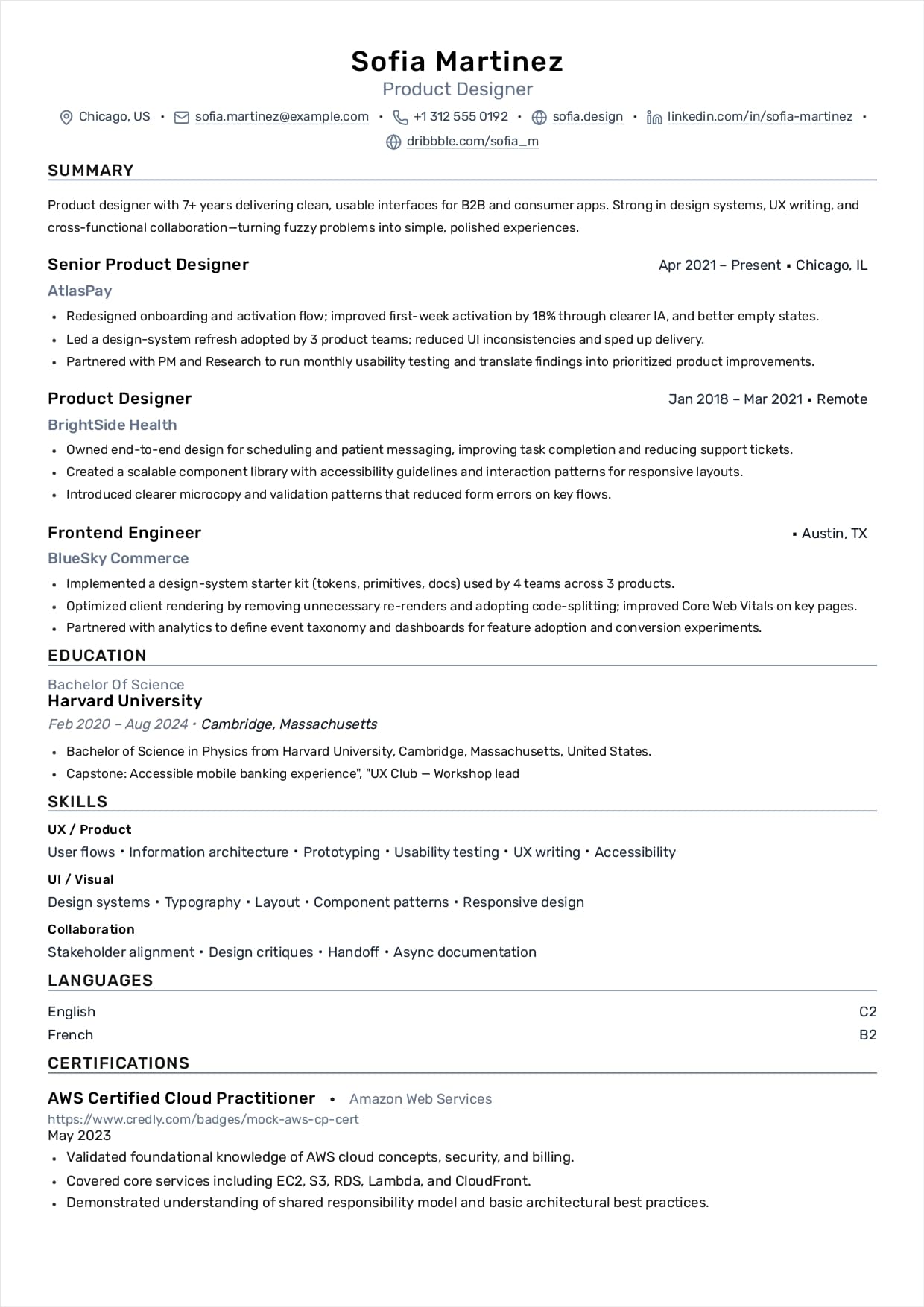
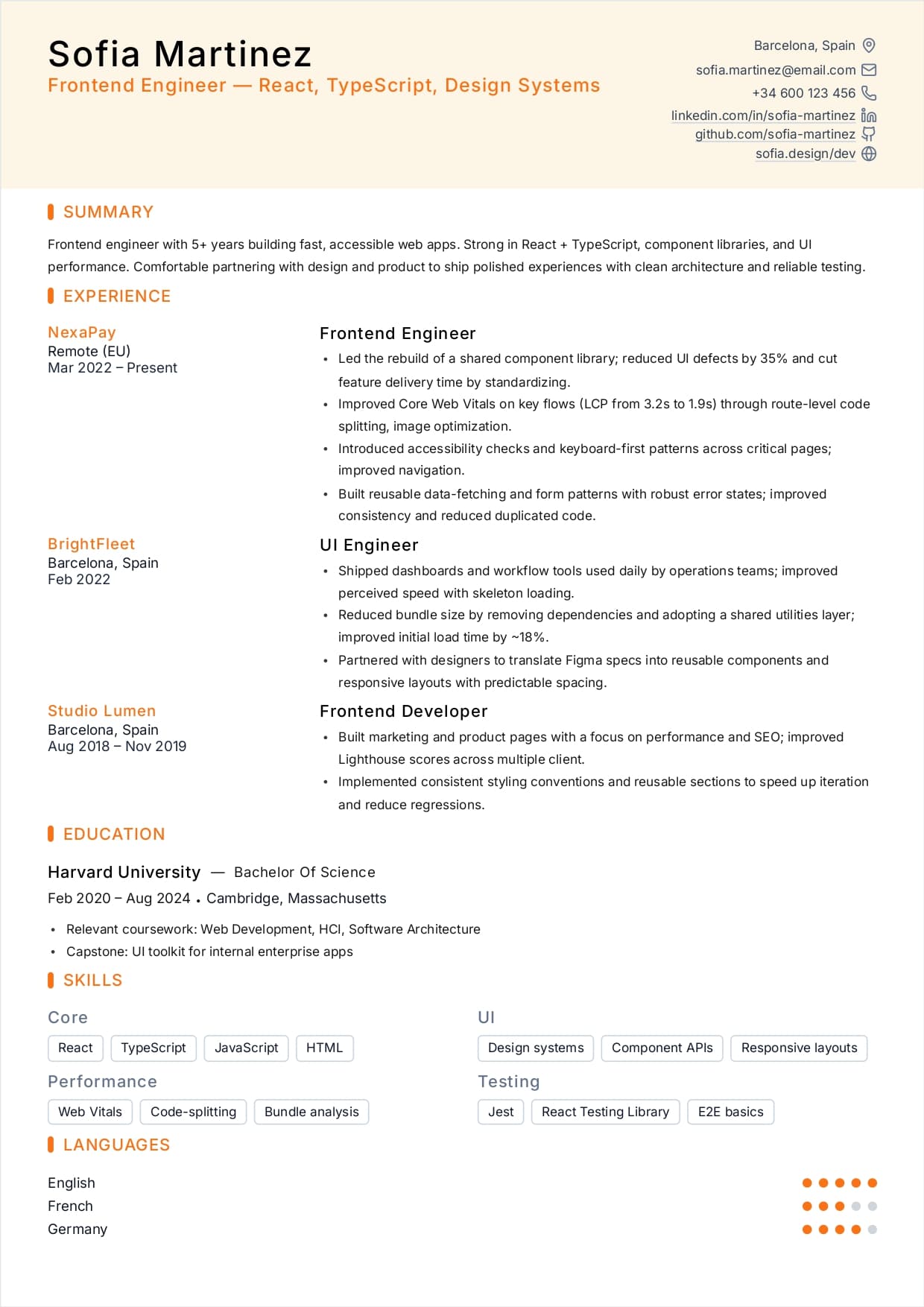
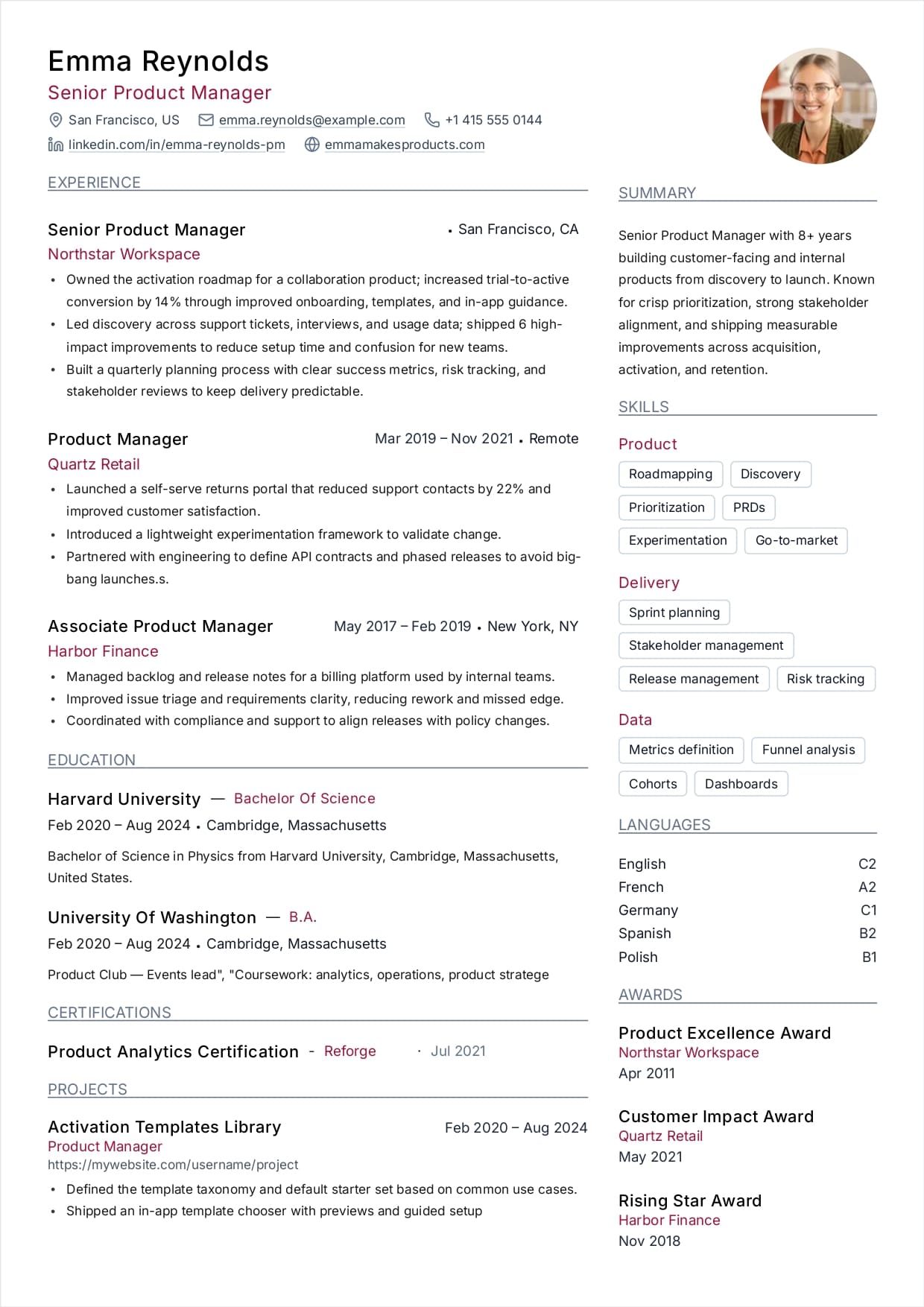
- Cloud or tag layout (space-saving): Short grouped tags per line. Example: APIs: REST, gRPC. Data: Postgres, Redis. Messaging: Kafka, SQS.
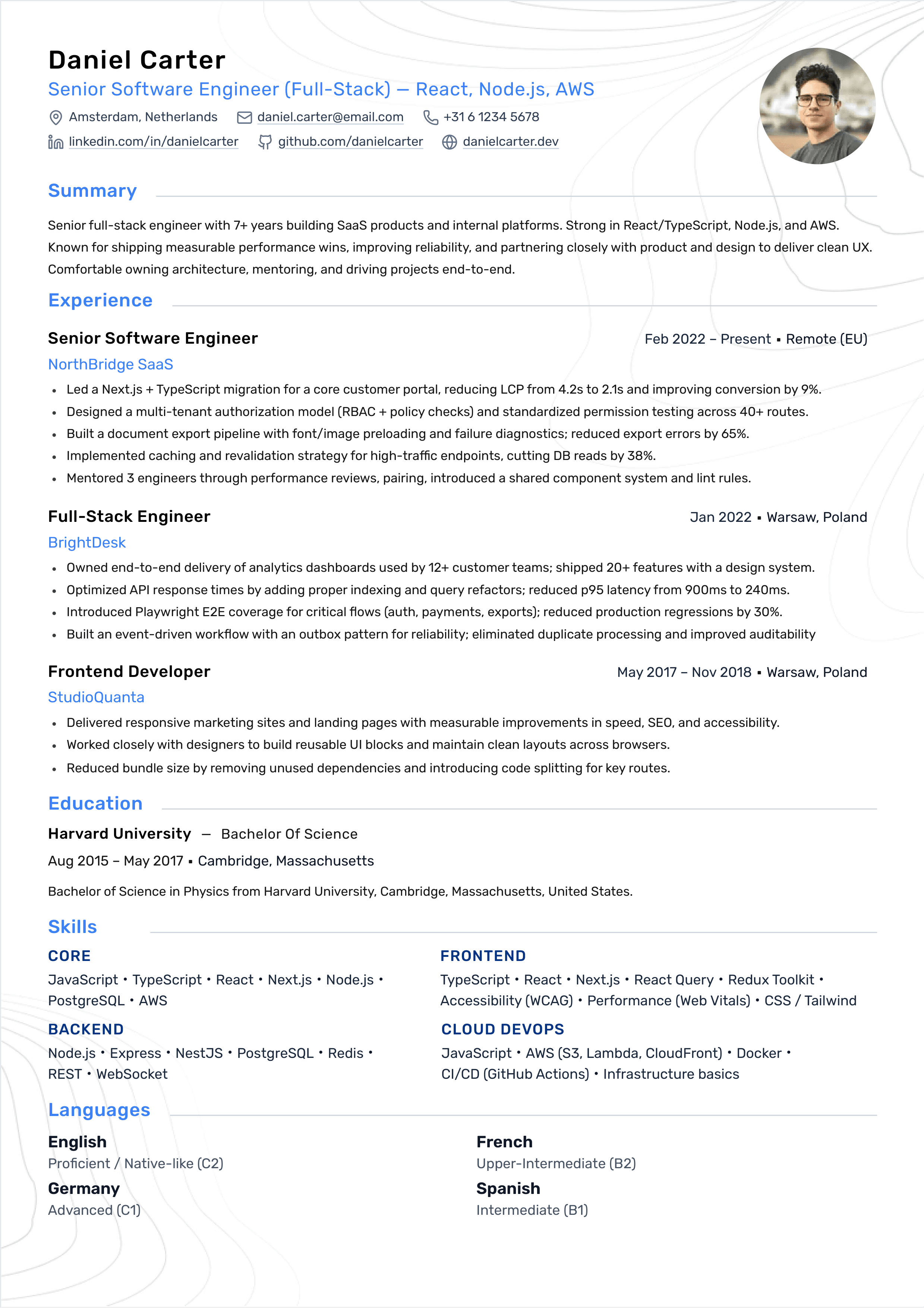
- Categorized list (most readable): 5 to 7 categories with 3 to 6 skills each. This is the safest format for parsing.
- Proficiency matrix (specialists only): Keep it textual. Example: PostgreSQL (advanced), Kafka (intermediate), Rust (basic).
Avoid graphical skill bars. They are hard to parse and rarely increase interview rates.
Security and Reliability Skills to Highlight
Senior backend roles increasingly require security awareness and reliability engineering. A few high-signal lines can dramatically improve perceived seniority.
Mention security topics only when you can explain them clearly. Focus on practical controls: access checks, secrets management, rate limiting, and safe defaults.
- Access control and authorization checks on every sensitive endpoint
- Input validation and injection prevention
- Rate limiting, timeouts, circuit breakers, retry policies
- Secrets management (Vault, cloud secrets managers)
- Backups, restore drills, and disaster recovery planning
If you mention SLOs, define what you measured: latency, error rate, availability, or freshness.
Final Checklist
Use this checklist before you submit your resume.
- Skills are grouped into meaningful clusters
- Skills match the job description wording
- Skills list is short and high signal (10 to 18)
- At least 2 to 4 bullets prove the most important skills
- Bullets include scope and system outcomes (latency, throughput, reliability)
- Formatting is plain text and ATS-friendly