

Most Interview Advice Is Too Shallow to Help You Win
A lot of interview advice sounds useful but fails when the stakes are real. Candidates are told to research company values, rehearse generic strengths and weaknesses, smile more, and hope for chemistry. That might help someone feel slightly more prepared, but it does not explain how hiring decisions actually get made.
Strong interviews are not about sounding polished for 45 minutes. They are about making it easy for the interviewer to conclude one thing: this person understands the work, can solve the problems behind the role, and is likely to deliver value with low drama and low ramp-up risk.
That is why top candidates do not treat interviews like personality contests. They treat them like structured business conversations. They translate experience into outcomes. They reduce ambiguity. They answer with evidence. They ask questions that expose what success actually looks like. And they leave the room sounding like someone who already thinks in terms of priorities, tradeoffs, and results.
This guide turns that approach into a practical system. It is built around eight rules that help you prepare for interviews more strategically, speak with more authority, and present yourself as a high-confidence, high-clarity candidate in a hiring market that increasingly rewards measurable skills over vague potential.
The best interviewers are not looking for the most rehearsed candidate. They are looking for the clearest low-risk signal of future performance.
Key Takeaways
- Interviewing is a business conversation, not a personality performance.
- Employers increasingly use skills-based hiring, which means candidates must show evidence of capability, not just enthusiasm.
- Structured answers outperform rambling because they reduce cognitive load and make impact easier to evaluate.
- Quantified outcomes are more persuasive than activity-based descriptions.
- Your virtual setup, timing, audio, and presence all affect how competent and reliable you appear.
- The questions you ask at the end of the interview should uncover success metrics, not generic culture talking points.
- The strongest close is not passive gratitude. It is thoughtful alignment with the team’s current priorities.
- A better resume workflow supports better interview performance, because it forces you to clarify your value before you ever join the call.
Why Interview Strategy Matters More in 2026
Interview performance matters more in 2026 because hiring teams are under pressure to make better, faster decisions with less tolerance for vague profiles. LinkedIn’s Future of Recruiting report has highlighted the continued rise of skills-based hiring, while the National Association of Colleges and Employers reported that 70% of surveyed employers use skills-based hiring practices in 2026. That means candidates are increasingly judged on demonstrated ability, not just title history or résumé aesthetics.
At the same time, employer demand still clusters around proof of problem-solving, communication, teamwork, initiative, and technical strength. NACE’s Job Outlook research shows these are among the most sought-after signals on candidate materials, while the World Economic Forum continues to rank analytical thinking among the most essential core skills in the labor market. In other words, the market rewards people who can think clearly, communicate clearly, and connect their work to outcomes.
Interviews have become the moment where that proof gets stress-tested. The employer is asking: can this person explain what they did, why it mattered, and how they think? Can they speak with enough structure that we trust them with ambiguity, stakeholders, customers, and deadlines?
This is why casual prep is no longer enough. The stronger your role, the more your interview is a test of judgment, prioritization, communication, and business awareness.
Modern hiring is moving toward skills, outcomes, and evidence. Your interview strategy has to reflect that shift.
What Top Candidates Understand That Most Candidates Miss
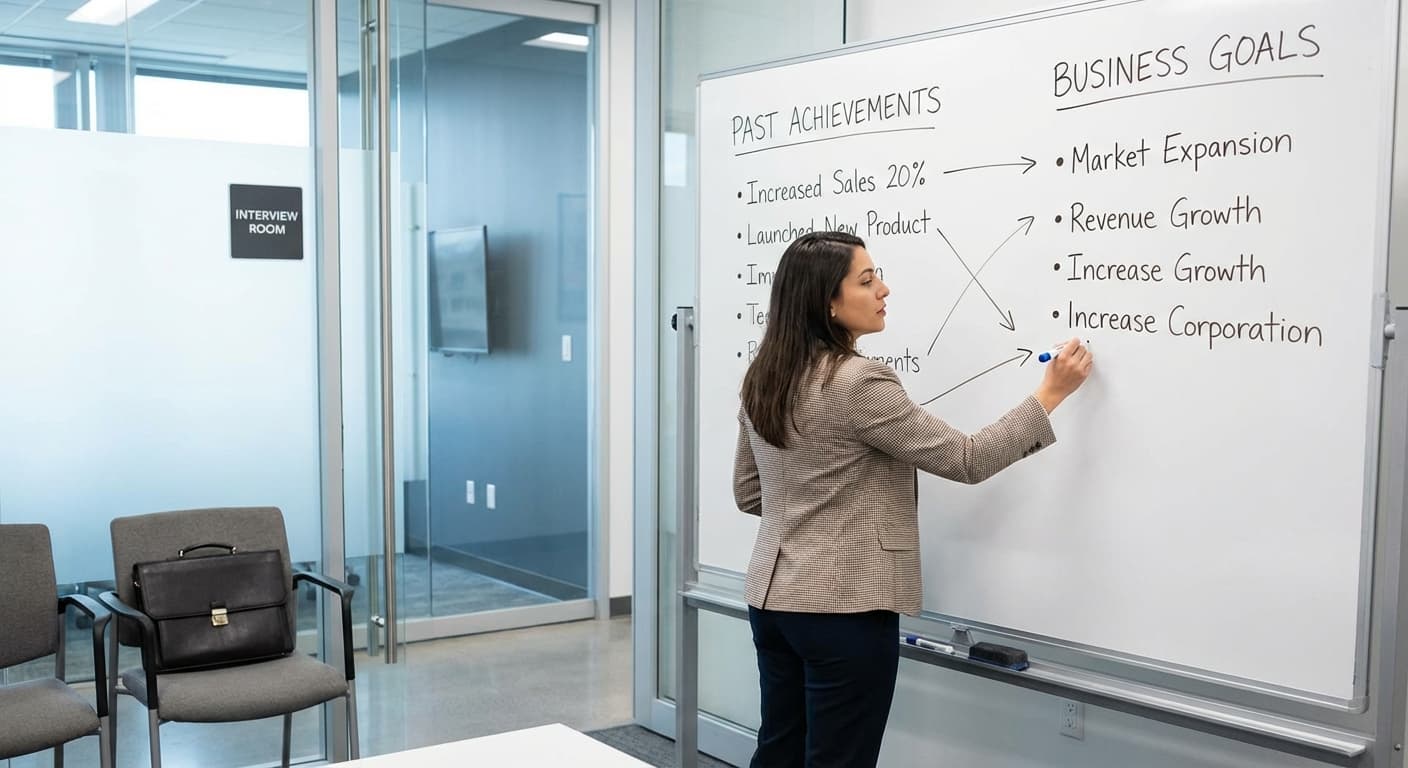
Most candidates prepare from the inside out. They start with themselves: my background, my strengths, my projects, my story. Top candidates prepare from the outside in. They start with the company, the role, the team, the pressure points, and the likely reason the role exists right now.
That shift changes everything. Instead of answering questions as autobiography, they answer them as relevance. Instead of listing responsibilities, they frame outcomes. Instead of trying to sound impressive in the abstract, they show why their track record is useful in this exact context.
This is also what makes a candidate feel senior, even before the offer. Seniority in an interview is not just years of experience. It is the ability to turn raw experience into clean, decision-ready signal for the person evaluating you.
Candidates who win interviews consistently do one thing well: they make their value obvious.
Rule 1: Stop Researching Trivia. Start Researching the Business Problem
Knowing when the company was founded or repeating its mission statement does not make you memorable. It makes you look like every other candidate who skimmed the About page. What matters more is understanding why the company is hiring for this role now and what pain the team is trying to reduce.
Before the interview, study the role like a business problem. Read the job description closely. Look for repeated words. Look at the reporting line if you know it. Read the product pages, recent launches, customer reviews, hiring trends, and leadership posts. If the company is public, read the earnings materials and pay attention to growth pressure, cost control, customer retention, product expansion, or operational bottlenecks.
Then build a simple hypothesis: this role likely exists to improve one or more of the following, revenue, speed, quality, compliance, customer experience, retention, cost efficiency, or execution capacity. When you answer questions with that lens, you sound commercially aware instead of merely interested.
This does not mean pretending to know the company better than the interviewer. It means showing that you understand work exists to create outcomes, not just tasks.
- What business goal is this team likely being asked to improve?
- What friction is slowing the team down today?
- What customer, operational, or technical problem might this role help solve?
- What pressure would make this hire urgent right now?
- Which parts of my background map directly to that pressure?
Do not prepare to say why you want the role. Prepare to explain why the role needs someone like you.
Rule 2: Stop Describing Activity. Start Talking in Outcomes
One of the fastest ways to sound average in an interview is to explain what you were responsible for instead of what changed because of your work. Hiring managers do not buy effort. They buy outcomes, risk reduction, and forward motion.
That is why quantified storytelling matters. A simple structure such as accomplished X, as measured by Y, by doing Z forces your answer to move from vague participation to credible impact. It also makes your experience easier to compare against the role’s expectations.
You do not need massive headline numbers to do this well. Improvement counts. Speed counts. Accuracy counts. Cost reduction counts. Process cleanup counts. Team enablement counts. Even when hard metrics are limited, you can still quantify scope, frequency, turnaround time, customer reach, error reduction, or cross-functional complexity.
Interviewers remember candidates who speak in results because results are easier to trust than adjectives. 'I am proactive' is forgettable. 'I reduced handoff delays by introducing a weekly checkpoint that cut approval time from five days to two' is not.
- Weak: I managed stakeholder communication across multiple teams.
- Stronger: I built a shared delivery ritual across product, design, and engineering that reduced missed dependencies and helped the team ship on schedule for two consecutive releases.
- Weak: I improved the onboarding process.
- Stronger: I redesigned onboarding documentation and checklists, which reduced repeated support questions and helped new hires become productive faster.
If your answer does not show what changed, it is probably too weak.
Rule 3: Structure Every Answer Because Clarity Signals Competence
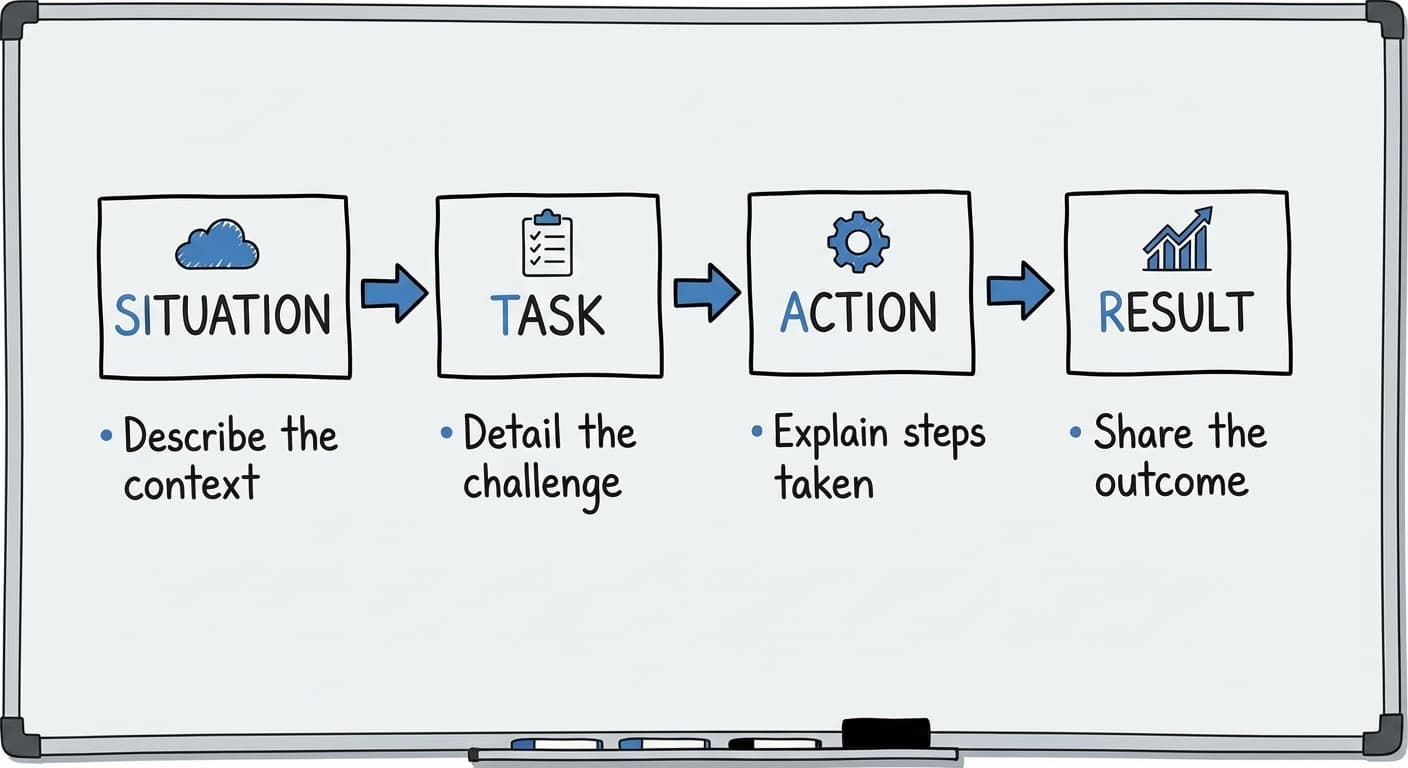
Clear structure is one of the most underrated interview advantages. Many employers use structured interviews precisely because structured questioning improves reliability and predictive value compared with unstructured interviewing. Candidates should mirror that logic in their own answers.
When you ramble, the interviewer has to work harder to understand you, extract the relevant part, and judge your impact. That extra cognitive effort works against you. A structured answer does the opposite. It guides the listener through context, decision, action, and result with minimal friction.
Frameworks such as STAR, CAR, or PAR are useful because they force discipline. You do not need to sound robotic, but you do need a repeatable pattern. State the situation briefly. Clarify the goal or challenge. Explain what you specifically did. Close with the outcome and what it proved.
This matters even more in high-stakes or technical interviews, where messy answers can make strong experience look weaker than it is. Clarity does not make you sound simpler. It makes you sound in control.
- Start with the challenge or context in one or two sentences.
- Name the objective, constraint, or risk clearly.
- Explain the action you personally drove, not just what the team did.
- End with the result, ideally measurable, and tie it back to the role.
A strong structure helps the interviewer think, this person will also be easy to work with.
Rule 4: Look Intentional, Not Overdone
Presentation still matters, but the goal is not to look flashy. The goal is to look prepared, appropriate, and controlled. In a virtual interview especially, the quality of your setup affects how reliable and organized you appear before you even answer the first question.
Career guidance from MIT and other university career centers consistently recommends practical basics: position your camera at eye level, use clean lighting near the camera, choose a neutral background, and test your audio and video in advance. These are simple details, but they signal judgment. Employers often read technical sloppiness as a broader sign of weak preparation.
This does not mean you need expensive gear. It means remove avoidable distractions. Use a stable device. Avoid noisy spaces. Make sure your face is visible. Wear something appropriate for the company context. In most cases, slightly more polished is safer than too casual.
Candidates sometimes underestimate how quickly an interviewer forms impressions. If your first two minutes feel chaotic, muffled, or messy, you start from behind.
- Camera at eye level
- Front-facing light or window light
- Clear audio, ideally tested in the same setup you will use
- Neutral background with minimal distraction
- Laptop charged and backup plan ready
- Clothing that matches the company’s level of formality
Professional presence is not vanity. It is a trust signal.
Rule 5: Be Early Because Calm Beats Recovery Mode
Being on time is baseline. Being early is strategic. It gives you space to settle your breathing, review key notes, and enter the interview from a composed mental state instead of from panic.
For virtual interviews, log in early enough to test the link, camera, microphone, and naming settings. For in-person interviews, arrive early enough to absorb the environment and avoid rushing through the door. In both cases, readiness is not just logistical. It affects how you think, how you speak, and how much control you project.
A flustered start creates drag. Even if the interviewer is polite, your mind is already split between recovering and performing. Top candidates protect the opening minutes because first impressions are costly to reverse.
You want your first signal to be steady and prepared, not apologetic and reactive.
Rule 6: Ask Questions That Reveal Performance Expectations
The end of the interview is not filler. It is one of the clearest chances to demonstrate judgment. Weak candidates ask generic questions they could have answered from the website. Strong candidates ask questions that reveal how the team defines success, where the role creates leverage, and what pressure the manager is trying to solve.
Harvard Business Review and multiple university career centers recommend using this moment to understand expectations, priorities, and how success will be measured. That is smarter than asking for vague culture summaries, because it gives you direct insight into the evaluation logic behind the role.
Better questions also turn the interview into a two-way assessment. You are gathering intelligence. If the interviewer cannot explain what success looks like, what the first 90 days involve, or what problem the hire is expected to address, that is useful information too.
And there is a second advantage. Once they answer, you can tie your background directly to what they just said, making your close more relevant and memorable.
- What would make someone exceed expectations in this role in the first six months?
- How do you measure success for this position?
- What are the biggest challenges this person would need to solve early?
- What tends to separate solid performers from exceptional performers on this team?
- If I joined next month, what would be the most important priority to understand quickly?
Good questions do not just show interest. They reveal whether the role is actually well defined.
Rule 7: Manage Energy, Not Ego
A lot of candidates misunderstand confidence. They think confidence means sounding dominant, over-selling, or acting like they do not care whether they get the job. That is not confidence. That is performance. Real confidence looks more controlled.
Interviewers often respond better to candidates who are calm, specific, and grounded in evidence than to candidates who are loud, overly polished, or constantly trying to impress. Composure communicates that you know your value and do not need to inflate it.
That means speaking slightly slower than your nerves want, pausing before answering, and letting your results carry the weight. It also means not collapsing into self-doubt when you get a hard question. You are allowed to think. You are allowed to clarify. You are allowed to say how you would approach a problem if the answer depends on context.
The goal is not to look fearless. The goal is to look trustworthy under pressure.
Authority in interviews usually sounds calm, not theatrical.
Rule 8: End Like a Consultant, Not a Spectator
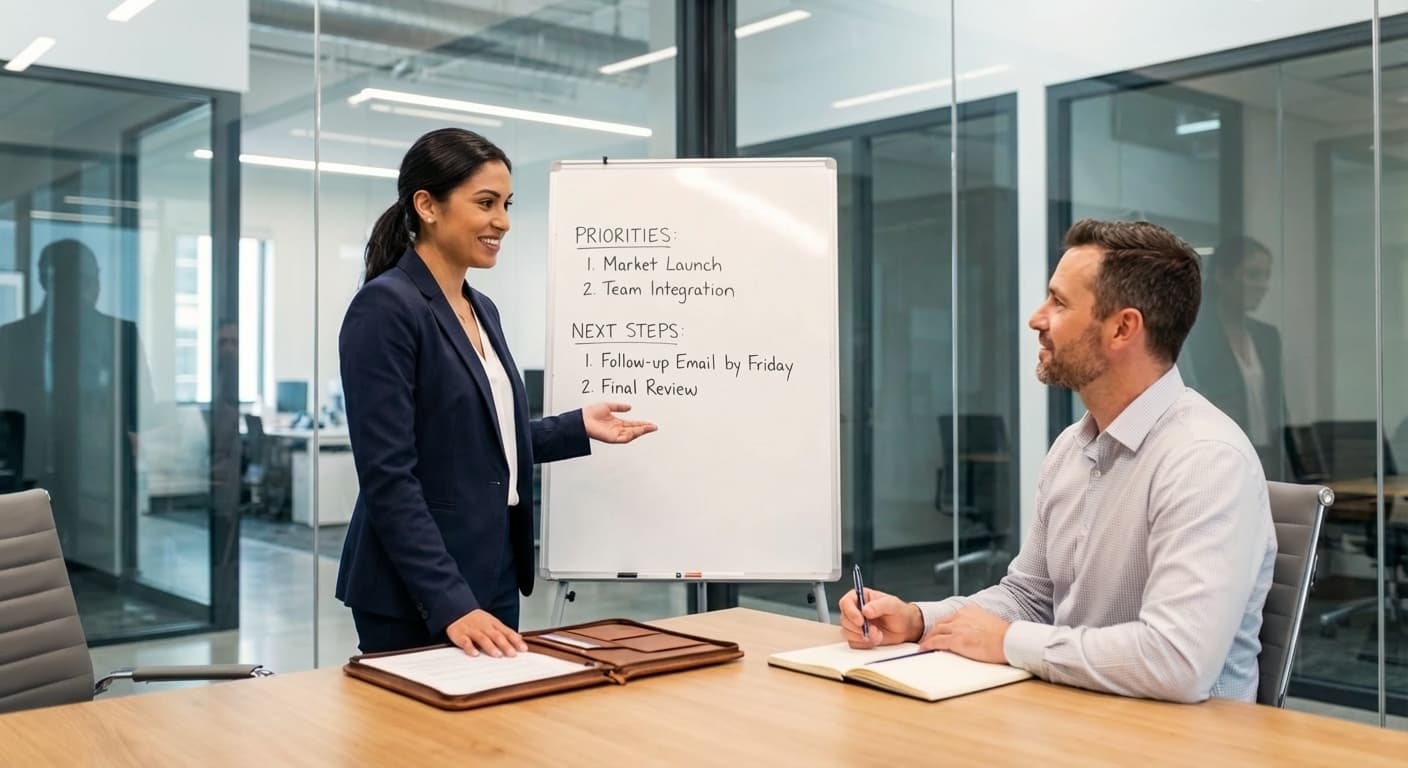
Most candidates end interviews passively. They thank the interviewer, say the role sounds exciting, and wait. That is polite, but it wastes the final impression. A stronger close shows you have already translated the conversation into priorities and action.
This does not mean delivering a dramatic sales pitch. It means briefly reflecting what you heard and aligning yourself with it. For example, you might say that it sounds like speed of execution, stakeholder clarity, and stronger delivery consistency are major priorities for the team, and that those are exactly the kinds of problems you have solved before.
A close like this signals three things at once. You listened well. You understand the role beyond the job title. And you are already thinking like someone responsible for outcomes rather than approval.
This is powerful because hiring decisions are often about perceived future usefulness. The best close shifts the interviewer’s mental picture from candidate to colleague.
- Reflect the team’s priorities back clearly
- Connect those priorities to one or two relevant strengths
- Show how you would approach the first phase of the role
- Confirm alignment without sounding scripted or desperate
Do not end by hoping they imagine your value. Help them imagine you doing the job.
The Interview Mistakes That Quietly Kill Strong Candidates
Many candidates lose interviews without realizing why. The issue is often not lack of experience. It is poor signal quality. They make the interviewer work too hard to connect the dots.
Common mistakes include giving long answers with no clear result, speaking only in responsibilities, failing to connect experience to the actual role, asking generic questions, and entering the interview without a working point of view on what the team needs.
Another frequent mistake is under-preparing examples. Candidates know their background, but they have not converted it into concise evidence. They vaguely remember the work, but they cannot tell the story cleanly enough under pressure. That is exactly why practice matters.
- Talking too long before reaching the point
- Using adjectives instead of evidence
- Confusing team outcomes with personal contribution
- Failing to quantify scope, speed, or impact
- Treating every company the same
- Asking end-of-interview questions that reveal little strategic thinking
- Finishing with no summary, no alignment, and no memorable close
A weak interview often sounds less like incompetence and more like unstructured competence.
A Practical Interview Preparation Checklist
Good preparation is not random confidence-building. It is a repeatable system. Use this checklist before any meaningful interview so you are not relying on memory and adrenaline alone.
- Read the job description twice and underline repeated priorities
- Write a one-sentence hypothesis for why the role exists
- Prepare 5 to 7 outcome-based stories using a structured format
- Add metrics, scope, or clear before-and-after impact to each story
- Prepare a concise answer to why this role and why this company now
- Set up your virtual or in-person logistics the day before
- Prepare 3 strategic questions about success, priorities, and expectations
- Practice your closing summary so you can end with clarity
The point of preparation is not to memorize. It is to reduce chaos.
How Roleframe Helps You Prepare Better for Interviews
Interview performance starts earlier than most people think. It starts when you clarify your own track record on the page. A weak resume usually produces weak interview answers because the candidate has never forced their experience into clear, outcome-based language.
Roleframe helps by making that preparation process more structured. You can maintain a strong base resume, create targeted variants for different role families, refine bullets into measurable outcomes, and keep multiple tailored versions without losing your original narrative. That gives you a cleaner source of truth when interview questions begin.
Instead of scrambling to remember which project best proves stakeholder management, process improvement, technical depth, or leadership, you can work from organized versions that already reflect those themes. That makes your interview prep faster and more accurate.
A better resume system does not just help you apply. It helps you explain your value with more confidence because you have already done the thinking.
The best interview answers usually come from candidates who already organized their experience properly before the interview.
FAQ: How to Prepare for a Job Interview
These are the questions candidates ask most often when trying to improve interview performance quickly and seriously.
- How long should I prepare for an interview? Enough to understand the role, build structured examples, and practice your delivery. For important interviews, one focused prep session is rarely enough.
- Should I memorize answers? No. Memorize structure, proof points, and opening lines if needed, but keep the delivery flexible and natural.
- What is the best framework for behavioral questions? STAR remains a strong default because it forces clarity around context, action, and result.
- What if I do not have exact numbers? Use ranges, volume, timing, scope, or before-and-after comparisons where accurate. Precision helps, but clarity matters more than fake specificity.
- What should I ask at the end of an interview? Ask how success is measured, what the first months look like, and what distinguishes excellent performance in the role.
- How do I sound confident without sounding arrogant? Speak calmly, be specific, and let evidence do the work instead of exaggeration.
- How can a resume builder help with interview prep? A structured resume workflow helps you turn experience into clearer stories, better metrics, and stronger role-specific examples.
Conclusion: Interviewing Well Is a Trainable Skill
Interview success is not reserved for naturally charismatic people. It is not luck, and it is not mostly about memorizing clever lines. It is a trainable skill built on preparation quality, evidence quality, and communication quality.
The strongest candidates know how to identify the business need behind the role, translate experience into outcomes, answer with structure, manage their presence, ask higher-value questions, and close with alignment. That combination makes them easier to trust, easier to imagine on the team, and easier to hire.
If you want better interview outcomes, stop preparing like a candidate trying to be liked. Start preparing like a professional solving a business problem. That is the shift that changes how you sound, how you think, and how you get evaluated.
And if you want to make that easier, build your resume and interview workflow around structured, role-specific evidence. The more clearly you can organize your experience before the interview, the more convincingly you can present it when the interview starts.
Top candidates do not wing interviews better. They prepare with more intent.